[Seoul Mayor] Oh Sehoon vs Jung Wonoh... The 'Real Estate' Battle [Sisa Show]
Oh Sehoon: "Jung Wonoh Will Be Park Wonsoon Season 2"
Jung Wonoh: "Oh Sehoon Will Be Yoon Sukyeol Season 2"
Clash Ignites Over Real Estate Policy
■ Broadcast: The Asia Business Daily "So Jongseop's Current Affairs Show" (Mon-Fri, 4-5 PM)
■ Host: So Jongseop, Political Specialist ■ Producer: Lee Miri
※ When citing content from this article, please be sure to mention "So Jongseop's Current Affairs Show."
The candidates for the June 3 Seoul mayoral election have been finalized: Oh Sehoon from the People Power Party, Jung Wonoh from the Democratic Party, Kim Jungcheol from the Reform Party, and Kwon Youngguk from the Justice Party. The so-called "Seoul Battle" is symbolized by the showdown between Oh Sehoon and Jung Wonoh. The biggest question in the Seoul mayoral race is whether Oh Sehoon will secure an unprecedented fifth term or whether Jung Wonoh will unseat him. Which side takes Seoul is one of the core factors determining the overall outcome of the local elections. Even if a party wins in other metropolitan areas, a loss in Seoul would overshadow those victories. This is why both the ruling and opposition parties are putting everything on the line for Seoul.
Looking at Seoul’s election results over the past five years, the contest between the ruling and opposition parties has been relatively close. In the 2022 presidential election, Democratic Party candidate Lee Jaemyung garnered 45.73% of the vote, while People Power Party candidate Yoon Sukyeol received 50.56%. In the local elections held that same year, Democratic Party candidate Song Younggil ran for Seoul mayor, while People Power Party’s Oh Sehoon sought his fourth term. The result was a landslide: Oh Sehoon won with 59.05% to Song’s 39.23%. While the timing—right after the Yoon Sukyeol administration took office—played a role, Song's lack of special ties to Seoul, having previously served as Incheon mayor, was also cited as a key reason for his defeat. In the district mayoral races, the People Power Party won in 17 districts while the Democratic Party won in 8. In the 2024 National Assembly elections, the landscape shifted dramatically. The Democratic Party won in 37 districts, while the People Power Party won in 11 districts, mainly centered around Gangnam and the Hangang Belt.
![[Seoul Mayor] Oh Sehoon vs Jung Wonoh... The 'Real Estate' Battle [Sisa Show]](http://www.asiae.co.kr/news/img_view.htm?img=2026042713100541740_1777263005.png)
What about last year's presidential election? Lee Jaemyung received 46.7%, while Kim Moonsu received 42.1%. The difference between the two was 4.6 percentage points, almost identical to the gap between Lee Jaemyung and Yoon Sukyeol in the 2022 presidential race. Reform Party candidate Lee Junseok received 9.8%. From a conservative vs. progressive perspective, there is no significant difference in Seoul.
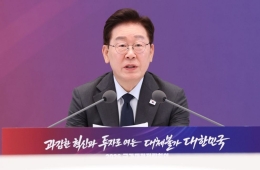
Oh Sehoon was born in 1961 in Seongsu-dong, Seongdong-gu, Seoul. He graduated from Da-il High School and later earned a law degree from Korea University. After passing the bar exam, he became a lawyer and served as the legal committee chair for the Korean Federation for Environmental Movement and as a member of the Lawyers for a Democratic Society’s environment committee. His frequent media appearances greatly boosted his reputation. Building on this momentum, he became a National Assembly member, but chose not to run for re-election, instead announcing his retirement. He also served as a visiting professor at Yale University, participated in overseas volunteer work, and engaged in various other activities. He served two terms as Seoul mayor but resigned in 2011, taking responsibility after the free school meal referendum failed. In 2021, he became Seoul mayor for a third term and was re-elected for a fourth term in 2022. Oh Sehoon is now aiming for an unprecedented fifth term as Seoul mayor.
![[Seoul Mayor] Oh Sehoon vs Jung Wonoh... The 'Real Estate' Battle [Sisa Show]](http://www.asiae.co.kr/news/img_view.htm?img=2026042713111941742_1777263079.jpg)
Currently, Oh is in conflict with party leader Jang Donghyuk and is moving to form an independent election committee centered on younger legislators such as Bae Hyunjin and Kim Jaeseop. Believing that relying on the party’s low approval rating would make a proper campaign impossible, he is pushing to run the election “Oh Sehoon-style.”
Who is Jung Wonoh? Born in 1968 in Yeosu, Jeollanam-do, he graduated from Yeosu High School and Seoul City University with a degree in economics. During his time at City University, he served as vice president of the student council and was involved in student activism. He has served as an aide to former Assemblyman Lim Jongseok, a member of Seoul’s Urban Planning Committee, and a special professor at Hanyang University. He also chaired the Democratic Party’s Good Local Government Committee and worked as a special advisor to the party leader on decentralization. Elected as Seongdong-gu district chief in 2012, he went on to serve three consecutive terms in that office.
![[Seoul Mayor] Oh Sehoon vs Jung Wonoh... The 'Real Estate' Battle [Sisa Show]](http://www.asiae.co.kr/news/img_view.htm?img=2026042713114141743_1777263101.jpg)
Jung Wonoh has assembled a “melting pot” campaign committee with 31 incumbent lawmakers and 48 district party heads. He has declared that he will make Seoul a “G2” city and established the “Oh Sehoon 10-Year Judgment Headquarters.” Oh Sehoon, on the other hand, has asserted that the Lee Jaemyung administration is running amok, emphasizing his intention to be a vanguard for rebuilding conservatism and to serve as a check on the Lee Jaemyung government. Both candidates are framing their campaigns as “Season 2”: Jung Wonoh criticizes current mayor Oh Sehoon as “Yoon Sukyeol Season 2,” while Oh Sehoon labels Jung Wonoh as “Park Wonsoon Season 2.”
Both are highlighting their achievements. Oh Sehoon is appealing for support to build on successes such as the Hangang Renaissance, the Climate Companion Card, the Wrist Doctor 9988, and the Garden City Seoul initiative, asking voters to let him finish strong. Jung Wonoh, meanwhile, is emphasizing his role in developing Seongsu-dong and criticizing Oh Sehoon for his wavering stance during the martial law and impeachment periods.
※ Click the video to view the full content.
At the center of the current confrontation is the question of whether to abolish the so-called Long-Term Ownership Special Deduction (LTSD). President Lee Jaemyung’s remarks sparked the issue. On April 18, President Lee posted on social media: “If you earn more than 1 billion won in wage income, about half goes to taxes, but for unearned real estate gains, even if they amount to tens or hundreds of billions of won, the taxes are drastically reduced just because the property was held for a long time. That’s unfair and unreasonable. The LTSD should be abolished, but for the first six months, there should be a grace period; for the next six months, only half should be abolished; and after a year, it should be fully abolished. That way, those who sell faster will benefit, which might help put more properties on the market.”
Recognizing the sensitivity surrounding real estate, the Democratic Party stated, “Our party has never considered any tax reform related to this,” seeking to contain the fallout. Han Jeongae, the party’s policy chief, also tried to control the controversy by saying, “The opposition is misleading the public with a malicious political frame.” Meanwhile, the People Power Party and Oh Sehoon’s camp are raising the issue aggressively: “Rather than just saying that his position is the same as the party’s, Jung Wonoh should clearly state his own view on this matter,” they argue.
Hot Picks Today
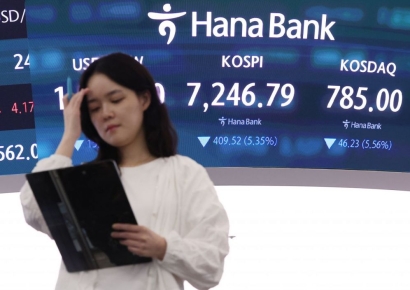 Report That Accurately Predicted KOSPI's 20% Plunge Now Says "Buy Now... Path to 11,450 Points Opens"
- [Exclusive] "Why Are Sales So Strong Only in Korea?"... 200,000 Units Sold in 10 Years Since Entering Korea [Tesla's Solo Run... Hyundai's Counterattack]
- [Breaking] Jeong Cheongrae Announces Bid for Democratic Party Leadership... "No Intention to Run for President Using Party Leader Position"
- "They Warned Us Five Years Ago": Collapse Inevitable After Ignoring the Danger... It Finally Gave Way [Infrastructure, From Construction to Replacement]③
- "Why the World Should Learn from Korea: Why Foreigners Are Impressed by Riding the Subway"
Voters’ reactions to these issues, evaluations of the upcoming televised debates, the evolving progressive-conservative landscape, and the degree of consolidation among political forces are all expected to influence the outcome of the Seoul mayoral race.
![[Seoul Mayor] Oh Sehoon vs Jung Wonoh... The 'Real Estate' Battle [Sisa Show]](http://www.asiae.co.kr/news/img_view.htm?img=2026042711314941647_1777257109.jpg)
© The Asia Business Daily. All rights reserved. Unauthorized AI training and use prohibited.