Middle East Depleted of Air Defense Missiles Requests Early Delivery of Cheongung from South Korea
"After Six Weeks of War, Middle East Seeks Alternative Air Defense Systems"
"U.S. Defense Contractors Backlogged... Region Diversifies Supply Sources"

As the war between the United States and Iran has extended beyond six weeks, Middle Eastern countries that have depleted their stockpiles of air defense missiles are requesting South Korea to expedite the delivery schedules for air defense weapons they have ordered, the Wall Street Journal (WSJ) reported on April 12 (local time).
Quoting sources, WSJ reported that "Saudi Arabia has asked South Korean defense companies Hanwha and LIG Nex1 whether it would be possible to accelerate the delivery schedule for the medium-range surface-to-air missile (M-SAM, Cheongung II) system," and "the United Arab Emirates (UAE) has also reportedly requested additional interceptor missile supplies from Korean firms."
The M-SAM is an air defense system capable of intercepting drones, ballistic missiles, and air-to-surface missiles launched from fighter jets. Currently, Middle Eastern countries such as Saudi Arabia and the UAE are known to be facing a severe shortage of existing stockpiles. With peace talks between the United States and Iran having broken down, and concerns over a prolonged war growing, Middle Eastern countries are reportedly considering a variety of alternatives, including Japan's Patriot missiles, Ukraine's drones, and America's Gatling guns, in addition to Korean systems, according to the WSJ.
The WSJ pointed out that although Middle Eastern countries have placed additional orders for air defense missiles with U.S. defense contractors, American firms are already facing significant backlogs and are unlikely to meet delivery deadlines, prompting these countries to seek alternative products. "This highlights how the U.S. defense industry has not been able to sufficiently expand its production capacity despite a surge in demand due to the war in Ukraine," the WSJ added, noting that "there is a risk of potentially losing future orders."
Hot Picks Today
 "Who Would Buy an 'Ugly' Car?" Despite Harsh Reviews, All $920,000 Ferraris Already Sold Out
- "Down 17% — 'This Is Too Much'... Frustrated Shareholders Enter Politics Themselves"
- NICE Investors Service: "Corporate Sales to Grow 21.5% This Year... AI Peak-Out Requires Mid- to Long-Term Monitoring"
- "My Money Is Melting Away... Government Blamed for Turning Stock Market Into a Playground for Foreign Investors Amid Market Crash"
- "Licking a Straw Changed His Life: The Consequence for a 19-Year-Old's Vending Machine Prank"
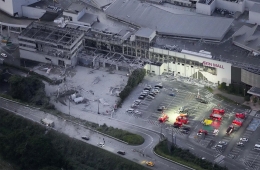
Meanwhile, as Iran imposes a blockade on the Strait of Hormuz and carries out retaliatory attacks across the Middle East, the damages suffered by oil-producing countries in the region are mounting. According to Bloomberg News, Saudi Arabia's crude oil production capacity has decreased by more than 600,000 barrels per day on average compared to pre-war levels due to Iranian airstrikes. In Qatar, the Ras Laffan industrial complex, the world's largest gas production base, has sustained damage, causing a 17% drop in the country's total gas output.
© The Asia Business Daily. All rights reserved. Unauthorized AI training and use prohibited.