Lee Chang-yong: "Stagflation Unlikely at This Point... Positive Outlook on Supplementary Budget Funded by Excess Tax Revenue" (Comprehensive Update 2)
Inflation Rate Forecast to Be "Significantly" Raised from 2.2% in May Outlook
Supplementary Budget Positively Assessed for Use of Excess Tax Revenue, Not Debt
Mandatory Local Education Grants Should Be Reviewed for Appropriateness
Exchange Rate F
"The unfolding situation in the Middle East, which is extremely difficult to predict, is the biggest variable."
On April 10, the central theme throughout the press conference held after Lee Chang-yong, Governor of the Bank of Korea, attended his final Monetary Policy Committee meeting before the end of his term, was war. The policy rate remained unchanged at 2.50% per annum, as the Bank of Korea emphasized the need for further monitoring of the developments and ripple effects of the Middle East conflict. The Bank also indicated that this year's consumer price inflation rate would be revised up "significantly" from its previous projection of 2.2% due to high oil prices and a strong exchange rate triggered by the war. Meanwhile, the economic growth rate is now expected to fall below the previous forecast of 2.0%.

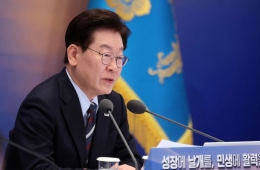
Lee Chang-yong, Governor of the Bank of Korea, is answering reporters' questions at a press conference following the monetary policy direction decision meeting held at the Bank of Korea in Jung-gu, Seoul on the 10th. Photo by Joint Press Corps
View original imageExternal conditions have changed since February's policy meeting..."In the worst-case scenario, stagflation must also be considered"
The outbreak of war in the Middle East immediately after the Monetary Policy Direction Meeting in February has significantly altered external conditions. The surge in international oil prices and disruptions to energy supplies, caused by the blockade of the Strait of Hormuz and damage to energy infrastructure, have been notable. Although the United States and Iran have agreed to a two-week ceasefire, it remains uncertain whether a formal end to the conflict will be reached. Even if the situation transitions to stabilization, it is expected to take a considerable time for energy supply chains to return to normal. As a result, economic growth is projected to weaken while inflation (rising prices) is likely to intensify compared to previous forecasts. The extent of these impacts will largely depend on the duration of the Middle East conflict, as well as subsequent global energy supply-demand and price trends.
Governor Lee also noted that assessing the possibility of stagflation—when inflation and economic stagnation occur simultaneously—depends on how the war unfolds. He said, "At this point, the likelihood of stagflation is low. If the situation in Iran is resolved now, I would say the probability is small," but added, "However, it is impossible to predict what could happen two weeks from now. If energy infrastructure is destroyed, the impact could be prolonged, making it difficult to generalize." He explained that, under the worst-case scenario, it would be difficult to rule out the occurrence of stagflation.

Lee Changyong, Governor of the Bank of Korea, is answering questions from reporters at a press conference following the Monetary Policy Direction Meeting held at the Bank of Korea in Jung-gu, Seoul, on the 10th. Photo by Joint Press Corps
View original imageInflation outlook to be revised up 'significantly'...Growth rate to fall below 2%
The Bank of Korea is expected to considerably raise its inflation forecast for this year in its economic outlook next month, compared to the previous estimate of 2.2%. The Bank expects the inflation rate, which stood at 2.2% in March, to rise to the mid-to-high 2% range going forward. Soaring international oil prices will further widen the inflation gap, although the government’s price stabilization measures are expected to partially offset this effect. The core inflation rate is also projected to be somewhat higher than the previous forecast of 2.1%.
Growth, on the other hand, is expected to fall short of the previous projection of 2.0%. Governor Lee stated, "Although steady export growth—especially in semiconductors—and the government’s supplementary budget will partially ease downward pressure on the economy, rising energy prices and supply disruptions will slow growth," adding, "The future growth trajectory will be greatly influenced by how the situation in the Middle East develops, changes in the trade environment, the semiconductor cycle, and the pace of domestic demand recovery."
Governor Lee delivered a positive assessment regarding the government's supplementary budget plan, highlighting that it is being financed not through fiscal deficits or debt, but via surplus tax revenue. However, he pointed out the need to reconsider whether the allocation of 4.8 trillion won in local education subsidies included in this supplementary budget is appropriate for its intended purpose. He commented, "At a time when we must respond to economic difficulties through a supplementary budget, we need to consider whether sending the surplus tax revenue to elementary, middle, and high school education budgets is truly appropriate for the purpose. Such inflexibility should be revisited."

Lee Chang-yong, Governor of the Bank of Korea, is striking the gavel at the Monetary Policy Committee plenary meeting held on the 10th at the Bank of Korea main building in Jung-gu, Seoul.
View original imageExchange rate fluctuating around 1,500 won, driven by Middle East turmoil and foreign investors..."Relatively reduced intervention"
The won-dollar exchange rate surged to the 1,500 won range due to the strengthening of the US dollar amid the Middle East conflict and net selling of Korean stocks by foreign investors, but fell back to around 1,470 won following the temporary truce between the United States and Iran. Governor Lee explained, "In November and December of last year, the main factor behind the depreciation of the won was the nearly threefold increase in overseas investments by individual investors. However, the recent rise in the exchange rate has been mainly driven by the Middle East situation and foreign investors selling Korean stocks."
Accordingly, if the Iran situation stabilizes, the exchange rate could drop as rapidly as it previously surged. This is because, from the end of last year to now, the possibility of increased capital inflows has grown with Korea's inclusion in the World Government Bond Index (WGBI), the trend of individual investors repatriating overseas funds has been observed since March, and discussions are underway regarding a reduction in National Pension Service overseas investments.
Regarding the effect of foreign exchange market intervention at the end of last year, Governor Lee remarked, "While the recent surge is due to the Iran situation, if we hadn’t intervened at that time, expectations for won depreciation would have been higher, and the exchange rate could be at an even higher level now. The intervention at that time was a good policy decision." Regarding the reduction of intervention after the Iran situation, he stated, "Since March, the depreciation of the won has been much greater than the dollar index, because it is widely recognized that Korea is relatively more vulnerable to the Middle East conflict," and added, "If authorities intervene in a situation where foreign investors are exiting the Korean stock market to realize profits, it would only benefit those foreign investors further."

"Both rate hikes and holds remain possible compared to Russia-Ukraine war"
On this day, the Bank of Korea's Monetary Policy Committee unanimously decided to maintain the base rate at its current level of 2.50% at the policy direction meeting held at the Bank of Korea main building in Jung-gu, Seoul. All seven committee members agreed to freeze the rate, marking the seventh consecutive meeting with no change following similar decisions in July, August, October, and November last year, and in January and February this year. Governor Lee stressed, "This was not simply a decision to defer policy due to uncertainty, but a move to more closely monitor the developments and ripple effects of the Middle East conflict before determining the policy direction."
The Committee did not disclose its forward guidance for future rates at this meeting. Governor Lee said, "When shocks are temporary, it is preferable not to respond with rate adjustments, taking policy lags into account. However, if such shocks become prolonged, inflationary pressures mount, and inflation expectations become unstable, a policy response is necessary. At present, though, it is still difficult to judge how the Middle East situation will evolve." He further stated, "Only once negotiations between the United States and Iran are on track can we present and discuss our views. Therefore, there was little discussion this time regarding rate hikes or cuts within the next three months."
Hot Picks Today
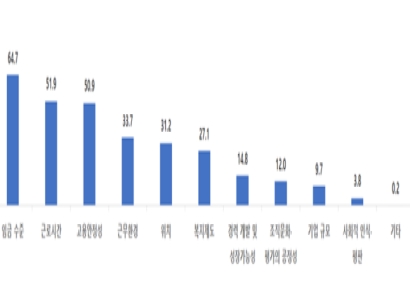 "Please Pay Me at Least 3 Million Won a Month": More Than Half of Young People Today Prioritize "Working Conditions" Over Company Size
- Selling Like Crazy Every Year... 30-Year-Old Hetbahn Takes on a New Challenge: Tastes Better Than "Mom's Home Cooking" [On-Site Report]
- I Thought Only 'Old Guys' Ate It... Young People Are Hooked on This 'Unusual Food' at Risk of Disappearing? [Delicious Stories]
- "Hey, Lady, Teach Your Kids to Behave!" ... 300,000 Won in Cash and a Bodily Injury Claim Demanded Over Child's Door Ding
- Beachgoer Finds 'Plastic' That Turns Out to Be Perfume Ingredient Worth More Than Twice as Much as Gold
Governor Lee compared the current policy environment and the nature of the shock to the situation during the Russia-Ukraine war in 2022, observing that both proactive monetary policy responses and non-responses remain open possibilities. During the Russia-Ukraine war, pent-up demand from the COVID-19 period led to a swift economic recovery, and the shock from the war contributed more to inflation than to economic slowdown. This prompted the Bank of Korea to raise rates to counter inflationary pressures. Governor Lee commented, "Compared to the Russia-Ukraine war, both the stock market and the exchange rate are higher now, but with last year's growth rate at just 1%, it is hard to say that the recovery is strong enough." He added that, from a demand perspective, the pressure is not as great as before, but on the supply side, while the Russia-Ukraine conflict primarily affected Europe, the current situation has a greater impact on Asia—especially oil-dependent countries like Korea, Japan, and Taiwan—so the supply shock could be more severe.
© The Asia Business Daily. All rights reserved. Unauthorized AI training and use prohibited.