'Okjeong Jungang Station Dietre' Model Home Opens to Continued Visitor Influx

After the opening of the (tentatively named) Okjeong Jungang Station Dietre model home, an influx of visitors has been observed. As of April 10, it ranked among the top real-time apartment search queries on the real estate platform Hogangnono, indicating continued interest from prospective buyers.
Despite rainy weather, a queue formed at the model home, which opened on April 9. A real estate industry official commented, "Directly connected station complexes often offer a rare level of transportation convenience," adding, "The demand appears to reflect interest in new developments with proximity to stations and central living zones."
This complex, to be built in Okjeong New Town, will consist of five underground floors and up to 49 above-ground floors, with a total of 3,660 units. This round of sales is limited to 2,807 apartment units. The project primarily features 84 m² and 128 m² floor plans, and will include community amenities such as a six-lane indoor swimming pool, sauna, indoor gymnasium, and media room.
The complex is located adjacent to the exit of Okjeong Jungang Station (tentative name, scheduled for completion in 2030) on Subway Line 7, and an agreement has been signed to construct a direct passage between the complex and the subway station. This will allow residents to access the station directly from within the complex, without exposure to the outside.

Examples of price formation for directly connected station complexes can also be found in nearby areas. For instance, in Dasan New Town, Namyangju, the 84 m² Type B unit at Dasan Xi Ivy Place, which is directly connected to a station, was sold for 1.18 billion won in February, while a nearby non-connected complex traded for 983 million won, reflecting a price difference. Similar price variations based on direct connection have been observed near Cheongnyangni Station in Seoul.
In terms of transportation, in addition to Line 7, an extension of the Deokjeong-Okjeong Line, included in the second phase of Gyeonggi-do's urban rail network plan, is currently under review. If the plan is realized, residents will be able to transfer to GTX Deokjeong Station after traveling just one station. The possibility of connecting to a metropolitan transportation network is considered a factor that enhances both residential convenience and asset value.
To the east of the complex lies Okjeong Lake Park, which spans approximately 160,000 square meters. Proximity to the park, along with transportation accessibility, serves to increase the comfort of residential living. The southern central commercial district contains clusters of private educational institutes and commercial facilities, and sites for elementary, middle, and high schools are all within walking distance of the complex.
This complex, constructed by Daebang Construction, is subject to the government’s price cap on sales. It is one of the private residential sites in Okjeong New Town and is scheduled for completion in 2030.
Hot Picks Today
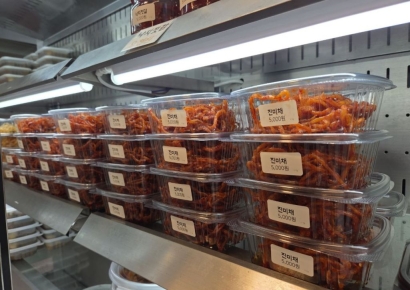 "Auntie, When Will Dried Shredded Squid Return as a Side Dish?"...Once Vanished from Restaurants, Now Making a Comeback
- Monthly Salary Soars 3.7 Times from 8.25 Million Won to 30.59 Million Won... 86 Fair Trade Commission Retirees Join Law Firms Over 10 Years
- "You've Earned Your Wealth—Now It's Time to Use It Well"...Seniors Turning to Financial Centers Before Illness Hits [Finance Embracing Seniors] ①
- They Said the Future Response Fund Would Drain Local Coffers... "Local Tax Revenue to Increase Until 2050 Despite Low Birth Rate"
- Gucci Starts Selling 'Made in China' Shoes Amid Sluggish Sales... What’s Happening with Luxury Sneakers Priced at 1.2–1.3 Million Won?
The application schedule begins with special supply on April 20, followed by priority applications on April 21 and secondary applications on April 22. The model home is located in Okjeong-dong, Yangju-si, and is open daily from 10 a.m. to 6 p.m.
© The Asia Business Daily. All rights reserved. Unauthorized AI training and use prohibited.