Monetary Policy Committee to Operate Policy with Focus on Price and Financial Stability
Full Text of the April Monetary Policy Decision Statement
The Bank of Korea's Monetary Policy Committee decided on the 10th to keep the base interest rate unchanged at 2.50% per annum, stating, "Going forward, monetary policy will be implemented to ensure that the inflation rate stabilizes at the target level over the medium term while monitoring the growth trend," and adding, "We will also pay close attention to financial stability."

Lee Changyong, Governor of the Bank of Korea, is presiding over a meeting of the Monetary Policy Committee held on the 10th at the Bank of Korea headquarters in Jung-gu, Seoul. 2026.04.10 Photo by Joint Press Corps
View original imageIn its monetary policy decision statement distributed this morning, the committee explained, "The Middle East war has increased upward pressure on prices and downward pressure on growth simultaneously, and volatility in the financial and foreign exchange markets has expanded significantly."
Regarding the background for holding the rate steady, the committee said, "Given the high uncertainty surrounding the Middle East situation, we judged that it is appropriate to maintain the current base rate and closely monitor the developments and spillover effects of the situation."
The domestic economy continues to improve on the back of strong exports and a recovery in consumption, but after the Middle East crisis, economic sentiment has weakened and some industries have experienced production disruptions, increasing downward pressure on growth. The committee noted, "From now on, the domestic economy is expected to slow more than previously anticipated, with this year's growth rate forecast to fall below the 2.0% projection made in February," and added, "Growth will be heavily influenced by the progression of the Middle East situation, changes in the trade environment, the semiconductor market, and the pace of domestic demand recovery."
Regarding domestic prices, the committee stated, "The upward pressure will greatly intensify due to the rise in international oil prices, but the government's price stabilization measures will partially alleviate this, resulting in inflation rising to the mid-to-upper 2% range." They also noted, "This year's consumer price inflation rate is expected to significantly exceed the February projection of 2.2%, and core inflation is also expected to be higher than the earlier forecast of 2.1%."
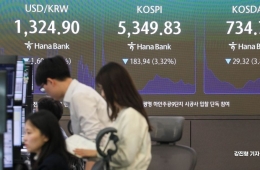
On the financial and foreign exchange markets, the committee observed, "The won-dollar exchange rate rose to the 1,500 won range and then fell after the temporary truce between the United States and Iran. Stock prices, which had been rising sharply, underwent a correction and then partially rebounded, showing significant fluctuations." They added, "While the upward trend in housing prices in the Seoul metropolitan area has slowed and expectations for further price increases have weakened, it is still too early to say whether a stable trend has been established."
The committee stated, "Future monetary policy decisions will be made after closely monitoring changes in internal and external conditions such as the Middle East war and the resulting trends in inflation, growth, and financial stability."
Below is the full text of the monetary policy decision statement.
The Monetary Policy Committee has decided to maintain the Bank of Korea base rate at the current level of 2.50% until the next monetary policy decision. In a situation where both upward pressure on inflation and downward pressure on growth have increased due to the Middle East war, and volatility in the financial and foreign exchange markets has expanded significantly, we judged that, given the high level of uncertainty surrounding the Middle East situation, it is appropriate to maintain the current base rate and closely monitor the developments and spillover effects going forward.
The global economy has maintained relatively solid growth, supported by investments in AI and fiscal expansion in major countries, but growth is expected to weaken and inflation to rise due to energy price increases and supply disruptions caused by the Middle East war. In international financial markets, risk aversion has intensified, dramatically increasing volatility in key price variables. Long-term government bond yields have surged due to inflation concerns and shifting expectations for monetary policy, the US dollar has strengthened, and stock prices have fallen sharply. However, some of these trends have partially reversed following the temporary truce between the United States and Iran. Going forward, the global economy and international financial markets are expected to be influenced by the development of the Middle East situation, changes in monetary and fiscal policies of major countries, shifts in the trade environment, and trends in AI investment.
The domestic economy had continued to improve thanks to strong exports and a recovery in consumption, with employment also maintaining a positive trend in job creation. However, after the Middle East crisis, economic sentiment has weakened and some industries have experienced production disruptions, increasing downward pressure on growth. Looking ahead, despite robust semiconductor exports and supplementary budgets, the growth rate is expected to slow more than initially anticipated due to rising energy prices and supply disruptions, with this year’s growth rate likely to fall below the 2.0% forecast made in February. This growth trajectory will be heavily influenced by the development of the Middle East situation, changes in the trade environment, the semiconductor market, and the pace of domestic demand recovery.
Turning to domestic prices, in March, the consumer price inflation rate (2.2%) rose from the previous month as petroleum prices climbed sharply, while the core inflation rate (excluding food and energy, 2.2%) edged down slightly due to a slowdown in the rise of personal service prices. The short-term inflation expectations rate (general public, 2.7%) increased slightly from the previous month. Looking ahead, inflation is expected to face significantly higher upward pressure due to rising international oil prices, but the government's price stabilization measures will partially mitigate this, resulting in inflation rising to the mid-to-upper 2% range. Accordingly, this year’s consumer price inflation is expected to significantly exceed the February projection (2.2%), and core inflation is also likely to be somewhat higher than the previous forecast (2.1%). There is considerable uncertainty regarding the future inflation path, particularly related to international oil prices and exchange rate movements, the effectiveness of the government’s price stabilization measures, and the extent of cost increases.
In the financial and foreign exchange markets, volatility in key price variables has expanded significantly. The won-dollar exchange rate rose to the 1,500 won level due to the strengthening of the US dollar following the Middle East war and net selling of stocks by foreign investors, but fell after the temporary truce between the United States and Iran. Yields on government bonds soared due to concerns over domestic and global inflation and changing expectations for monetary policy, before falling back, while stock prices, which had been climbing rapidly, underwent corrections and partial rebounds, resulting in significant fluctuations. Household loans continued to grow at a slow pace due to the government’s ongoing macroprudential policy stance, and the upward trend in housing prices in the Seoul metropolitan area has slowed and expectations for further price increases have weakened, but it remains to be seen whether a stable trend has been established.
The Monetary Policy Committee will continue to implement monetary policy to ensure that the inflation rate stabilizes at the target level over the medium term while monitoring the growth trend, and will pay close attention to financial stability. The domestic economy faces both increased upside risks to inflation and downside risks to growth due to the Middle East war, with a very high degree of uncertainty in forecasts. From a financial stability perspective, it is necessary to pay attention to the impact of increased exchange rate volatility and to continue monitoring the stability of housing prices and household debt in the Seoul metropolitan area. Therefore, future monetary policy decisions will be made after closely reviewing changes in internal and external conditions such as the Middle East war, as well as the resulting trends in inflation, growth, and financial stability.
Hot Picks Today
 He Left It in the Car and Forgot... "I Nearly Collapsed with Joy": Man Wins $1.48 Million Lottery
- Goldman Sachs Cuts KOSPI Target by 25%... "Excessive Pessimism, Still Attractive"
- "'Nodding Off' on the Subway? Here's Why Koreans Are Getting Even Less Sleep"
- "Please Pay Me at Least 3 Million Won a Month": More Than Half of Young People Today Prioritize "Working Conditions" Over Company Size
- Beachgoer Finds 'Plastic' That Turns Out to Be Perfume Ingredient Worth More Than Twice as Much as Gold
All seven members of the Monetary Policy Committee voted in favor of the decision to keep the base interest rate unchanged.
© The Asia Business Daily. All rights reserved. Unauthorized AI training and use prohibited.