Government Launches Institutionalization of Lee Jae-myung's 'Basic Income'... Pilot Project Set for 2027
Focusing the Pilot Project on Bridging the Blind Spot for Young and Middle-aged Adults
Designing a 'Korean Model' Based on Social Contribution
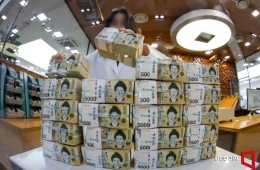
The government is moving to institutionalize "basic income," a core policy of President Lee Jae-myung. It has launched a dedicated task force and commissioned research to provide the basis for policy formation, thereby beginning preliminary work to implement a pilot project in 2027.
Structural Unemployment Triggered by AI... Responding with 'Participation Income'

In 2016, Daniel Raventos, the head of the Basic Income Spain Network, published a book titled "What Is Basic Income". It was translated by President Jaemyung Lee and Presidential Policy Special Advisor Hanju Lee. Kyobo Book Centre.
View original imageAccording to the government on April 10, the Ministry of Health and Welfare recently established the "Basic Social Policy Task Force" and created a separate "Basic Income Planning Team" under its umbrella to focus on reviewing basic income as an alternative income security system. The task force is led by the minister, with two vice ministers serving as deputy heads. This is the first time a central government department has set up a team specifically dedicated to basic income. Right after the launch of the task force, the Ministry of Health and Welfare began laying the groundwork for basic income discussions by commissioning a research project on "ways to introduce basic income." The goal is to include the scale and budget of a pilot project in the 2027 budget proposal as early as possible.
The driving force behind the government's move to introduce a basic income system is the growing sense of crisis over structural unemployment expected to be brought on by artificial intelligence (AI) technology. The government believes that the advent of AI will lead to an era where intelligence is oversupplied, resulting in the decoupling of labor and income. In fact, as companies respond by reducing new hires, young people entering the labor market are finding themselves at the forefront of structural unemployment. The government sees the existing social security system, which is based on full employment, as collapsing.
Accordingly, the government plans to first apply basic income to young and middle-aged adults as part of the pilot project. While a social benefit system currently exists for children (via child allowances) and seniors (via basic pension), young and middle-aged adults are considered to be in a "blind spot." Instead of providing unconditional cash payments, the government is prioritizing a "participation income" model, which requires involvement in socially contributive activities. The plan is to encourage participation in activities that create social value, even if they are not strictly productive, and to establish a system for certifying and monitoring these activities. This approach aims to address concerns that a basic income system could diminish motivation to work and to ensure that it contributes to social development.
A government official said, "There is significant anxiety among young people who, despite receiving higher education, find nothing to do after entering society. Given that the existing welfare system focuses on children and seniors, we plan to prioritize young and middle-aged adults—who are facing the threat of structural unemployment and are currently in a blind spot—in the pilot project."
The Biggest Challenge Is Funding... "A Precise Design Is Needed"

This government move indicates that the president’s long-standing vision is entering the stage of realization. President Lee, who promoted "disaster basic income" and "youth basic income" during his tenure as governor of Gyeonggi Province in 2020, pledged to build a "basic society" during the last presidential election. This is now being concretized with the establishment of a presidential Basic Social Committee and a dedicated task force within the Ministry of Health and Welfare.
The key issue, however, remains funding. During the 2022 presidential election, President Lee Jae-myung proposed a land value tax (about 50 trillion won) and a carbon tax (about 64 trillion won) as funding sources for basic income, but faced fierce criticism from the People Power Party at the time, who argued it would stifle business activity and increase the tax burden. Dividends from common assets and the recapture of AI-driven transformation gains are also being discussed, but no clear methodology has yet been established.
To minimize the fiscal burden, the Ministry of Health and Welfare is also considering, in the medium to long term, the integration and adjustment of similar projects—such as "sunlight and wind income" and "art activity preparation funds"—with basic income. A government official said, "If youth participation leads to a reduction in local traffic accident rates, identifying the corresponding social cost savings (such as lower insurance premiums) and recycling them as resources for participation income (basic income) could help create a self-sustaining circular structure, thereby minimizing fiscal outlays. We plan to develop options that ensure social acceptance and sustainability through public debates and expert forums." Depending on the results of upcoming research, the government may also consider linking or consolidating basic income with existing welfare systems.
Hot Picks Today
 "Auntie, When Will Dried Shredded Squid Return as a Side Dish?"...Once Vanished from Restaurants, Now Making a Comeback
- Monthly Salary Soars 3.7 Times from 8.25 Million Won to 30.59 Million Won... 86 Fair Trade Commission Retirees Join Law Firms Over 10 Years
- "Looks Like a Curtain" — 60% of Retinal Detachment Patients Are in Their 20s to 50s, Not Just an Elderly Disease
- "You've Earned Your Wealth—Now It's Time to Use It Well"...Seniors Turning to Financial Centers Before Illness Hits [Finance Embracing Seniors] ①
- "V and Go Yoonjung Wear Them Too"... The Transformation of the ‘Grandma Ring’ Captivates Foreigners [K-Holic]
Professor Chung Soon-dul of the Department of Social Welfare at Ewha Womans University said, "The purpose of basic income is admirable, but as seen in the recently launched integrated care projects, the biggest challenge for universal welfare programs covering all citizens is securing enough funding. To avoid burdening future generations, a precise design will be necessary."
© The Asia Business Daily. All rights reserved. Unauthorized AI training and use prohibited.