"Two-Hour Commute for a 40-Minute Drive" Public Officials Frustrated... Considering Rental Cars Due to 2-Day Vehicle Rotation
Reorganizing Carpools and Renting Cars
Exceptions Possible for One-Way Commutes Over 30km
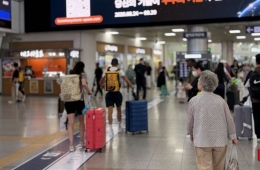
Mr. A, a public institution executive in his 50s working in Bundang-gu, Seongnam, Gyeonggi Province, said, "It used to take me 40 minutes to commute 20 kilometers by car, but now I have to use public transportation every other day," adding, "When I transfer to a bus, the commute takes almost two hours. Honestly, commuting itself has become burdensome."
Mr. B, a government employee who commutes to the Government Seoul Office, said, "When the 5-day vehicle rotation was introduced, I arranged a carpool with a colleague. But after the system was changed to the 2-day rotation, we realized both of us have even-numbered vehicles," adding, "I'm now looking for an odd-numbered vehicle carpool team."

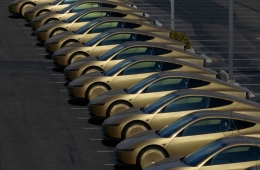
Amid the prolonged Middle East war, the public institution vehicle restriction system has been strengthened from a 5-day rotation to an odd-even '2-day rotation' system. On April 8, 2026, employees are informing drivers about the implementation of the 2-day rotation in front of the Government Seoul Office in Jongno-gu, Seoul. Photo by Kang Jinhyung
View original imageRearranging Carpools and Even Renting Cars
As the energy crisis has worsened due to the prolonged Middle East war, tightening public sector vehicle operations to an odd-even 2-day rotation is rapidly changing the morning commute for public officials. On workplace community forums, posts seeking carpool partners are surging, and people are responding in various ways, such as rotating the use of family cars.
Beginning April 8, the government implemented the passenger vehicle 2-day rotation system for about 11,000 institutions, including central government agencies, local governments, public institutions, provincial and city education offices, and national and public schools. This measure follows the escalation of the resource security crisis alert to the "caution" level and the strengthening of the previous 5-day rotation to a 2-day rotation. On odd-numbered days, only vehicles with odd-numbered license plates can be driven, and on even-numbered days, only those with even-numbered plates. In effect, the entire national public sector is now subject to these rules.
On the first day of the vehicle 2-day rotation, the commuting scene changed noticeably. At the entrance gate of the Government Sejong Office, administrators checked each vehicle's license plate and directly confirmed the reason for exceptions before granting entry. One official at the office said, "I left home in a rush this morning and drove out without thinking, then remembered the 2-day rotation was in effect. I ended up parking my car and walking 30 minutes to work."
Various examples of coping with the 2-day vehicle restriction in public institutions are being shared on employee community forums. One employee at an energy public enterprise said, "I considered renting a car with a different plate number for a short term," adding, "I'm worried I might even need to rent a car just to get to work." Another employee said, "I have a business trip scheduled, but now I'm not sure if I need to reschedule because of the vehicle restrictions, or if my work vehicle qualifies for an exemption." Some have come up with creative ways to avoid parking restrictions. One employee said, "There was talk about parking at an apartment complex a bit further from the office and walking in, but that's difficult because of potential complaints."

On the 28th, when high-concentration fine dust emergency reduction measures were issued for the first time this winter in the Seoul metropolitan area, a two-day vehicle operation system was implemented at the Seoul Metropolitan Office of Education in Jongno-gu, Seoul. Photo by Jin-Hyung Kang aymsdream@
View original imageNot Just a Recommendation... More Remote Work Encouraged
This measure is more of a mandate than a mere recommendation. For government offices, if a violating vehicle is detected, the head of the relevant institution is notified, and repeated violations can result in restricted access to parking lots or even disciplinary action. The number of violations is managed by combining the history from the previous 5-day rotation system.
However, not all vehicles are restricted uniformly. According to the government's 2-day vehicle rotation plan, passenger cars used by public institution employees for commuting and official vehicles are subject to the rule in principle, but electric or hydrogen vehicles, vehicles for disabled persons, and vehicles for pregnant women or those accompanied by infants are exempted.
In particular, long-distance commuters may be eligible for exemptions. If one-way travel exceeds 30 kilometers or takes more than 90 minutes by standard commuting routes, the institution head may recognize the vehicle as exempt within a minimum necessary range. However, these criteria are not absolute and may be adjusted according to each institution's circumstances.
The National Government Employees' Union argues, "Instead of enforcing a uniform 2-day rotation, increasing flexible work hours and remote work rates would fundamentally reduce energy used for commuting," adding, "Unnecessary travel can be minimized by replacing in-person reports and long-distance meetings with video conferencing, and the energy consumption structure should also be changed." The union also said, "For new town areas with insufficient public transportation infrastructure such as Sejong City, officials raising children below elementary school age, and emergency field personnel, flexible operation and exemption rules based on work characteristics, rather than blanket restrictions, should be guaranteed."
Hot Picks Today
 "Surviving on One Meal a Day to Invest 3.5 Million Won Monthly... 'FIRE' Craze Sparks 'NISA Poverty' in Japan"
- "Correction Over for Samsung and SK hynix" "670,000 for Samsung, 4.7 Million for SK hynix": Why Global IBs Remain Optimistic
- "Used for the Wedding" 300,000-Won Ring and Dress...Changing Wedding Trends
- Causing Trouble Without a Simple "Sorry"... The Reason Behind the 'Gen Z Stare' Revealed
- Nongshim Third-Generation Executive Sangyul Shin to Wed SKT Employee on the 13th
While business travel and external work vehicles are basically subject to the 2-day vehicle rotation, temporary exemptions may be granted with the institution head's approval in cases of urgency or significant inconvenience in using public transportation. For shift workers and duty officers, if their vehicles enter on a non-restricted day and leave on the following restricted day, exemption is recommended. If drivers obtain verification documents from the responsible department and display them on the vehicle dashboard, the exemption will be recognized. Meanwhile, private companies are also joining the energy-saving effort by implementing either the 5-day or 2-day vehicle rotation system, as well as restricting elevator use during commuting hours and lunchtime. The government stated, "In this energy supply crisis, the public sector must take the lead in saving energy," and called for active cooperation with the 2-day vehicle rotation and the 5-day public parking lot rotation system, even if it causes some inconvenience.
© The Asia Business Daily. All rights reserved. Unauthorized AI training and use prohibited.