Dongdaemun, Seongbuk, and Gwanak Surpass Gangnam 3 Districts in Apartment Market Cap Growth... Higher Bar for Homebuyers
Seoul Apartment Market Cap Reaches 2,578 Trillion Won
Dongdaemun, Seongbuk, and Gwanak Combined Market Cap Hits 178 Trillion Won
Up 12.63% Compared to November Last Year
Concerns Rise Over Increasing Median Price of Seoul Real Estate
Following the '10·15 Measures,' which designated the entire city of Seoul as a land transaction permit zone, the market capitalization growth rate of mid- to low-priced apartment clusters was twice as high as that of the three Gangnam districts. Since these measures were announced in October last year, statistical data confirms that mid- to low-priced apartments have been closing the price gap with high-priced ones—a clear sign of a 'gap-narrowing' market. As mid- to low-priced apartment prices catch up, buying a home in Seoul has become even more difficult.
According to data on 'apartment sales market capitalization by autonomous district in Seoul' provided by the real estate platform Zigbang on April 8, the total market capitalization of Seoul apartments as of last month stood at 2,758.779 trillion won. This represents a 7.13% increase (about 18.3 trillion won) compared to November last year (2,575.2629 trillion won), when the 10·15 Measures had just been implemented.

Apartment market capitalization is the sum of the sales prices of all apartments within a specific area. It is calculated by weighting the number of units by size based on actual transaction data. An increase in apartment market capitalization means the asset value of Seoul's apartments is rising.
Dongdaemun District Ranks First in Market Cap Growth... Gwanak and Seongbuk Districts Also Stand Out
By district, Dongdaemun recorded the highest market capitalization growth rate compared to November last year. The market cap rose from 66.8222 trillion won in November to 78.3014 trillion won last month, a jump of 17.18%. This was followed by Songpa (11.66%), Gwanak (10.26%), Dongjak (10.11%), and Seongbuk (9.72%). Gwanak, Seongbuk, and Dongdaemun are areas with a high proportion of mid- to low-priced apartments worth less than 1.5 billion won.

In particular, the combined market capitalization of Dongdaemun, Gwanak, and Seongbuk districts rose from 178.4932 trillion won to 201.0369 trillion won during this period, an increase of 12.63%—about twice the growth rate of the three Gangnam districts (6.38%). The combined market capitalization of the three Gangnam districts increased from 1,024.4965 trillion won in November last year to 1,089.898 trillion won last month, a rise of 65.4014 trillion won.

This trend contrasts with last year. At the beginning of last year, apartment prices in the Gangnam area and the Han River belt led the surge. As a result, the combined Gangnam 3 districts' market capitalization jumped 21.07%, from 846.215 trillion won in March to 1,024.4965 trillion won in November. In contrast, Gwanak, Seongbuk, and Dongdaemun districts saw only a 10.72% increase (161.2052 trillion won to 178.4932 trillion won).
From Polarization to a Gap-Narrowing Market
Experts note that the rise in mid- to low-priced apartment prices since the end of last year is significant, even considering the increase in new housing supply. When new apartments are occupied during this period, the number of units reflected in sales prices increases, which raises market capitalization. In Songpa District, for example, Jamsil Raemian I’Park (2,678 units) and Jamsil Le El (1,865 units) began occupancy in December last year and January this year, leading to a sharp increase in market capitalization. In Dongdaemun, Imun I’Park Xi (4,321 units) started occupancy in November last year. However, even accounting for increased supply, the rise in market capitalization was relatively large. Notably, Seongbuk and Gwanak—where the growth in market capitalization was most pronounced—did not have any large complexes with more than 500 units begin occupancy in the latter half of last year.
Yoon Sumin, an expert at NH NongHyup Bank, explained, "Although the occupancy of Imun I’Park Xi in Dongdaemun had some impact, the larger factor has been the rapid price increases in mid- to low-priced apartments located near business districts since the second half of last year."
Hot Picks Today
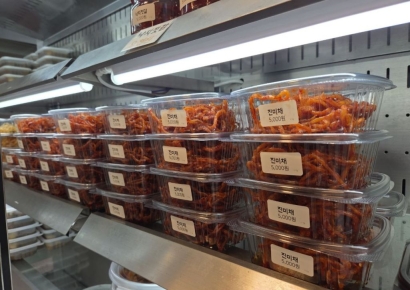 "Auntie, When Will Dried Shredded Squid Return as a Side Dish?"...Once Vanished from Restaurants, Now Making a Comeback
- "Is It Right to Pay This Much on a Fixed Salary?"... Seoul Ranks 1st or 2nd Globally for Smartphone Fees
- US Supreme Court Allows 'Noncitizen Screening Tool' Ahead of Midterm Elections
- Already 1,000 Examined, Stirring Up Protest: "Why Go to the Army When We Said No?" Students Rally in the Streets
- "Is the Dermatology Clinic Near My Home Affected Too?... Where Have All the Resigned Residents Gone?"
Experts explain that the market trend has shifted from polarization to a gap-narrowing phase, which is raising the median price of homes in Seoul. This means that apartment prices across Seoul are rising together, regardless of price range, raising the bar for actual homebuyers. Yoon Sumin noted, "Last year, the gap between home prices in the Han River belt and the three Gangnam districts and those in mid- to low-priced complexes under 1.5 billion won widened, but this year, mid- to low-priced apartment complexes in areas with convenient commutes are closing the gap with high-priced apartments."
© The Asia Business Daily. All rights reserved. Unauthorized AI training and use prohibited.