Kim: "The Rising Exchange Rate Is Unusual... The Most Concerning Indicator"
Park Sooyoung Raises Concerns Over "Early Stages of Stagflation"
Prime Minister Minseok Kim remarked on April 6 regarding the ongoing trend of a high exchange rate, saying, "If we look at the fundamentals of the Korean economy, including the early period of the Lee Jaemyung administration, the way the exchange rate is rising like this is somewhat unusual."
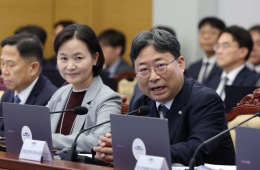
Prime Minister Kim made these comments during the government questioning on economic affairs held at the National Assembly in the afternoon. This was in response to a question from Park Sooyoung, a lawmaker from the People Power Party, who referred to the high exchange rate situation and asked, "There are concerns that our exchange rate is at the level seen during the IMF bailout in 1998."

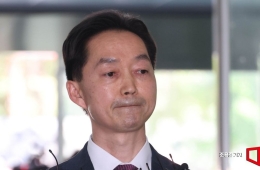
Prime Minister Minseok Kim is speaking during the government questioning on economic affairs at the plenary session held at the National Assembly in Yeouido, Seoul, on the 6th.
View original imagePrime Minister Kim addressed this, saying, "Fundamentally, there are several factors involved, but most intuitively, it is a matter of supply and demand. Demand has increased while supply has decreased." He further explained, "The reasons include a preference for safe assets, the expansion of overseas investments, and foreigners selling (stocks); these factors have combined." He added, "We are implementing various measures to address the supply and demand issues."
Prime Minister Kim continued, "Since the new administration took office, various indicators have been relatively positive," but also acknowledged, "The most concerning indicator, in fact, is the exchange rate." He went on to say, "We are well aware of the immense pressure faced by parents with children studying abroad or by those engaged in economic activities whenever the exchange rate rises."
Hot Picks Today
 "Why Work a White-Collar Job? This Chinese Occupation Now Earns Over 5 Million Won a Month"
- "Give Us Our Money Back": 76 Billion Won in Refunds in Two Weeks... Starbucks Hit with 18 Billion Won Loss
- Candidate for Chief of Serious Crime Investigation Agency Kim Jiyong Reports Assets Worth 3.8 Billion Won, Owns Two Apartments in Bundang
- "Will Real Part-Timers All Lose Their Jobs?"... Robot Sales Assistant Sweeps Up KRW 450 Million in Pots with Finger Hearts
At the session, Assemblyman Park stated, "With economic forecasts suggesting growth will fall and prices will rise, I believe we may be in the early stages of stagflation." He also raised concerns that the government's supplementary budget execution could stimulate inflation. Prime Minister Kim disagreed with this assessment. He further expressed the opinion that "it is more reasonable to view this as a temporary fluctuation caused by an external variable, namely, the Middle East."
© The Asia Business Daily. All rights reserved. Unauthorized AI training and use prohibited.