"Is This the Bottom? Market Set to Soar After the War... Sectors Leading the KOSPI Rebound [Real Investment Techniques]"
KOSPI in Deep Value Range: Rebound Possible
Semiconductors Emerge as Leaders on Robust Export Performance
Energy in the Spotlight Due to War: ETF Returns Rise
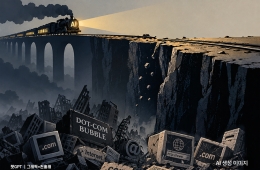
There are projections in the securities industry that the Korean stock market, which has experienced sharp volatility during the war between the United States and Iran, could stage a rally once the conflict ends. In particular, semiconductors—which continued to post solid export performance even during the war—are expected to lead the rebound.

KOSPI Deep Value...Time for a Rebound Is Coming
!["Is This the Bottom? Market Set to Soar After the War... Sectors Leading the KOSPI Rebound [Real Investment Techniques]"](http://www.asiae.co.kr/news/img_view.htm?img=2026040614130115429_1775452381.jpg)
According to the financial investment industry as of April 8, the Korean stock market is expected to rise if risks stemming from the Middle East ease. First, it is analyzed that KOSPI’s valuation has reached an extremely undervalued range, indicating further upside potential. Currently, KOSPI’s 12-month forward price-to-earnings ratio (PER) has dropped to 7.75 times, and as in similar past cases, it is interpreted that the timing for a rebound is drawing near. A forward PER of 8 times or less for KOSPI is considered a phase of extreme undervaluation (deep value), so if risk concerns are alleviated, a reversal to the upside may follow.
Lee Kyungmin, a researcher at Daishin Securities, explained, "In the past, during situations when economic and earnings uncertainties intensified and economic recession and earnings deterioration became a reality—such as during COVID-19 (7.52 times), the 2018 U.S.-China trade war and downturn in the semiconductor industry, and rising bond yields (7.62 times)—in all three cases, a trend reversal became apparent from those lows. If the shock to the economy remains only a concern, a V-shaped rebound has unfolded. Thus, if geopolitical risks are eased or resolved in this instance, a strong upward reversal is also expected."
The return of foreign investors—who had been selling Korean stocks to avoid risk—could also serve as a foundation for the stock market rebound. In the month following the outbreak of the war, net foreign selling exceeded 35 trillion won. Kim Junyoung, a researcher at iM Securities, said, "After the war, the Korean stock market dropped by 13.9%, marking the steepest decline except for Indonesia, which had individual issues. Given this sharp drop, a rapid rebound can be anticipated. The net foreign selling was the result of both concerns over foreign exchange losses and the geopolitical premium, and both factors are expected to simultaneously ease once the war ends."
Semiconductor Earnings Forecasts Continue to Rise
The semiconductor sector, in particular, is expected to drive the market’s upward momentum. Despite the war, semiconductors continued to show robust export performance. Last month, semiconductor exports reached USD 32.8 billion, surpassing USD 30 billion for the first time ever. This means semiconductors accounted for 38% of Korea’s total exports. Additionally, on the previous day, Samsung Electronics' preliminary first-quarter results far exceeded market expectations, raising optimism across the entire sector. Samsung Electronics reported consolidated first-quarter sales of 133 trillion won, the largest ever. Its preliminary first-quarter operating profit was estimated at 57.2 trillion won, up 755% year-on-year. Kim Hyunji, a researcher at DS Securities, commented, "The announcement of Samsung Electronics’ preliminary results can be a factor that changes market sentiment, as it reconfirms strong semiconductor demand even amid lingering geopolitical uncertainty."
!["Is This the Bottom? Market Set to Soar After the War... Sectors Leading the KOSPI Rebound [Real Investment Techniques]"](http://www.asiae.co.kr/news/img_view.htm?img=2026040610583615170_1775440716.jpg)
Thanks to rising memory prices, semiconductor companies are expected to maintain growth drivers even after the second quarter. Kim Dongwon, Head of Research at KB Securities, explained, "Despite a sharp increase in prices during the first quarter, major clients are prioritizing securing stable memory supply over prices, and order intensity is showing a marked increase compared to the first quarter. Furthermore, artificial intelligence (AI) data center customers are stepping up the competition to secure supply by proposing binding contract terms such as large advance payments and penalty clauses to ensure mid- to long-term supply stability." He added, "This is likely to further boost memory prices and reinforce the sustainability of the upward momentum."
In addition, the energy sector was also cited as a noteworthy area. Kim Sungkeun, a researcher at Mirae Asset Securities, said, "While uncertainty related to Iran persists, it is important for each country to increase interest in renewable energy and key materials as part of strengthening national security. U.S. energy could also become an option as demand shifts away from Middle Eastern energy sources."
Energy ETFs Driven by the War...Regular Investment Strategy Also Proposed
Last week, the top-performing exchange-traded funds (ETFs) were also energy-related. As of April 6, PLUS Solar & ESS ranked first in weekly returns with a 14.52% gain. KODEX Renewable Energy Active (10.07%) placed second, while HANARO Fn Eco-Friendly Energy (9.03%) ranked fourth, with energy-related ETFs occupying the upper ranks. Yuk Donghui, Head of ETF Product Marketing at KB Asset Management, said, "As was the case during the Russia-Ukraine war, this Middle East conflict has greatly heightened global vigilance regarding energy security. In particular, Asian countries—which have been highly dependent on Middle Eastern oil—are increasingly anxious, so a variety of energy-related industries are expected to come into the spotlight."
!["Is This the Bottom? Market Set to Soar After the War... Sectors Leading the KOSPI Rebound [Real Investment Techniques]"](http://www.asiae.co.kr/news/img_view.htm?img=2026040610583915171_1775440719.jpg)
Semiconductors are also expected to become a leading ETF theme after the end of the war. Nam Yongsoo, Head of ETF Management at Korea Investment Management, said, "Although price volatility has increased recently due to the war, in terms of fundamentals, global big tech companies’ plans to invest in data centers remain unchanged. Therefore, it is worth consistently maintaining a strategy of investing in ETFs that cover overall global semiconductor demand." He also suggested that splitting purchases of gold-related ETFs as a hedge against risk and for diversification purposes is a valid strategy. Nam added, "Over the mid- to long-term, the main factors supporting the investment value of gold remain the same: central bank gold purchases, expanding fiscal deficits, increased demand for diversifying dollar assets, and the constant presence of geopolitical risk."
Hot Picks Today
![Selling Like Crazy Every Year... 30-Year-Old Hetbahn Takes on a New Challenge: Tastes Better Than "Mom's Home Cooking" [On-Site Report]](https://cwcontent.asiae.co.kr/asiaresize/93/2026102216175071025_1792653470.jpg) Selling Like Crazy Every Year... 30-Year-Old Hetbahn Takes on a New Challenge: Tastes Better Than "Mom's Home Cooking" [On-Site Report]
Selling Like Crazy Every Year... 30-Year-Old Hetbahn Takes on a New Challenge: Tastes Better Than "Mom's Home Cooking" [On-Site Report]
- "Please Pay Me at Least 3 Million Won a Month": More Than Half of Young People Today Prioritize "Working Conditions" Over Company Size
- A 12-Year-Old Girl Went to the Hospital After Her Blood Pressure Hit 225 and Was Stunned: "What Is This Coral Reef-Like Thing in Her Aorta?"
- "Hey, Lady, Teach Your Kids to Behave!" ... 300,000 Won in Cash and a Bodily Injury Claim Demanded Over Child's Door Ding
- Beachgoer Finds 'Plastic' That Turns Out to Be Perfume Ingredient Worth More Than Twice as Much as Gold
!["Is This the Bottom? Market Set to Soar After the War... Sectors Leading the KOSPI Rebound [Real Investment Techniques]"](http://www.asiae.co.kr/news/img_view.htm?img=2026040808255817148_1775604358.png)
Since there is still a possibility of stock price declines due to uncertainty, some are recommending that now is a good time for regular investment strategies. A strategy to buy covered call ETFs that pay monthly dividends has been proposed. Covered call ETFs have limited upside in a rising market, but because they pay dividends by adding premiums from selling call options, they offer higher distributions than other types. Kang Songcheol, a researcher at Eugene Investment & Securities, said, "Given the ongoing war and rising oil prices, there is potential for further stock price declines, but at the same time, the easing of tensions could lead to a rebound. Since the price burden from previous declines has eased since last month, now is a good time to start regular investments."
© The Asia Business Daily. All rights reserved. Unauthorized AI training and use prohibited.