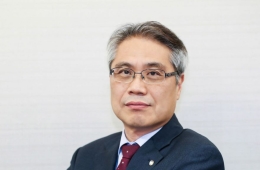
Employment Ministry Opens APEC Future Jobs Forum... Discussing Employment Strategies in the AI Era
The Ministry of Employment and Labor held an international forum to discuss changes in jobs and response strategies resulting from the spread of artificial intelligence (AI).
The ministry announced that it would host the "Asia-Pacific Economic Cooperation (APEC) Future Jobs Forum: Artificial Intelligence (AI) and Demographic Changes" at the Conrad Hotel in Seoul from April 6 to 7. The event is attended by more than 100 participants, including policymakers from international organizations and APEC member economies, private companies, and related institutions, who are focusing on discussing the impact of AI on the labor market.

The Ministry of Employment and Labor held an international forum on the 6th at the Conrad Hotel in Seoul to discuss response strategies under the theme "Asia-Pacific Economic Cooperation (APEC) Future Jobs Forum: Artificial Intelligence (AI) and Demographic Changes" and is taking a commemorative photo. Ministry of Employment and Labor
View original imageThis event was organized as a follow-up to last year's APEC Summit and Labor Ministers' Meeting. At that time, member economies agreed to cooperate and share best practices in response to AI and demographic changes, and this forum serves to put that agreement into concrete action.
The forum consists of three sessions: the impact of AI and demographic changes on jobs and industries; government policy directions; and AI-based job creation and AI transformation (AX) in the public sector.
The government is pursuing response strategies centered on the "Basic Plan for Employment Stability in Industrial Transformation." The plan focuses on establishing a monitoring system to analyze job changes by industry, region, and occupation; providing support for job transitions and revitalizing employment in new industries; strengthening the employment safety net; and nurturing future talent. Currently, detailed tasks are being developed to reflect the opinions of labor and management.
International organizations and experts evaluated Korea's policy direction positively. The Organisation for Economic Co-operation and Development (OECD) emphasized the importance of a comprehensive plan that includes monitoring job impacts and social protection, assessing Korea's approach as appropriate. The World Bank introduced Korea's lifelong skills development policies as best practices.
Use cases of AI in the private sector were also shared. A call center operator presented a plan to shift customer service representatives to new roles such as chatbot design and quality management by providing AI training. The steel industry shared a case where deep learning-based remote operations have reduced hazardous tasks, thereby helping to prevent industrial accidents.
Hot Picks Today
!["Sold During the Plunge, Now What?"... Samsung Electronics at 5.5 Million Won, SK hynix at 4.2 Million Won—Time to Buy, Not Sell? [Weekend Money]](https://cwcontent.asiae.co.kr/asiaresize/93/2026071415403645750_1784011236.jpg) "Sold During the Plunge, Now What?"... Samsung Electronics at 5.5 Million Won, SK hynix at 4.2 Million Won—Time to Buy, Not Sell? [Weekend Money]
"Sold During the Plunge, Now What?"... Samsung Electronics at 5.5 Million Won, SK hynix at 4.2 Million Won—Time to Buy, Not Sell? [Weekend Money]
- "Is Nvidia the Only One Making Money? We're Profiting Too"... Samsung Electro-Mechanics' 1.5 Trillion Won LTA Jackpot Signals a Major Turnaround [ChipTalk]
- Koreans Wait Four Hours in Line for 'Just One Sip'... The Life-Changing Story of the 1993-Born Chairman Behind the 'Jang Wonyoung Milk Tea' [Interview]
- "Reeling From Daily 3% Swings"…Retail Investors Abandon Korean Stocks for U.S. Market
- "I Spent 1 Million Won in One Night" Deep Regrets... The Heavy Burden of Today’s Housewarming Parties
In the public sector, AI-based employment services were also introduced. Through "Employment24," the government is supporting AI-powered talent recommendations and career planning, and is operating an AI counseling service that provides 24-hour labor law consultations. Lim Youngmi, policy chief of the Ministry of Employment and Labor, stated, "We must turn crisis into opportunity through innovation, inclusion, and cooperation during the AI transition," and added, "We will promote people-centered industrial transformation and the creation of quality jobs."
© The Asia Business Daily. All rights reserved. Unauthorized AI training and use prohibited.