"Tailored Support for Infants and Young Children in the Era of Low Birthrate"
Korea Childcare Promotion Institute and Korean Association for Public Administration
Seminar on April 2: Directions for Creating a Future-Oriented Childcare Environment
Experts advise that support for infants and young children must be improved in a customized way to address structural social changes such as rapidly shifting demographics and declining birth rates.
The Korea Child Care Promotion Institute and the Korean Policy Studies Association announced on April 3 that they held a joint seminar on April 2 at the Korea Child Care Promotion Institute’s training center under the theme, "The Answer to Policy Lies in the Field: Seeking Policy Directions for Creating a Future-Oriented Child Care Environment," and discussed such approaches.

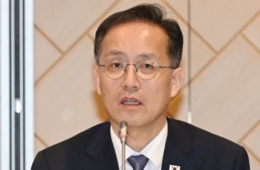
The Korea Institute of Child Care and Education held a seminar on the 2nd in collaboration with the Korean Association for Public Administration to create a future-oriented childcare environment. Korea Institute of Child Care and Education
View original imageDuring the first session, Professor Choi Heeyong of Catholic Kwandong University delivered a presentation on "Establishing a Region-Led Core Parenting Competency Support System," outlining the need for and execution strategies of local-based support systems such as universal parent education and tailored parenting support. The subsequent panel discussion featured Professor Choi Yujin of Wonkwang University, Professor Han Areum of Catholic Kwandong University, Professor Park Jin-Sol of Inha University, Professor Kang Minseong of Kyung Hee University, and Center Director Joo Hee-Jin of the Korea Research Institute for Local Administration. They focused on ways to enhance policy implementation by strengthening region-led parenting support systems and improving connections between central and local governments.
In particular, there was an argument that "Comprehensive Child Care Support Centers" function as core parenting support hubs within local communities, and that it is necessary to increase the number of these centers to improve accessibility, especially for users affected by physical distance. Additionally, participants emphasized the importance of connecting and cooperating with various child-rearing support infrastructure within each region to bridge the gap between policy and practice.
In the second session, Kim Yuna, Head of the Comprehensive Child Care Support Division at the Korea Child Care Promotion Institute, delivered a presentation titled "From Policy to the Field: Integrated Support to Protect the Child Care Activities of Infant and Young Child Teachers." Kim proposed integrated support measures to strengthen the institutional foundation through amendments to the Infant and Young Child Care Act, to protect the rights and interests of child care teachers, and to foster a stable child care environment.
During the following discussion, experts suggested that a support system enabling "immediate intervention" should be established so that the Child Care Activity Protection Center can respond promptly to crises in the field. They also noted the need for securing a national budget and expanding the pool of specialized personnel.
Hot Picks Today
 "Jealous of Koreans" - Now a Must-Do on Every Trip... The Place Where Foreigners Spent KRW 229.8 Billion
- [Exclusive] Piling medicines into a basket and setting them on the counter: "Ready to check out?" ... Misuse concerns mount, but the government remains in the dark.
- "'No! Dad, Run!'... Father Moved by 5-Year-Old Son Who Shielded Him from Ghost at Korean Folk Village"
- "I thought getting into a big company was the goal"... The 'position' only 1 in 121 employees reaches
- "Please Let Me Go Home"... Customers Trapped in Department Store Parking Lot for 5 Hours Vent Their Anger

Cho Yongnam, President of the Korea Child Care Promotion Institute, stated, "This seminar was an opportunity to identify the direction of infant and young child policy at the field level amid social changes such as low birth rates and to connect these discussions to effective policies." He added, "We will actively support the implementation of the recommendations discussed so that they can be established in practice."
© The Asia Business Daily. All rights reserved. Unauthorized AI training and use prohibited.



!["Please, Just Take Them Off" - They Made It All the Way to Bed... Then Fecal Bacteria Struck [Deep Scroll]](https://cwcontent.asiae.co.kr/asiaresize/307/2026101610053063338_1792112730.png)