[Solutions for Local SME Manpower Issues] ② Designing 'Work-Life Harmony'... Change Through Systems, Not Money
The Growing Welfare Gap Between Large Corporations and SMEs
Institutional Change as the Starting Point for Desirable Workplaces
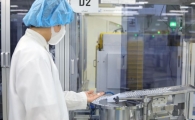
Eugene Technology, a company specializing in precision molds and automation equipment for secondary batteries, operates a factory in Cheongju, North Chungcheong Province, covering approximately 14,000 square meters. On this large-scale production line, it is hard to find even a speck of dust, let alone the typical oil stains associated with factories. Lee Miyeon, the CEO and a former engineer, founded the company in 2010 with the desire to create a workplace where technical staff could work in a clean environment and be treated well. Now in its 17th year, that vision remains unchanged. The company is committed not only to cultivating the workplace but also to supporting work-life balance (work-life harmony).

Production equipment is organized at the Eugene Technology factory in Cheongju City. Photo by Cheolhyun Kim
View original imageEugene Technology has distinctive programs that local companies can offer. A prime example is its dormitory program. However, the "dormitory" here is not the traditional concept where employees live and eat together in a company-owned residence. Instead, employees freely find their own living spaces in Cheongju City, and the company covers the cost. The aim is to provide a living environment separate from work. CEO Lee said, "If we simply built a dormitory within the factory, young employees wouldn't come. We support them in the way they prefer most."
All of Eugene Technology’s approximately 140 employees are full-time. The company operates factories in both Cheongju and Hwaseong, and has a total of four overseas subsidiaries in the United States, China, Poland, and Hungary. This means employees have opportunities to be assigned as expatriates abroad. Due to the nature of their business—producing, supplying, and installing products—both overseas and domestic business trips are frequent, and the work system is flexible. Even though the secondary battery market is experiencing a downturn and the company's performance has also declined, there has been no forced restructuring. CEO Lee stated, "Our employees have a deep understanding of their work, and many have stayed with us for the long term."
Eugene Technology is a prime example of how SMEs are working to narrow the "welfare gap" with large corporations. For regional SMEs, it is difficult to guarantee work-life harmony on par with major companies in order to attract talent. According to the Ministry of Employment and Labor, as of 2024, the monthly non-statutory welfare cost per person at SMEs with fewer than 300 employees is 159,000 won, which is just 34.7% of the 459,000 won spent by companies with 300 or more employees. The gap has continued to widen. Ten years ago, in 2014, the welfare cost per employee at companies with fewer than 300 workers was 141,700 won per month, compared to 296,000 won at companies with 300 or more employees. At that time, the monthly gap was 148,900 won, but ten years later, it has grown to 300,000 won—more than double.

In this context, the institutional changes made by local SMEs—such as expanding flexible work arrangements and supporting the balance of work and childcare—are becoming a starting point for creating workplaces where young people want to work. The Pickt, an SME located in Chuncheon, Gangwon Province, has adopted staggered working hours, remote work, and annual leave in 30-minute increments, allowing individuals to choose their own work environment to attract top local talent. The company has also made the workplace more conducive to focusing on work by allowing employees to bring pets to work and providing adjustable desks.
In addition, Easy M&C, an SME in Ulsan, regards its employees as the company's core strength and has implemented a pre-approval system for overtime to reduce unnecessary late hours. The average working week is 35 hours. Instead of longer hours, the company has distributed a suite of artificial intelligence (AI) tools to enhance productivity. As a result, the company has grown to employ about 180 people within seven years of its establishment.
Despite the difficult circumstances on the ground, there is a consensus that policy support is needed for local SMEs striving to create quality jobs. While the will exists, many SMEs lack the resources to introduce such programs without assistance, underscoring the need for government support. The SME community has suggested measures such as issuing exclusive credit cards for SME employees through partnerships with financial institutions, and linking these to welfare platforms. There are also calls to specify support for local SMEs that introduce welfare programs to improve working and living conditions. Eligible support could include costs for improving the work environment, operating dormitories, and commuting. Kim Heejung, Director of Economic Policy at the Korea Federation of SMEs, stated, "Solving the manpower shortage in non-metropolitan areas is the most urgent issue for balanced regional development," adding, "Fundamentally, it is important to create quality jobs by enhancing corporate competitiveness."
Related Articles
 [Solutions for Regional SME Talent]① Building a Virtuous Cycle Connecting Local Education, Employment, and Settlement
Series on Solutions for Local SME Manpower Issues
[Solutions for Local SME Manpower Issues] ① Building a virtuous cycle of local education, employment, and settlement
[Solutions for Local SME Manpower Issues] ② Designing 'Work-Life Harmony'... Change through systems, not money
[Solutions for Local SME Manpower Issues] ③ Utilizing foreign workers is not a choice but a necessity
[Solutions for Local SME Manpower Issues] ④ A realistic starting point: resolving 'mismatches'
© The Asia Business Daily. All rights reserved. Unauthorized AI training and use prohibited.