Park Honggeun, Minister of Planning and Budget, Vows Thorough Preparation for Immediate Execution of Supplementary Budget Upon National Assembly Approval
Presides Over First Expanded Executive Meeting After Taking Office
Calls for Sincere Communication and Prompt Execution
On April 3, Park Honggeun, Minister of the Planning and Budget Office, stated, "When it comes to submitting materials related to the supplementary budget, responding to standing committees and the Special Committee on Budget and Accounts, and communicating with the National Assembly, we will demonstrate a more proactive and sincere approach than before." He added, "Since the actual policy effect of the supplementary budget depends on the speed of execution, I ask everyone to thoroughly check all preliminary procedures and preparations to ensure that implementation can begin immediately after the National Assembly’s approval."
"Compensation System for Budget Office Staff Who Worked to Exhaustion... Establishing the Organization's Status"

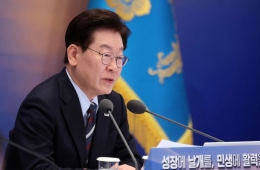
On the 3rd, Park Honggeun, Minister of Planning and Budget, at the Macroeconomic Fiscal and Financial Meeting. Ministry of Planning and Budget.
View original imageAt his first expanded executive meeting since taking office, Minister Park said, "Following the President's address yesterday, the National Assembly’s schedule is intensifying, so close cooperation with the National Assembly is necessary to ensure the swift passage of the supplementary budget." The government has already submitted a supplementary budget plan worth 26.2 trillion won to the National Assembly, aiming to offset the impact of high oil prices. Notably, the plan was prepared in a record-short period of just 17 days.
The Planning and Budget Office regards this supplementary budget as 'CPR' for the real economy and is focusing on ensuring rapid processing by the National Assembly and prompt execution. The supplementary budget bill is expected to go through comprehensive policy inquiries and individual reviews by the Special Committee on Budget and Accounts on April 7 and 8, and then be finalized at the plenary session on April 10. If the bill passes, the Planning and Budget Office intends to carry the same sense of urgency demonstrated in preparing the bill within 17 days into the implementation phase as well.
Minister Park also expressed his commitment to establishing the identity and stability of the Planning and Budget Office. He said, "Despite the unsettled atmosphere caused by a prolonged vacancy in the minister’s position following the government’s organizational restructuring, I am grateful for the dedication of employees who have successfully managed key issues such as responding to the Middle East conflict." He continued, "In particular, I will create a system that properly compensates the efforts of Budget Office staff who worked tirelessly, even to the point of nosebleeds, in preparing the supplementary budget." Park emphasized, "Having been involved in designing the role of the Planning and Budget Office since my time at the National Policy Planning Committee, I will clarify the organization’s position as its inaugural minister with a sense of responsibility for seeing the work through."
Minister Park presented three guiding principles for future work: performance orientation, speed, and enhanced communication. He outlined plans to significantly reduce unnecessary processes and formal tasks, foster a smart work environment utilizing digital and artificial intelligence (AI) technologies, and cultivate an organizational culture that encourages enthusiastic work. He added, "Since departmental boundaries are of little consequence, we must closely coordinate from the perspective of the public and actively communicate with the National Assembly, local governments, and civil society from the policy planning stage to enhance policy completeness."
Additionally, Minister Park called for swift progress and concrete reporting not only on the supplementary budget but also on the Planning and Budget Office’s core policy tasks, such as establishing mid- to long-term national development strategies and strengthening strategic resource allocation.
High Oil Price Relief Payments Could Be Distributed as Early as Late April... Early Execution of the Supplementary Budget Expected to Boost Economic Growth by 0.29 Percentage Points
If the supplementary budget passes the National Assembly, implementation will proceed swiftly, focusing on three main high oil price relief packages: support for the 'oil price ceiling system,' the 'high oil price relief payment,' and the public transportation refund support (K-Pass) program. The 'high oil price relief payment,' which provides up to 600,000 won to the bottom 70% of income earners, is expected to be distributed as early as the end of April, or by early May at the latest. Last year, the first round of livelihood support payments was distributed 17 days after the supplementary budget passed. The relevant task force (TF) plans to ensure that disbursement occurs at a similar speed.
Compensation for oil refiners under the oil price ceiling system will be calculated in two periods: March to June and June to September. After accounting reviews and expert evaluations, the actual settlement is expected to take about two to three months. The public transportation (K-Pass) support program, which temporarily raises the refund rate by up to 30 percentage points for six months, is expected to begin immediately upon the bill’s passage.
Hot Picks Today
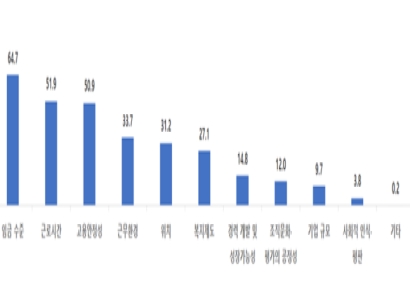 "Please Pay Me at Least 3 Million Won a Month": More Than Half of Young People Today Prioritize "Working Conditions" Over Company Size
- Selling Like Crazy Every Year... 30-Year-Old Hetbahn Takes on a New Challenge: Tastes Better Than "Mom's Home Cooking" [On-Site Report]
- I Thought Only 'Old Guys' Ate It... Young People Are Hooked on This 'Unusual Food' at Risk of Disappearing? [Delicious Stories]
- "Hey, Lady, Teach Your Kids to Behave!" ... 300,000 Won in Cash and a Bodily Injury Claim Demanded Over Child's Door Ding
- Beachgoer Finds 'Plastic' That Turns Out to Be Perfume Ingredient Worth More Than Twice as Much as Gold
According to analysis by the National Assembly Budget Office, the supplementary budget’s effect on economic growth will vary by execution speed, with a gap of nearly 0.1 percentage points. If 50% of the budget is executed early in the second quarter, the growth boost is estimated to reach 0.29 percentage points. However, if implementation is delayed and only 20% is executed in the second quarter, the effect drops sharply to 0.21 percentage points. Accordingly, the Planning and Budget Office will strongly encourage early execution within the second quarter of not only the three main packages but also other projects, including 9.7 trillion won in initiatives for local governments and other quickly executable programs.
© The Asia Business Daily. All rights reserved. Unauthorized AI training and use prohibited.