Paju City Makes All-Out Push to Include Subway Line 3 Extension, GTX-H, KTX Paju Extension, and Tongil-ro Line in National Rail Plan
5th National Railroad Network Plan Nears Finalization
Paju City Eagerly Awaits Inclusion of Four Proposed Lines
Citizens' Promotion Group Submits 100,000 Signatures to Ministry
"The Optimal Solution for Border Area Compensation"
Railwa
As the finalization and announcement of the "5th National Rail Network Construction Plan (2026-2035)"—which will redraw the railway map of South Korea—approaches, Paju City, a key transportation hub in northern Gyeonggi Province, is making a comprehensive all-out effort to attract four major railway lines.
With the Ministry of Land, Infrastructure and Transport launching its final demand survey to determine regional priorities, Paju City maintains that these four lines, which are crucial to the city's future, must be included in the new plan.

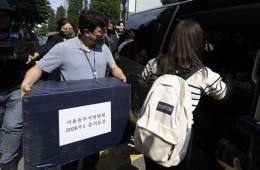
Paju City is launching a comprehensive all-out effort to attract four key railway lines as the finalization and announcement of the "5th National Rail Network Construction Plan (2026-2035)" approaches. Photo by Paju City
View original imageThe sense of urgency is particularly high among residents of northern Gyeonggi's border areas, who, despite being part of the Seoul metropolitan area, still face poor transportation infrastructure. In Paju City, citizen-led campaigns to attract more railway lines have been ongoing for several years.
The "National Rail Network Citizen Promotion Group" (hereafter referred to as the Citizen Promotion Group) was established in July 2024. The group set a goal of having four key projects—the extension of Subway Line 3, the GTX-H Line, the extension of KTX Paju, and the Tongil-ro Line—included in the national rail network plan. The group personally led a large-scale signature campaign and, in just eight months, surpassed its target of 100,000 signatures. The signatures and an official proposal were then submitted to the Minister of Land, Infrastructure and Transport.
A Paju City official emphasized, "It is now time for the nation to repay the special sacrifices made by residents of the border region by expanding the rail network."
Beyond this, the city has been mobilizing all efforts to raise awareness of the need for a Paju railway network and persuade the government through various means, including city-wide resolution rallies, national petitions, and even public performances such as "Railway Concerts."
The Citizen Promotion Group has also presented detailed and well-structured arguments as to why the four railway projects proposed by Paju City must be included in the national rail network construction plan. Railway experts cite key assessment criteria such as: ▲ policy alignment, ▲ connection with future national strategies, ▲ clear resident demand and need, and ▲ project readiness. The Citizen Promotion Group claims that all four Paju railway projects present compelling cases in all these respects.
Policy Alignment: Balanced Development and Real Estate Stabilization... A Solution for Compensating Border Areas
The expansion of the Paju rail network aligns with the current government’s policy direction of improving access to Seoul while dispersing residential functions to the outskirts, thereby stabilizing the housing market in the metropolitan area. Beyond simply expanding transportation infrastructure, it is regarded as a policy tool for both reorganizing spatial structures and promoting balanced regional development.
It is also important to note that Paju, as a typical border area, has faced various overlapping regulations such as military facility protection zones for over 70 years, which have significantly restricted development. When considering the "special sacrifices" and "contributions to national security"—factors that are difficult to measure by cost-benefit (B/C) analysis alone—expanding railway infrastructure serves as a practical form of national compensation and is strongly justified as a balanced development strategy.
Connection with Future National Strategies: Strategic Investment for the Era of Peace
Paju is strategically located as a land bridge connecting Seoul, Kaesong, and Pyongyang, making it a key hub for inter-Korean exchange and cooperation. Looking further ahead, Paju is also ideally positioned to become the center of Northeast Asia’s railway and logistics network, linking the Korean Peninsula with China and, ultimately, Europe.
The argument is that expanding the "Paju rail network" is not merely a response to local demands but a strategic investment to prepare for an era of peace on the Korean Peninsula and to accelerate the realization of a continental railway network.
Clear Resident Demand and Need: Rapid Population Growth and Explosive Potential
Paju City is experiencing rapid growth, with a population of approximately 550,000. As residential and living zones expand, the existing railway infrastructure is insufficient to meet the increasing demand.
Furthermore, if major development projects such as the Peace Economic Special Zone, Free Economic Zone, Dome Stadium, Geumneung Urban Development Project, the development of returned US military bases, and the creation of a medical cluster proceed as planned, Paju’s transportation demand is expected to rise even further.
Project Readiness: Moving Beyond a 20-Year Aspiration to Realization
The Paju railway projects—including the extension of Subway Line 3—have been long-standing aspirations, under discussion for more than 20 years. Over this period, route planning and inter-regional consultations have been thoroughly accumulated. Gyeonggi Province and neighboring Goyang City also recognize the necessity and have established cooperative frameworks. In addition, the issue of securing a depot can be resolved by utilizing existing facilities such as the Munsan depot, providing a realistic alternative.
Paju City and the Citizen Promotion Group reiterated that the national rail network construction plan should not be viewed simply as a list of social infrastructure projects, but rather as a blueprint for South Korea’s spatial structure and growth trajectory for the next 10 years and beyond. They stressed that expanding the Paju rail network is the optimal solution to simultaneously address three key challenges: building the future transportation network of the Korean Peninsula, providing national compensation for the special sacrifices of border areas, and promoting balanced development in the northwestern part of the metropolitan area.
Hot Picks Today
 "When Should I Sell My $30 Million in Shares?"... SpaceX Employees Face a Happy Dilemma
- Nearly 500 Patients in a Day Bring Medical System to Brink of Collapse... Nigeria Faces Cholera Outbreak Emergency
- "Japan Outraged Over Korea's 'Theft'; New Variety Rights Protection Agency to Launch in August"
- "Is She Really a Mother of a 45-Year-Old? The Secret to Youthful Looks of a 70-Year-Old Woman with 2 Million Followers"
- Travelers Risk Being Stranded... Japan on High Alert Amid Worst-Ever Typhoon Scenario
Currently, the total value of projects proposed by local governments nationwide exceeds 600 trillion won. The key question is how many of Paju City’s four lines will be reflected within a limited budget. The final outcome of the 5th National Rail Network Construction Plan, which will design the new framework of South Korea’s transportation network, is expected to emerge as early as July 2026.
© The Asia Business Daily(www.asiae.co.kr). All rights reserved.