Banners, Business Cards, and Campaign Vehicles in Succession... Triple Election Cost Surge from Middle East Crisis
A Domino Effect of Rising Costs from Banners to Campaign Vehicles
Minor Parties and New Political Entrants Face Growing Burdens Without Subsidies
"For small parties like ours, banners and business cards are almost the only means to promote our candidates, so the burden is heavy... But it's not as if we can just skip them because they're expensive."
An official from a minor political party preparing for the upcoming local elections in June sighed at news that the prices of raw materials for promotional items could surge due to instability in the Middle East. He lamented, "Parties without parliamentary seats have difficulty even receiving state subsidies," adding, "The cost for this local election will be much higher than any previous election we've participated in."
Banner Costs to Jump 30%... The 'Middle East War' Spreads to the Election Scene

On the first day of official campaigning for the 8th nationwide local elections on the 19th, promotional banners of candidates are hanging on the streets of Gwanak-gu, Seoul. Photo by The Asia Business Daily
View original imageThe aftermath of the 'Middle East War,' which began with a U.S. airstrike on Iran, is now translating into rising costs in the domestic election scene. The surge in oil prices is affecting everything from the raw materials for banners and business cards to fuel costs for campaign vehicles.
According to a compilation of The Asia Business Daily’s reporting on April 3, the impact of rising raw material prices is particularly pronounced for banners. The price of the fabric used for banners, known as the 'face of the streets,' has increased by nearly 30%. This price hike is directly linked to the surge in naphtha prices—a key raw material for synthetic fibers—caused by soaring oil prices.
An employee at a printing company in Chungmuro, Seoul, shared, "Including the hanging fee, each banner costs about 80,000 won, but prices are expected to rise by another 20,000 to 30,000 won soon." According to the Public Official Election Act, candidates can display up to two banners in each eup, myeon, or dong within their constituency. For example, if a Gwanak-gu district council candidate in Electoral District A (Boramae-dong, Euncheon-dong, Sillim-dong) installs two banners per dong, the total cost is 480,000 won. If the unit price rises by 30,000 won per banner, the total jumps to 660,000 won.
Business cards, the only means of promotion before the official campaign period, have also become a headache. Not just paper, but ink and plastic cases are all seeing raw material price increases. Since most pulp is imported, paper prices are closely tied to both global pulp prices and exchange rates. According to raw material price information from the Ministry of Trade, Industry and Energy, last month the global price for hardwood bleached kraft pulp (SBHK) was $760 per ton, a 2.7% increase in a single month. The owner of a business card printing shop in Yeongdeungpo-gu explained, "Paper prices have risen, but plastic cases that rely on petrochemical products like polypropylene are already in short supply," adding, "Business card prices are expected to rise by more than 5%."
For large-scale elections, renting a 5-ton campaign vehicle for the 13-day campaign period costs about 40 million won—roughly the price of buying a new car. As of April 2, diesel for vehicles in Seoul is priced at 1,940 won per liter. Assuming a truck fuel efficiency of 3 km/l and driving 100 km per day, fuel costs alone will exceed 840,000 won over the 13-day period.
While some banner costs can be saved by reducing the number of replacements or handling installation and removal personally, there is virtually no way to cut down on campaign vehicle fuel expenses. An official from a minor party commented, "The burden of fuel costs will increase significantly," adding, "We're considering using vehicles from cooperative associations to at least reduce rental fees."
Election Expense Limits Remain Unchanged, but What About New Political Entrants?

A preliminary candidate for local council in the June 3 local elections handing out business cards. Photo by Jiye Lee.
View original imageAccording to the National Election Commission, the average "election expense limit" for a single local council candidate in this local election is about 48 million won. For metropolitan assembly members, the limit is 56 million won; for heads of basic local governments, it's 184 million won; and for provincial governors and mayors, the average limit is 1.587 billion won. While the limits are adjusted for inflation each election cycle, the fundamental calculation is based on the population of the electoral district. Market factors like risks from the Middle East are not reflected.
Within these limits, candidates must cover office rent, labor costs, campaign vehicle rentals, printing of promotional materials and banners, advertising, and more. Minor parties and new political entrants, often lacking abundant financial resources, are hit especially hard by the ripple effects of the Middle East conflict. Furthermore, under the Public Official Election Act, if a candidate fails to secure at least 10% of valid votes, future expenses are not reimbursed. This means they must shoulder all election costs without any state subsidy.
Hot Picks Today
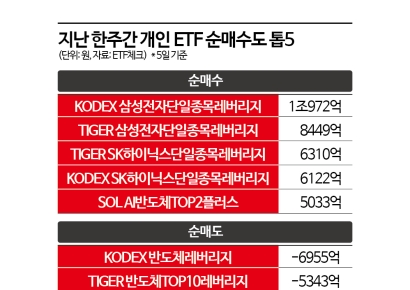 "Let's Double with Samsung and SK hynix": Retail Investors Dump Semiconductor ETFs for Samsung and SK hynix Leverage Products
- "Why Is There No Substitute Holiday for Memorial Day?"... Here's Why
- Apartments Under 1.5 Billion Won Sold Above Appraised Value... Seoul Auction Market Sees Strength in Mid-to-Low Priced Units [Real Estate A to Z]
- "Surge in Buying After Samsung Bonuses: 'Gap Investment Hotspot' Faces Regulation as Prices Soar by 480 Million Won in Six Months [Real Estate AtoZ]"
- "Didn't Go All-In on One Partner"... The Secret of Belugas' Diversified Love Life [Experiment Note]
There are concerns that with the expense limits remaining essentially unchanged while costs continue to rise, the barrier to political participation is becoming distorted. It is pointed out that campaign activities and overall competitiveness may be overly dependent on a candidate’s financial strength. A first-time district council candidate in Seoul expressed concern, saying, "Banners and business cards are the most basic tools to inform people of a candidate’s name, face, and pledges,"and added, "I'm worried that if I cut costs, my campaign will not be as effective."
© The Asia Business Daily(www.asiae.co.kr). All rights reserved.



![[Breaking] President Lee: "Unjust assets of pro-Japanese anti-national collaborators to be investigated and reclaimed"](https://cwcontent.asiae.co.kr/asiaresize/307/2026060610302489855_1780709424.jpg)