[Jihye Choi's Trend 2026] Branding Through Subtraction
Stories Remain Where Immediacy Fades
Empty Shelves, Screenless Cameras
A Brand's Sincerity Lies in the Space in Between

Jihee Choi, Research Fellow at Seoul National University Consumer Trend Analysis Center
View original imageAt a bookstore in Tokyo’s Ginza district, only a single book sits on the shelf. This is Morioka Shoten, a bookstore comprised solely of empty shelves. Customers are spared the “task” of choosing from among hundreds of titles and instead are confronted with a single, focused question: “Will I read this one book today, or not?” By reducing the range of choices to the extreme, the bookstore paradoxically turns the relationship between reader and book into something deeper and more personal. Here, freedom is not “the freedom to choose anything,” but rather “the freedom to decide whether to devote your time entirely to this one book right now.”
There was a time when a brand’s value was measured by “how much, how fast, how conveniently” it could deliver. The more options, the better; everything had to be seamlessly connected; waiting was considered just another word for attrition. Yet, recently, consumers are paradoxically gravitating toward brands that impose their own boundaries and rules. Places where you seal away your phone, reduce your options, or are handed tools that introduce small inconveniences—these are where people now find deeper satisfaction. The crucial question is changing: “Instead of adding convenience, what can be subtracted to return initiative to the consumer?”
The most striking example of this change is the “No Phone” strategy. Simply setting aside the all-powerful smartphone can fundamentally alter the direction of a brand’s space and experience. A prime example is Hush Harbor, a phone-free bar opened by Rock Harper, winner of the American TV show “Hell’s Kitchen,” in Washington, D.C., in September 2025. At Hush Harbor, guests seal their phones in a Yondr pouch and spend the evening without photos, uploads, or messages. In their place are conversation, music, and a cocktail made right before your eyes. Rather than merely restricting freedom, the brand encourages guests to “be fully present in this moment, with these people.” By embracing the discomfort of disconnecting from digital networks, guests paradoxically gain more control over their own evenings.
Similar constraints are emerging in art museums. The Frick Collection in New York strictly prohibits photography in its galleries. Visitors are permitted only to view with their eyes and to engage their thoughts in front of each artwork. By forgoing image reproduction and the “social media-ification” of the gallery, the museum returns control over perception to the visitor, giving them agency over the art and space.
The second strategy is reducing options. While it may appear freeing to have abundant choices, in practice it often breeds fatigue and regret. An overload of menu choices, hundreds of pieces of content, and endless scrolling generate not a sense of liberation but an ongoing worry: “Did I choose wrong?” One product directly addressing this dilemma is “The Boring Phone,” a collaboration between Heineken and the New York convenience store brand Bodega. This “boring” phone, stripped down to only calls and texts—no social media, apps, or notifications—aims to help people focus on others and on music, rather than on endless feeds, at festivals and social gatherings. By stepping back from the latest smartphone tech race and intentionally creating a device that does less, the brand paradoxically enables users to experience more.
The final strategy is the art of waiting. Most of today’s services are designed around “instant confirmation, instant delivery, instant feedback.” Immediacy feels intense but evaporates quickly. Recognizing this limit, some brands are deliberately reintroducing the pause of waiting. Startup Flashback has released a digital camera called “Flashback One,” in which you can’t view photos immediately after shooting. Instead, the images are sent to a dedicated app and become viewable only after 24 hours. It digitally recreates the wait from the era of film cameras. Likewise, German camera brand Leica has intentionally removed the rear LCD screen from its $9,395 digital camera, the M11-D. Photos shot on it must be transferred and viewed later using an app.
The “No Phone” strategy, reducing options, and the art of waiting manifest in different domains but share the same roots. First is an awareness of excessive connectedness. Smartphones and social media are always primed to pull our attention elsewhere, making it hard to be truly “here” no matter where you are. Brands are now required not to multiply points of contact, but to guard the consumer’s attention. Second is the rise in choice fatigue and regret. The old equation of “more choices equals greater satisfaction” has broken down. The more brands pre-select and pare down, the more responsibly and deeply consumers can immerse themselves in what remains. Third is numbness to immediacy. An environment where you can always watch, buy, or change things on the spot is convenient, but it dampens the emotional amplitude. The disappearance of waiting leaves little enduring narrative to recall later.
At the intersection where these three trends converge, the role of brands is being redefined. Brands have long competed to “provide more”: more features, faster speeds, wider selections. But now, at the peak of this additive race, consumer trust is paradoxically migrating toward brands that know the value of subtraction.
Brands that intentionally offer less of what they could do themselves and who deliberately give up some convenience—when this restraint is read as sincerity, as in “we want you to be fully present for this moment,” rather than as mere marketing—it is then that consumers respond most deeply. By practicing subtraction, brands restore room for choice, attention, and emotion to the consumer. The more space brands intentionally leave empty, the longer and more vividly those experiences will resonate for consumers.
Hot Picks Today
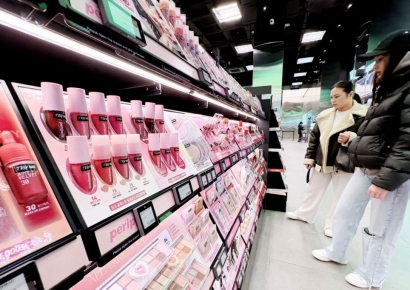 "Is It Really This Big?" World Number One in Sight... K-Beauty’s Surge Captivates Foreign Consumers with Trusted Korean Products
- "44 Billion Embezzled Over 17 Years"... Management Office Employee Suspected of Colluding with Relatives in Apartment Fee Embezzlement
- Choi Minhee and Others Oppose Nominated Supreme Council Appointments... Kim Minseok Says "Appointments Were Unavoidable"
- "We Refuse Male Passengers"... 'Pink Bus' Launches with All-Female Drivers and Passengers
- "You Can't Get One Even If You Want"... 38,000 Won Keycap Limited to One Per Person Sells Out in an Hour
Jihee Choi, Research Fellow at Seoul National University Consumer Trend Analysis Center
© The Asia Business Daily. All rights reserved. Unauthorized AI training and use prohibited.