[Good Morning Market] U.S. Stocks Rebound Sharply on Hopes for End of War... Optimism Rises for Korea Market Too
Trump Signals End to War
Iranian President Echoes Similar Intent
U.S. Stock Markets Rally Across the Board as Oil Prices Ease for the First Time in Four Sessions
![[Good Morning Market] U.S. Stocks Rebound Sharply on Hopes for End of War... Optimism Rises for Korea Market Too](http://www.asiae.co.kr/news/img_view.htm?img=2025012308584010173_1737590320.png)
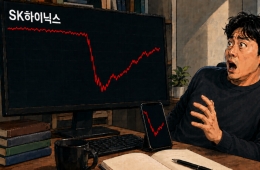
The U.S. and Iran both signaled their willingness to end the war on the same day, prompting a sharp rebound in the U.S. stock market. There is growing optimism that the recent steep declines in the domestic stock market may also come to a halt.
On March 31 (local time), the S&P 500 Index on the New York Stock Exchange closed at 6,528.51, up 2.91% from the previous day. The tech-heavy Nasdaq Composite Index also surged by 3.83% to finish at 21,590.63. The Dow Jones Industrial Average closed at 46,341.33, rising 2.49%.
This is seen as a result of both U.S. President Donald Trump and Iranian President Masoud Pezeshkian mentioning the possibility of ending the war. Earlier, President Trump hinted in a phone interview with the New York Post that negotiations to end the war with Iran were progressing well, suggesting that the U.S. could withdraw from Iran even without reopening the Strait of Hormuz.
President Pezeshkian also stated in a phone call with Antonio Costa, President of the European Council, that "the solution to the war is to stop the attacks," and that "if there is a guarantee of no further attacks, we are ready to end the war." At the same time, President Pezeshkian shifted responsibility by claiming that the U.S. had carried out attacks during negotiations. However, the market interpreted these remarks as a signal that both parties are seeking an exit strategy.
Tom Di Galoma, Managing Director at Mischler Financial, commented, "There is a growing perception that the U.S. is stepping back from its grip on the Strait of Hormuz, and the Trump administration is lowering its hardline stance on Iran."
Amid expectations that geopolitical risks will ease, major U.S. indices all rose sharply. The sharp increase in more than $14 billion in rebalancing funds, as recently mentioned by Goldman Sachs and JP Morgan, is also seen as having contributed to the recovery in the indices. International oil prices also retreated. The West Texas Intermediate (WTI) crude oil contract for May closed at $101.38 per barrel, down 1.46% from the previous session, marking its first decline in four trading days.
U.S. economic data released on this day had little impact on the market. According to the February Job Openings and Labor Turnover Survey (JOLTS) released by the U.S. Department of Labor, the seasonally adjusted number of job openings was 6,882,000, falling short of the market expectation of 6,920,000. The March Consumer Confidence Index came in at 91.8, up 0.8 points from February's 91.0. The market had expected a drop to 88.0, but the actual result was the opposite.
The domestic stock market is also expected to recover the recent losses amid hopes for an end to the war. The MSCI Korea ETF, which moves similarly to the domestic stock market, jumped 5.65%. The MSCI Emerging Markets Index ETF also rose by 3.73%. The Philadelphia Semiconductor Index climbed by 6.24% as well.
Hot Picks Today
![[Test Drive] The Sealion 7 Transformed by a 2 Million Won Upgrade: "Base Model Buyers Might Feel Shortchanged"](https://cwcontent.asiae.co.kr/asiaresize/93/2026080417033869589_1785830618.jpg) [Test Drive] The Sealion 7 Transformed by a 2 Million Won Upgrade: "Base Model Buyers Might Feel Shortchanged"
[Test Drive] The Sealion 7 Transformed by a 2 Million Won Upgrade: "Base Model Buyers Might Feel Shortchanged"
- 'Single-Stock Leveraged ETF Blow' Crippled KOSDAQ in July... Hopes Rise for a Turnaround in August with 11.38% Surge [Weekend Money]
- Chinese Buyers Retreat from Seoul’s Real Estate Market? Foreign Purchases Plummet by 2,000 [Real Estate AtoZ]
- "If We Don't Get Married, Let's Live Together"... Gen Z Chooses 'Co-Buying Homes with Friends' Over Romantic Partners [Gen Z Around the World]
- Kim Seontae Appears Gaunt After Leaving 'Don Seontae'... 3,000 Thumbs Up for Chungju Mayor's "Come Back" Offer
Analysts point to intraday fluctuations in the won-dollar exchange rate as a key factor. Han Jiyoung, a researcher at Kiwoom Securities, noted, "In March, foreign investors made large net sales of around 35 trillion won. In addition to concerns about the war and semiconductor instability, the surge in the exchange rate also played a role." She added, "Whether the surge in the exchange rate stabilizes will be a key point to watch for foreign investor inflows." Han further said, "During the recent sharp correction, the KOSPI has largely absorbed the burden from the early-year rally," and noted, "With the KOSPI's 12-month forward price-to-earnings ratio (PER) dropping to the mid-7 range, it is now entering a valuation bottom."
© The Asia Business Daily. All rights reserved. Unauthorized AI training and use prohibited.





!["Even a 500 Million Won Jump Is Fine, Self-Residence Buyers Flock to Billion-Won Units"...High Winning Bids Continue for Mid- and Low-Priced Reconstruction Complexes [Real Estate AtoZ]](https://cwcontent.asiae.co.kr/asiaresize/307/2026042709001641074_1777248016.jpg)