Senior Secretary Hong Ikpyo Denies "Any Discussion" of July Property Holding Tax Increase Rumors
Will Property Holding Taxes Rise After the Local Elections?
"Not True... A Last Resort"
Hong Ikpyo, Senior Secretary for Political Affairs at the Blue House, stated on March 31 that the government is "not considering" an increase in property holding tax in July.
On MBC's "News Foreign Affairs" program that day, Hong refuted comments made by Jin Sungjoon, lawmaker of the Democratic Party of Korea, regarding a possible tax reform in July, saying, "It is a matter that has neither been discussed nor coordinated at all."

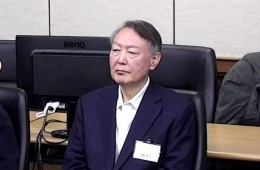
Hong Ikpyo, Senior Secretary for Political Affairs, is giving a briefing on the establishment of the Blue House Emergency Economic Situation Room at the Blue House Press Office on the 25th. March 25, 2026. Photo by Yonhap News
View original imageLawmaker Jin recently mentioned that there is a significant possibility that an increase in real estate holding tax will be included in the July tax reform plan. Hong dismissed this as Jin's personal opinion, noting, "Jin has always held the most active and progressive stance on real estate policy within the Democratic Party."
Regarding the opposition party's claim that the government may raise the holding tax after the local elections, Hong drew a clear line, saying, "That is not true."
Additionally, Hong emphasized, "The position of Deputy Prime Minister and Minister of Economy and Finance Koo Yooncheol is the government's position." On March 29, Deputy Prime Minister Koo stated, "If all policy measures fail, we would have no choice but to consider real estate taxation as a last resort."
However, Hong stressed, "If, after the strengthened capital gains tax on multiple home ownership takes effect on May 9, the number of properties for sale dries up or real estate prices rise, concentrated in single high-value homes, the government will utilize every available measure."
Meanwhile, addressing the energy supply crisis caused by the prolonged situation in the Middle East, Hong stated, "We are on the threshold of moving from the 'caution' level to the 'alert' level among the stages of caution, attention, alert, and serious." He appealed to the public, saying, "Even in the worst-case scenario, the government has already prepared manuals for each crisis level, so the public should remain calm."
Hot Picks Today
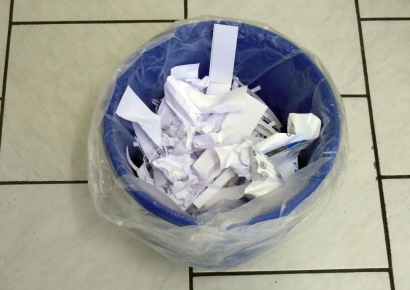 Ballot Box Found in Trash... Peru Holds Runoff Amid 'Ballot Shortage Crisis'
- "Brothers, You've Been Waiting for News?"... Orphanage Library Built Thanks to 'Money Brag' by SK hynix Employee
- Homeplus Posts Over 1 Trillion Won Net Loss in One Year... Receives Disclaimer of Opinion for Second Consecutive Year
- "A Mother's Quick Reflexes Save Child from BRT Bus Rushing onto Sidewalk"
- "Click! Gotta Post on SNS"... 'Small Luxury' for 20s and 30s Cools Down Amid High Inflation
Hong also noted, "Experts share the consensus that even if the war in the Middle East were to end today, it would take at least three to four months for energy supplies such as crude oil to return to normal." He urged, "Since the energy supply crisis could persist for a considerable period even after the war ends, we must prepare a meticulous response manual."
© The Asia Business Daily(www.asiae.co.kr). All rights reserved.


![[Breaking] President Lee Criticizes Election Commission: "No Excuse, Extremely Serious"](https://cwcontent.asiae.co.kr/asiaresize/307/2026060817232560108A.jpg)