High Oil Prices, Rising Exchange Rates, and Fire: Auto Factories Halt Production
Fire at Anjeon Industrial, Key Engine Valve Supplier
Production Halted for Genesis, Kona, and Others
Rising Oil Prices and Exchange Rates Due to Middle East Conflict
Raw Material and Logistics Cost Pressures Intensify
Parts Supply
Domestic automobile production is being disrupted as the rise in oil prices and exchange rates originating from the Middle East, combined with supply chain issues caused by a fire at a key supplier, overlap. The recent surge in logistics costs and raw material prices is further accelerating the increase in cost burdens.
According to the industry as of April 1, due to the aftermath of a fire at Anjeon Industry, a core supplier of engine valves, Hyundai Motor and Kia have either halted or adjusted production of certain models at their major plants, with production line stoppages occurring, thereby materializing supply chain disruptions.

Anjeon Industry is a key supplier of engine valves, providing parts to Hyundai Motor’s Ulsan and Asan plants as well as Kia’s Hwaseong, Gwangmyeong, and Gwangju plants. As of March 30, the models for which production has been halted include all Genesis gasoline models, Palisade gasoline and hybrid, Santa Fe gasoline 2.5, Grandeur gasoline 2.5, Kona HEV and gasoline 2.0, Sonata 2.0 and N Line gasoline 2.5 turbo, and Avante HEV and N. Among these, core models such as Genesis, Palisade, and Santa Fe are expected to resume production in June.
In reality, Hyundai Motor’s Asan plant is expected to see about 280 units worth of line stoppages over two days on April 2 and 3. A line stoppage refers to the situation where the conveyor belt operates empty, indicating that supply disruptions in parts have led to production halts. Industry observers expect that this fire will not remain just a short-term issue, but will spread instability throughout the supply chain.
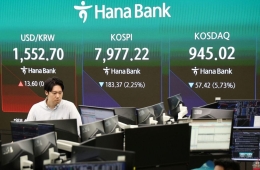
Additionally, the high oil prices and the rise in the won-to-dollar exchange rate due to the Middle East conflict are driving up raw material and logistics costs, increasing the burden on both profitability and supply chain stability across the industry. The automotive industry is particularly sensitive to changes in raw material prices and exchange rates. An increase in oil prices raises the cost of major component materials such as naphtha and synthetic resins, which directly leads to higher production costs.
Moreover, the additional rise in the won-to-dollar exchange rate is further increasing the burden on domestic parts manufacturers, who are highly dependent on imported raw materials. Finished vehicle manufacturers are also finding it difficult to avoid pressure to increase parts prices. The recent sharp rise in logistics costs is another negative factor.
A representative of a parts supplier delivering to Hyundai Motor and Kia stated, "There are no disruptions in parts production until April, but from May onward, the situation is unpredictable," adding, "Among our partner companies, there are reports of difficulties in securing key component materials, so we are closely monitoring the situation."
As a result, production is expected to decline from March onward, when the impact of the Middle East conflict intensified. In January and February of this year, domestic automobile production stood at 638,752 units, down 0.6% from the same period last year. While the decline is not yet severe, these figures reflect the period before the full impact of the Middle East conflict, so the decrease is likely to widen from March onward.
The problem is that these negative factors are unlikely to be resolved in the short term. As tensions in the Middle East show signs of prolongation, concerns about business conditions in the second quarter and beyond are growing. If supply disruptions in naphtha and synthetic resins—key raw materials for automotive parts—become a reality, it may become difficult to produce parts at all from May onward.
Hot Picks Today
 Ballot Box Found in Trash... Peru Holds Runoff Amid 'Ballot Shortage Crisis'
- "Brothers, You've Been Waiting for News?"... Orphanage Library Built Thanks to 'Money Brag' by SK hynix Employee
- "Exactly the Same Early Voting Results in Songdo 1-dong and 2-dong?"... Uproar Over Ballot Counting
- "A Mother's Quick Reflexes Save Child from BRT Bus Rushing onto Sidewalk"
- "Click! Gotta Post on SNS"... 'Small Luxury' for 20s and 30s Cools Down Amid High Inflation
Lee Jaeil, a researcher at Eugene Investment & Securities, said, "An unexpectedly prolonged war could exert pressure on margins in the domestic automotive industry and disrupt supply chains, leading to production setbacks and becoming a medium- to long-term risk factor. Shortages of various plastics, chemical products, and automotive semiconductors may occur, and as shipping routes are diverted, longer shipping times will also pose a short-term pressure on production," he explained.
© The Asia Business Daily(www.asiae.co.kr). All rights reserved.