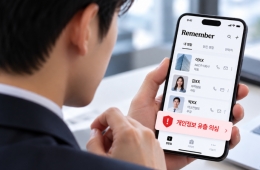
Even the Daejeon Fire Exploited... "No-Show Scams" Rampant Amid Legal Loopholes
From Impersonating Officials to the Daejeon Safety Industry Fire: Scams Are Evolving
Police Delayed Initial Response Due to Investigator's Vacation
"Without Structural Reform, Similar Damages Will Continue to Rise"
The CEO, Mr. A, of a smart livestock equipment company received a suspicious phone call a week ago. The caller introduced himself as a civil servant from Cheonan City Hall and said, "Due to the fire in Daejeon, we need supplies for audit preparedness." He requested Mr. A to make a proxy purchase from a specific company, promising a supply contract. Trusting the civil servant, Mr. A transferred 81 million won in two installments. However, when additional purchase requests kept coming, he called Cheonan City Hall and found out that no such civil servant existed.
Mr. A immediately went to the Suwon Paldal Police Station in Gyeonggi Province. In the meantime, the company specified by the impersonator had already filed for closure. Of course, the contract that was supposed to be signed with Mr. A was also fake. Despite explaining the situation, the police asked him to return three days later due to a faulty audio recording file and the absence of the assigned investigator who was on leave. The bank also refused to freeze the account, citing the lack of an official police document. While the police delayed their initial response, the golden time was lost.

A new type of phishing scam that exploits even national disasters is becoming increasingly rampant. Criminal methods have become more sophisticated, such as luring victims with large orders and then demanding prepayment to a particular company before disappearing. However, there are growing concerns that the administrative and investigative systems to prevent the spread of such damage are still stuck in a reactive approach.
According to the National Police Agency on April 1, there were 6,515 cases of no-show (proxy purchase) scams last year. The total damage amounted to 125.67 billion won. No-show scams are a new type of crime in which scammers demand proxy purchases and then abscond with the money. Initially, the method involved requesting large-scale restaurant reservations or asking for expensive alcoholic beverages to be ordered on their behalf, but recently, impersonation of civil servants and celebrities—and even the exploitation of national disasters—have been added to the tactics.
This year alone, there were 687 cases (22.5 billion won) in January, 332 cases (10.9 billion won) in February, and 521 cases (17 billion won) in March. Considering that the average monthly damage last year was 542 cases and 10.5 billion won, the scale of the damages has actually increased.
The limitations of the legal framework are also being pointed out as a problem. Under the current Act on Compensation for Losses Caused by Telecommunications Financial Fraud, financial institutions can only immediately freeze accounts and begin reimbursement procedures if the case is classified as "telecommunications financial fraud." However, new types of crimes disguised as "goods and services transactions," such as investment recommendation groups, romance scams, and no-show scams, fall outside the scope of voice phishing, which is the category eligible for account freezing by financial institutions.
With these new forms of phishing, even when victims recognize the scam, they cannot immediately freeze the account or begin reimbursement procedures through the bank. The decision can only be made after a police assessment. Thus, the prompt response of the police has become increasingly important, but, as in Mr. A's case, initial action is often delayed.

In order to prevent similar damage, experts are calling for structural improvements across the entire system. One representative measure is to temporarily freeze the account immediately upon receiving a report, to block the outflow of funds at the first stage. There is also a need for an authentication system that can verify the identity of the person in charge when public institutions request orders or purchases, to prevent impersonation crimes.
Oh Yoonseong, Professor of Police Administration at Soonchunhyang University, said, "Phishing crimes are becoming increasingly sophisticated, but the laws and investigative systems to block damage are still lagging behind," adding, "It is urgent to introduce institutional measures through supplementary legislation, such as a preemptive account freeze system that allows temporary freezing of accounts immediately upon report."
Hot Picks Today
 "Why Is the Amount in My Account So Low?"... Why Pension Savings Subscribers Were Surprised
- "Get Paid to Sleep Well" Competition Draws 40,000 in Japan for 19 Million Won Prize
- "Even Lee Jae-yong may not be this big a fan"... Stunned to See Galaxy Phones in a Taxi
- "'You Can't Dismiss It Just Because It's Small': U.S. City of 17,000 Transforms as 4,000 Become Millionaires"
- "I wanted her to feel my passionate love"... Wife collapses after husband's overly tight hug, diagnosed with broken ribs
Meanwhile, the government plans to revise the "Standard Operating Procedure for the Prevention of and Relief from Telecommunications Financial Fraud" in May through consultations between the National Police Agency and the financial sector. If the likelihood of the case being covered by the Act on Compensation for Losses Caused by Telecommunications Financial Fraud is recognized above a certain level, the system will allow accounts to be immediately frozen and funds recovered upon police confirmation.
© The Asia Business Daily. All rights reserved. Unauthorized AI training and use prohibited.



![[Editorial] Semiconductor Labor Exceptions: Don't Hide Behind Social Dialogue](https://cwcontent.asiae.co.kr/asiaresize/307/2026091511203728817_1789438836.jpg)
![[Editorial] Reviving the Special Inspector Is Only the Beginning... Authority and Scope Must Be Expanded](https://cwcontent.asiae.co.kr/asiaresize/307/2026091810333133998_1789695212.jpg)