"Retail Investors Surrender After Heavy Buying?... 9 Trillion Won Floods Into This Sector [Real Investment Techniques]"
Overdraft Balances and Margin Loans Decline Compared to Pre-Invasion Levels
Shift Assets to Short-Term Bonds and MMFs While Taking a Wait-and-See Approach
Surge in High-Risk Households Among Those in Their 20s and 30s... Banks Advise “Focus on B
Amid growing concerns over a prolonged war fueled by the deployment of U.S. ground forces and the involvement of the pro-Iranian Houthi rebels in Yemen, forecasts indicate that the downward trend of the KOSPI index, as well as the upward movement in interest and exchange rates, will likely continue for some time. The momentum of individual investors, who had been supporting the index by absorbing foreign sell-offs throughout March, has also waned. The financial sector advises that, given the ongoing uncertainties of the war, rather than rushing to buy stocks, investors should rebalance their assets, reduce debt, and hold products that can generate stable, short-term returns and boost cash holdings.
One Month into the Middle East Crisis, From FOMO to FOBO in the Korean Stock Market... Accelerating Capital Outflows

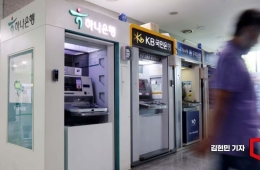
According to the financial sector on April 1, the combined balance of overdraft accounts at the five major commercial banks (KB Kookmin, Shinhan, Hana, Woori, and NH Nonghyup) stood at 40.0345 trillion won as of March 27. This is higher than the level before the outbreak of the Middle East war on February 27 (39.4249 trillion won), but nearly 800 billion won less than at the beginning of the conflict on March 6 (40.8151 trillion won). Demand deposits also plunged sharply from 684.8604 trillion won on February 27 to the 670 trillion won range in mid-March, before climbing back to 688.3629 trillion won on March 27. Margin loans for stock trading increased from 32.669 trillion won on February 27 to 33.4876 trillion won on March 18, before declining slightly to 32.7845 trillion won on March 27.
Initial market expectations that the Middle East war would be a short-term conflict lasting only three to four weeks have proven incorrect. As concerns over a prolonged conflict persist, foreign capital outflows, falling stock prices, and rising interest rates on margin loans have triggered a period of pause. A financial sector insider noted, "Up until the middle of last month, FOMO (fear of missing out) was driving investment, but now a FOBO (fear of better option) sentiment is taking hold, with investors waiting on the sidelines for better prices or options."
Bank PBs Recommend Short-Term Asset Reallocation over Chasing Individual Stocks
!["Retail Investors Surrender After Heavy Buying?... 9 Trillion Won Floods Into This Sector [Real Investment Techniques]"](http://www.asiae.co.kr/news/img_view.htm?img=2026040109463198995_1775004391.png)
Private bankers (PBs) at major banks are advising that, given the sharp short-term volatility in the stock market driven by developments in the Middle East war, investors should reallocate their assets to safer products that can provide returns, rather than clinging to individual stocks.
On the ground, bankers are offering tailored recommendations based on asset size. For wealthy clients with ample liquidity, although there is potential for market gains in the future, the prevailing analysis suggests that it is wise to park surplus funds in relatively safe and liquid products such as split purchases of short-term bonds, money market funds (MMFs), long-short funds, or profit-differentiated funds. One private banker at a major commercial bank commented, "Given the rapidly changing war situation, long-term bonds or oil-related products are not good alternatives," adding, "We mainly recommend so-called 'highly liquid products' such as short-term bonds, MMFs, or global AI semiconductor-related short-term funds."
In fact, the shift in asset flows is clear. As of March 27, the balance of MMFs at banks and securities firms stood at 243.955 trillion won, up by about 9 trillion won in just three weeks from 234.8079 trillion won on March 3. Compared to the start of the year (200.9963 trillion won), this figure has surged by approximately 44 trillion won. MMFs are ultra-short-term bond funds that invest in short-term government bonds or commercial paper (CP), and are attractive for idle funds as they can generate returns even when parked for just one day. Another short-term financial product, comprehensive asset management accounts (CMA), also saw balances rise from 107.0256 trillion won on March 3 to 110.4255 trillion won on March 27, an increase of more than 3 trillion won.
Time for 20s and 30s with Low Assets and Debt Repayment Capacity to Build Financial Strength Rather Than Invest
There is also growing advice that younger investors, who typically have lower asset levels or limited ability to service debt, should take a wait-and-see approach and allocate funds to bank deposits or installment savings with guaranteed interest income. This is because high-risk households, defined as those with a debt service ratio (DSR) exceeding 40% and liabilities exceeding assets, have surged sharply among those in their 20s and 30s. According to the Bank of Korea's March Financial Stability Report, the proportion of high-risk households in their 20s and 30s rose by 12.3 percentage points compared to 2020 (22.6%). Additionally, the financial liabilities held by young high-risk households in March last year were approximately 2.4 times higher than in March 2020. The Bank of Korea warned in its report, "High-risk households are rapidly increasing among young people, which could significantly heighten repayment burdens if asset prices adjust."
Hot Picks Today
![[Exclusive] "We Warned You Four Times"... Another Defect Found in Bathroom at LH Happy Housing Site](https://cwcontent.asiae.co.kr/asiaresize/93/2023073107570824314_1690757828.png) [Exclusive] "We Warned You Four Times"... Another Defect Found in Bathroom at LH Happy Housing Site
[Exclusive] "We Warned You Four Times"... Another Defect Found in Bathroom at LH Happy Housing Site
- "Eerily Similar to the COVID-19 Crisis"... Mysterious Death at Russian Research Institute Revives 'Pandemic Nightmare' [Current Affairs Show]
- "Busan Is in Big Trouble"... One Cockroach Can Produce 350 Nymphs; Establishment Confirmed, Causing Alarm
- "Older people won't be able to tell"... Gang targets convenience stores with counterfeit 50,000-won notes printed on A4 paper
- "I Hate Dog Meat and Skate, Love Pizza" ... "Let's Meet" Frenzy Over Beautiful 41-Year-Old Nurse, But There's a Twist
In response, banks are working hard to attract capital leaving the stock market through parking accounts and high-interest deposit and savings products. As of March 31, Woori Bank's "Woori First Transaction Deposit" offered the highest annual interest rate among the five major commercial banks at up to 3%, with the others operating regular deposit products in the 2.9% to 2.95% range. Regional banks and internet banks have also joined the competition with deposit rates in the 3% range. Special promotional products, such as NH Nonghyup Bank's "NC Dinos Proud Installment Savings," which offers up to 7% annual interest depending on the professional baseball team's performance, are also popular. For parking accounts, SC First Bank in the first-tier banking sector offers products with up to 5% annual interest, while OK Savings Bank in the savings bank sector provides products offering up to 7%, effectively absorbing investment funds waiting on the sidelines.
© The Asia Business Daily. All rights reserved. Unauthorized AI training and use prohibited.






![AI Investment and Inflation Pressures... U.S. Rates to Rise Again? [Weekend Money]](https://cwcontent.asiae.co.kr/asiaresize/307/2026071504434646114_1784058227.jpg)