GTX-A Full Line Opens in June! 'Unjeong I-Park Forest' Soars as a 30-Minute Gateway to Gangnam
The movement patterns of genuine homebuyers in the real estate market are becoming increasingly clear. As the burden of property holding taxes grows due to rising publicly assessed prices, combined with psychological resistance to Seoul's high housing prices, demand is rapidly shifting toward metropolitan outskirts that boast strong transportation networks and development prospects.
This trend is also evident within Seoul itself. In the so-called 'Nodogang' areas—Nowon, Dobong, and Gangbuk—transactions are increasing, especially in complexes where prices are relatively more affordable. This demonstrates that buyers are actively choosing options that reduce their financial burden. Recently, such movement has been expanding beyond Seoul to adjacent areas in Gyeonggi Province.
Throughout this process, a key standard has emerged: whether one can maintain a 'Seoul lifestyle area.' Regions that offer access to Seoul while simultaneously reducing tax and price burdens are now being highlighted as new alternatives.
Paju Unjeong is emerging as a representative area. This location allows for travel from Unjeong Jungang Station on the GTX-A line to Seoul Station in just over 20 minutes, effectively placing it within the Seoul sphere of daily life. In addition, with the full opening of the GTX-A line scheduled for June and growing expectations that service at Samseong Station could begin early next year, anticipation is rising for 30-minute access to Gangnam.
The Paju Medical Cluster project, which will strengthen the area's self-sufficiency, is also picking up pace. The city of Paju plans to complete its search for a general hospital operator by June, aiming to attract a general hospital at the university level. The Paju Medical Cluster is a large-scale undertaking that will include approximately 3,250 residential units, a general hospital, an innovative medical research complex, and a bio-convergence complex. It is expected to become a key hub, attracting medical and research professionals as well as related businesses in the future.
With expansions in transportation networks, job creation, and improvements to living infrastructure happening simultaneously, Paju Unjeong is anticipated to evolve from a simple residential area into a self-sufficient city. This is seen as a positive factor not only in terms of living convenience for residents but also for long-term asset value.
Amidst these market changes, 'Unjeong I-Park Forest' is emerging as a top choice for genuine homebuyers. This residential complex is located in a part of Paju Unjeong New City that directly benefits from transportation and medical infrastructure, and it is being recognized for securing both brand value and residential comfort.

<'Unjeong I-Park Forest' Panoramic View. Photo by IPARK Hyundai Engineering & Construction>
View original imageWith Unjeong Jungang Station on the GTX-A line nearby, accessibility to downtown Seoul is excellent. Once the entire line opens, it will be possible to reach the Gangnam area in about 30 minutes, which is expected to ease the housing burden for office workers commuting to Seoul. Furthermore, the area is well-connected to the entire metropolitan region via Jayu-ro, the Second Metropolitan Ring Expressway, and the planned Pyeongtaek-Paju Expressway, among other routes.
One of the distinct strengths is the ability to enjoy core self-sufficiency features—such as employment and medical environments—right in front of the complex. Since 'Unjeong I-Park Forest' is being developed within the Paju Medical Cluster, which will include a general hospital and a bio-convergence complex, it is poised to secure strong residential demand from high-income professionals in the future. Thanks to its prime location within the cluster, the complex boasts excellent proximity between jobs and homes, a core requirement for stable asset value appreciation moving forward.
Additionally, large-scale landscaping of approximately 64,000 square meters is planned, along with community facilities such as a swimming pool, sauna, and indoor gymnasium befitting a major residential complex. The landscaping will feature a variety of themed zones—including Signature Field, Art Field, Community Field, Nature Field, and Forest Field—offering residents a 'forest life' experience with pleasant green spaces and leisure opportunities throughout the year. Distinctive residential services, such as concierge service and non-face-to-face medical consultations, will also be provided for residents.
As a non-regulated area, the complex offers relatively flexible conditions regarding subscription, loans, and resale. The initial contract requires only a 5% down payment, with the first installment set at a flat rate of 10 million won, minimizing the initial financial burden. Interim loan limits are available up to 60% of the sales price, and the resale restriction period is as short as six months. An assured resale guarantee system allows for resale even before the first interim payment, enabling buyers to plan their finances flexibly.
A real estate industry insider commented, "'Unjeong I-Park Forest' is the optimal choice for buyers seeking to maintain access to Seoul while reducing their housing costs," adding, "With the connection to GTX Samseong Station and visible progress in the development of the Medical Cluster, its future value is being recognized as more than just a residential space."
'Unjeong I-Park Forest' is a large-scale residential complex being developed at 432 Seopae-dong, Paju-si, Gyeonggi-do (A2BL within the Paju Medical Cluster Urban Development Zone), consisting of 25 buildings with 3,250 units in total, ranging from 63 to 197 square meters of exclusive space, and rising from two basement levels to a maximum of 29 floors above ground.
Hot Picks Today
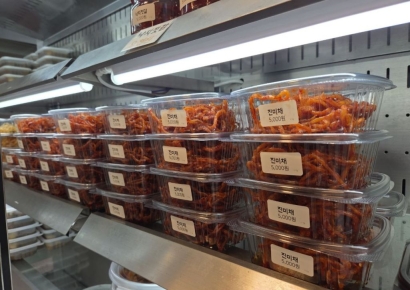 "Auntie, When Will Dried Shredded Squid Return as a Side Dish?"...Once Vanished from Restaurants, Now Making a Comeback
- Monthly Salary Soars 3.7 Times from 8.25 Million Won to 30.59 Million Won... 86 Fair Trade Commission Retirees Join Law Firms Over 10 Years
- "Is It Right to Pay This Much on a Fixed Salary?"... Seoul Ranks 1st or 2nd Globally for Smartphone Fees
- Illegal Webtoon and Video Sites Repeatedly Return Even After Being Blocked Over 200 Times
- Gucci Starts Selling 'Made in China' Shoes Amid Sluggish Sales... What’s Happening with Luxury Sneakers Priced at 1.2–1.3 Million Won?
The model home is operated by advance reservation only, and information on its location and booking can be provided by a professional consultant.
© The Asia Business Daily. All rights reserved. Unauthorized AI training and use prohibited.