'First Day' Shin Hyun-song: "Exchange Rate Is High, but No Major Concerns... Dollar Liquidity Remains Strong"
First Day Heading to Hearing Preparation After Returning to Korea
"The Exchange Rate Level Itself Should Not Be Overemphasized"
"Exchange Rate Is High, but Dollar Liquidity Remains Favorable... External Risks Are Limited"
Shin Hyun-song, nominee for Governor of the Bank of Korea, dismissed market concerns about the recent won-dollar exchange rate hovering above 1,520 won, stating that he is "not greatly concerned." He explained that there is ample dollar liquidity and strong related indicators, so there is no need to directly link the rise in the exchange rate to financial instability. He identified the "Middle East crisis" as the biggest risk currently facing the Korean economy and remarked that the supplementary budget bill being discussed in the National Assembly is a necessary measure.

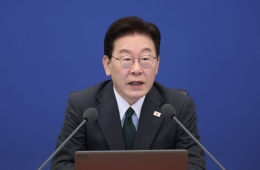
Shin Hyun-song, nominee for Governor of the Bank of Korea, is answering questions from reporters as he arrives at the confirmation hearing preparation office set up at Hanwha Financial Plaza in Jung-gu, Seoul on March 31, 2026. Photo by Dongjoo Yoon
View original imageOn the morning of March 31, Shin made these remarks to reporters as he arrived at the confirmation hearing task force office in Jung-gu, Seoul for his first day of preparation.
Shin cited the "Middle East crisis" as a short-term risk to the economy, saying, "There could be upward pressure on oil prices due to the Middle East crisis, which could in turn cause inflation to rise and present downside risks to the economy." He added, "Both the way events are unfolding and how long they will last are highly uncertain at this time."
However, regarding the won-dollar exchange rate remaining above 1,500 won for four consecutive trading days since the Middle East crisis, he emphasized, "The specific level itself should not be overly emphasized."
Shin assessed, "What matters is the impact of the exchange rate on the financial market and to what extent we can absorb the risk; from that perspective, I do not have major concerns." He continued, "While the exchange rate is high, dollar liquidity indicators are currently strong. With many foreign investors entering the domestic market and making significant investments through FX swaps, dollar liquidity remains abundant." He noted, "Unlike in the past, there is no need to directly connect a rising exchange rate to financial instability at this time. I believe external risks are not significant at present."
He refrained from commenting on the possibility of an interest rate hike later this year. Shin stated, "As the situation in the Middle East remains uncertain, we need to monitor developments. Since the monetary policies of central banks in different countries are interconnected, I will also continue to watch the policy paths of other advanced economies," thus expressing a cautious and reserved stance.
Regarding the National Assembly's discussions on a supplementary budget of 25 trillion won to address the Middle East situation, he said, "Since the Middle East crisis is putting more strain on vulnerable sectors, I believe it is necessary to provide policy support," adding, "Given the scale and design so far, I see the impact on inflationary pressure as being very limited."
He also actively denied market assessments that he is "hawkish" (prefers monetary tightening). Shin said, "I do not think it is appropriate to categorize people as hawks or doves in such a binary way. What is important is to accurately read the overall economic flow, understand how the financial system and the real economy interact at a systemic level, and respond flexibly according to the situation after identifying what effects arise."
Previously, the market had assessed Shin as having a strong hawkish stance based on his past remarks and research emphasizing macroeconomic and financial stability. As a result, the yield on three-year government bonds rose preemptively by 0.207 percentage points, from 3.41% on the 20th to 3.617% on the 23rd, shortly before and after his nomination.
Regarding the "private credit risk" that has recently emerged as a new trigger in the global financial market, Shin assessed that it is not at a concerning level. He stated, "The scale is just under 2 trillion dollars," and added, "The current issue is more about liquidity risk than credit risk, but considering the scale and the share in the system, it does not seem to be a major cause for concern."
Hot Picks Today
 "Two Spend 500,000 Won in a Flash, Yet Wait Two Hours?" ... 'Dreamland' Shunned by Kids and Foreign Tourists
- The Era of Getting 200 Million Won After 30 Years Is Over... A Japanese Bank's "Perpetual Department Head" Who Just Clocked In Cries Out
- Spain Hit by Its Worst Tragedy... Lee Kangin, Moreno and Real Madrid Join Soccer World in Mourning
- They Said, “Make It Your Home for Life” - Then Suddenly Kicked 200 Passengers Off... What Happened to the Around-the-World Cruise?
- "130 Rice Bowls Sold Out in a Day"... 'Unfiltered Face' Adds 8 Million Won to Night Market Sales: China's Bungeunwoo
He also expressed his gratitude and respect for Lee Chang-yong, who has led the Bank of Korea for the past four years, saying, "We have had in-depth discussions about Korea's economic situation at Bank for International Settlements (BIS) meetings," and "I am deeply grateful and respectful for his successful leadership of the organization."
© The Asia Business Daily. All rights reserved. Unauthorized AI training and use prohibited.