[War Extra Budget] Lee Vows Bold Response to Middle East Supply Instability...26.2 Trillion Won Supplementary Budget Finalized
Utilizing 25.2 Trillion Won in Excess Tax Revenue
Supplementary Budget Adjustment Without Issuing Government Bonds
On March 31, President Lee Jaemyung presided over a Cabinet meeting at the Blue House and finalized a supplementary budget bill worth 26.2 trillion won to respond to the high oil price shock.
In his opening remarks at the Cabinet meeting, President Lee addressed the instability in energy supply from the Middle East, stating, "In an emergency, we may utilize an emergency fiscal order as stipulated in the Constitution." He emphasized, "If necessary, we should pursue legislation, and we must make every effort to maximize the use of our authority and capabilities. There is no need to be bound by existing practices."
President Lee also said, "The global economy is on high alert due to the aftermath of the Middle East war," and noted, "The Organization for Economic Cooperation and Development (OECD) has downgraded growth forecasts for major countries this year, warning that oil prices could soar to 135 dollars per barrel in the second quarter." He urged each ministry to "closely monitor trends in their respective sectors on a daily basis and take preemptive and bold measures to address concerns over supply instability."

According to the government’s supplementary budget plan, direct subsidies for oil price damage will be provided to approximately 35.77 million people, or the bottom 70% of income earners, at 100,000 to 600,000 won per person, totaling 4.8 trillion won. A total of 10.1 trillion won will be allocated to ease the energy burden, including 5.1 trillion won for refinery loss compensation and public transportation reimbursement support, as well as 200 billion won in vouchers for energy-vulnerable groups. Park Hongkeun, Minister of Planning and Budget, said, "This supplementary budget is expected to raise this year’s GDP growth rate by 0.2 percentage points."
Most of the 26.5 trillion won supplementary budget will be funded by excess tax revenue. The government will recalculate tax revenue projections based on additional tax income expected this year and use the resulting increase as a source for the supplementary budget. The Ministry of Economy and Finance expects that tax revenue will exceed the budgeted national tax revenue of 390.2 trillion won for this year by about 25.2 trillion won, and has reflected this revised revenue projection in the supplementary budget.
The government estimates that, thanks to a semiconductor industry boom, corporate tax revenue will increase by 14.8 trillion won, while securities transaction tax and the special rural development tax—both related to stock trading—will also rise by 14.8 trillion won. Income tax from employment is expected to bring in an additional 4.8 trillion won. On the other hand, the extension of reduced rates on fuel tax and individual consumption tax for automobiles is projected to lead to decreases in traffic tax (down 3.4 trillion won), education tax (down 800 billion won), and individual consumption tax (down 500 billion won) respectively.
Besides excess tax revenue, the remaining 1 trillion won will be sourced from internal fund resources, and no additional government bonds will be issued to increase national debt. Separately, 1 trillion won of the excess tax revenue will be used to repay government bonds. There is precedent for increasing projected revenue through supplementary budgets without issuing deficit-covering bonds, as seen in 2017 (11.2 trillion won), 2018 (3.9 trillion won), during the pandemic in 2020 (7.6 trillion won), and 2021 (33 trillion won), with all of this funding directly allocated to supplementary budgets.
Hot Picks Today
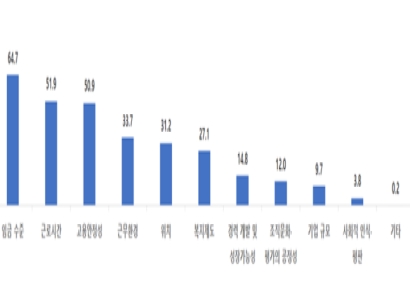 "Please Pay Me at Least 3 Million Won a Month": More Than Half of Young People Today Prioritize "Working Conditions" Over Company Size
- Selling Like Crazy Every Year... 30-Year-Old Hetbahn Takes on a New Challenge: Tastes Better Than "Mom's Home Cooking" [On-Site Report]
- I Thought Only 'Old Guys' Ate It... Young People Are Hooked on This 'Unusual Food' at Risk of Disappearing? [Delicious Stories]
- "Hey, Lady, Teach Your Kids to Behave!" ... 300,000 Won in Cash and a Bodily Injury Claim Demanded Over Child's Door Ding
- Beachgoer Finds 'Plastic' That Turns Out to Be Perfume Ingredient Worth More Than Twice as Much as Gold
The ruling and opposition parties have agreed to process the supplementary budget bill through a policy speech, comprehensive policy inquiries, and sectoral reviews by the Special Committee on Budget and Accounts on April 2, and to put it to a vote at the plenary session on April 10. If the bill passes the National Assembly, this year’s total revenue and expenditure budgets will increase to 700.6 trillion won and 753.1 trillion won, respectively. Accordingly, the managed fiscal deficit is expected to decrease to 107.6 trillion won, and national debt is projected to fall to 1,412.8 trillion won. The national debt-to-GDP ratio will decline by one percentage point from 51.6% to 50.6%. Vice Minister Im Kigeun of the Planning Office explained, "The upward adjustment of the nominal growth rate forecast from 3.9% to 4.9% at the end of last year, reflecting the semiconductor boom, contributed to the reduction in the debt ratio."
© The Asia Business Daily. All rights reserved. Unauthorized AI training and use prohibited.