[Good Morning Market] Surge in Oil Prices and Exchange Rates... KOSPI Expected to Open Lower
![[Good Morning Market] Surge in Oil Prices and Exchange Rates... KOSPI Expected to Open Lower](http://www.asiae.co.kr/news/img_view.htm?img=2025021302054530239_1739379946.jpg)
On March 31, the KOSPI is expected to open lower due to the sharp rise in international oil prices and exchange rates.
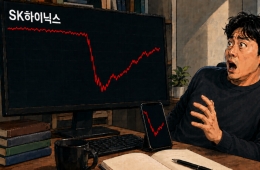
On the previous day at the New York Stock Exchange (NYSE), the Dow Jones Industrial Average closed at 45,216.14, up 49.50 points (0.11%) from the previous session. The S&P 500 Index ended at 6,343.72, down 25.13 points (0.39%), while the Nasdaq Composite Index finished at 20,794.64, falling 153.72 points (0.73%). In particular, concerns over 'TurboQuant' intensified, leading to a sharp decline in semiconductor stocks, with Micron plummeting by 9.8% and the overall sector showing weakness.
The decline on this day is attributed to the surge in international oil prices following the war between the United States and Iran. West Texas Intermediate (WTI) crude oil exceeded the psychological resistance level of $100 per barrel. Despite U.S. President Donald Trump's so-called 'taco' remarks, the market remains skeptical. However, as the possibility of negotiations remains open, experts assess that the likelihood of the worst-case scenario materializing is limited.
Han Ji-young, a researcher at Kiwoom Securities, stated, "Looking at the overall context of the ongoing war, the White House has indicated the possibility of a deal before April 6, and Iran also appears to be keeping negotiation channels open. Considering these factors, it is reasonable to regard the probability of the war risk escalating further and high oil prices persisting over the long term—the worst-case scenario—as relatively low."
On this day, the domestic stock market is expected to open lower due to the aftereffects of geopolitical uncertainties, such as higher oil prices and a sharp increase in the won-dollar exchange rate. In addition, the steep decline in U.S. semiconductor stocks is also expected to act as a short-term burden.
However, from a valuation perspective, there is analysis that the downside rigidity is gradually strengthening. The KOSPI's 12-month forward price-to-earnings ratio (PER) is 7.9 times, down about 23% from 10.2 times at the end of February, before the outbreak of the war. This decrease significantly exceeds the index's decline rate of -15% over the same period.
The researcher noted, "There have only been three instances in KOSPI's history where the forward PER dropped to 8.0 times: the 2008 financial crisis, the 2011 European debt crisis, and the 2018 U.S.-China trade conflict. Excluding black swan-level shocks such as the financial crisis, the 8.0 times level has effectively signaled a market bottom, which is worth noting."
Of course, there are still variables ahead. If the war causes commodity prices to rise, companies' earnings per share (EPS) forecasts may be revised downward, which could weaken valuation attractiveness. This is because, under the PER structure, if earnings prospects decline, valuation rises even if the index remains unchanged.
However, the view is that it is premature to factor in such concerns at this point. The researcher said, "It would be appropriate to wait until after confirming whether the earnings consensus (the average of analysts' forecasts) for leading sectors such as semiconductors is revised downward during the first quarter earnings season before taking action."
Furthermore, applying past cases, there is analysis that the current market remains in an undervalued zone. Considering that the KOSPI earnings consensus was revised down by about 12% during the Russia-Ukraine war in 2022, the current forward PER is only expected to rise from 7.9 times to about 9.0 times. This still falls short of the long-term average PER of 10 times.
Additionally, the significantly increased contribution of the semiconductor sector to profits compared to the past is also positive. This indicates that profit protection has strengthened compared to before, even amid external shocks such as war.
Hot Picks Today
![[Test Drive] The Sealion 7 Transformed by a 2 Million Won Upgrade: "Base Model Buyers Might Feel Shortchanged"](https://cwcontent.asiae.co.kr/asiaresize/93/2026080417033869589_1785830618.jpg) [Test Drive] The Sealion 7 Transformed by a 2 Million Won Upgrade: "Base Model Buyers Might Feel Shortchanged"
[Test Drive] The Sealion 7 Transformed by a 2 Million Won Upgrade: "Base Model Buyers Might Feel Shortchanged"
- 'Single-Stock Leveraged ETF Blow' Crippled KOSDAQ in July... Hopes Rise for a Turnaround in August with 11.38% Surge [Weekend Money]
- Chinese Buyers Retreat from Seoul’s Real Estate Market? Foreign Purchases Plummet by 2,000 [Real Estate AtoZ]
- "If We Don't Get Married, Let's Live Together"... Gen Z Chooses 'Co-Buying Homes with Friends' Over Romantic Partners [Gen Z Around the World]
- Kim Seontae Appears Gaunt After Leaving 'Don Seontae'... 3,000 Thumbs Up for Chungju Mayor's "Come Back" Offer
The researcher advised, "This may be a time when investors are considering reducing their domestic equity allocations due to internal and external risk factors, but considering the above, at minimum, maintaining existing equity allocations remains a realistic alternative."
© The Asia Business Daily. All rights reserved. Unauthorized AI training and use prohibited.



!["Even a 500 Million Won Jump Is Fine, Self-Residence Buyers Flock to Billion-Won Units"...High Winning Bids Continue for Mid- and Low-Priced Reconstruction Complexes [Real Estate AtoZ]](https://cwcontent.asiae.co.kr/asiaresize/307/2026042709001641074_1777248016.jpg)