Red Flags for Banking Soundness Amid Triple Risks from the Middle East... FSS to Conduct 'Stress Tests' on Banks Next Month
High Oil Prices, High Exchange Rates, and High Interest Rates Heighten Uncertainty
Loss-Absorbing Capacity Under Review Amid Concerns Over Soundness
Assessment Period Greatly Shortened for May Completion; Vulnerable Banks Urged to Strengthen
Financial authorities will launch stress tests on the entire banking sector next month. This measure is being taken to evaluate each bank's loss-absorbing capacity in crisis situations, as macroeconomic uncertainty has intensified following a surge in oil prices and the exchange rate amid escalating tensions between the United States and Iran. The authorities plan to require banks that receive unsatisfactory assessments to proactively increase their capital.

According to the financial industry on March 31, the Financial Supervisory Service will conduct a soundness assessment in April for eight banking groups and 20 banks, in preparation for the introduction of a 'stress capital buffer.'
An industry official stated, "With the Middle East crisis destabilizing forecasts for oil prices, exchange rates, interest rates, and growth rates all at once, uncertainty in the financial markets has significantly increased. The supervisory authorities intend to conduct stress tests swiftly, obtain results early, and proactively strengthen the capital adequacy of vulnerable banks."
The Financial Supervisory Service normally conducts this stress test once a year, but as last year's assessment concluded late, this year's test was initially scheduled for a later date. However, due to the escalation of risks originating from the Middle East, the schedule has been moved forward, and the test period—which usually takes four to five months—will be exceptionally shortened to be completed by May. This is aimed at preventing the spread of Middle East-related risks from the real economy to the financial sector at an early stage.
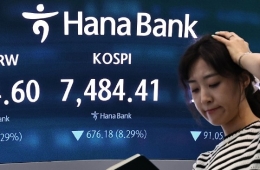
Macroeconomic conditions are rapidly deteriorating. The international price of West Texas Intermediate (WTI) crude oil has surged from the $50-per-barrel range at the beginning of the year to over $100, and the won-dollar exchange rate has surpassed 1,500 won. The surge in oil prices is likely to increase corporate costs and dampen consumer spending, putting downward pressure on the overall economy. The prolonged period of high interest rates is also expected due to heightened inflationary pressures. As a result, the Organisation for Economic Co-operation and Development (OECD) has revised its growth forecast for Korea this year from 2.1% down to 1.7%. This trend weakens the repayment capacity of companies, thereby increasing the potential for financial sector instability.
In this stress test, the Financial Supervisory Service will set the Middle East war and oil prices as key variables. While major macro variables such as interest rates, exchange rates, oil prices, stock indices, and growth rates are usually comprehensively reflected, this year’s test will focus more on geopolitical risks and energy price volatility. In cooperation with the Bank of Korea, multiple scenarios (such as severe or worsening shocks) will be established, and the authorities will closely analyze changes in banks’ loan assets, delinquency rates, default rates, and asset portfolios under scenarios of prolonged war and surging oil prices. In particular, the focus will be on evaluating the decline in capital adequacy ratios due to increased provisioning and the expansion of risk-weighted assets when shocks occur. Banks whose capital ratios fail to meet regulatory standards will be required to strengthen their capital adequacy.
This assessment also serves as a preparatory step for the 'stress capital buffer system,' which the Financial Services Commission is considering introducing within the year. The core of this system is to mandate additional capital accumulation for banks that perform poorly in stress tests. Depending on the decline in the common equity tier 1 ratio, an additional capital requirement of up to 2.5 percentage points may be imposed on top of the current regulatory standard of 8%. The Financial Services Commission had pursued the system’s introduction in 2024, but implementation was postponed several times in consideration of domestic and international political and economic uncertainties, such as the state of emergency, impeachment proceedings, Korea-US tariff negotiations, and high exchange rates. Through this assessment, authorities will be able to estimate banks’ potential additional capital burdens in advance.
Hot Picks Today
 Ballot Box Found in Trash... Peru Holds Runoff Amid 'Ballot Shortage Crisis'
- "Brothers, You've Been Waiting for News?"... Orphanage Library Built Thanks to 'Money Brag' by SK hynix Employee
- Special Prosecutor Seeks 2-Year Prison Term for Yoon in First Trial Over 'False Statements During Presidential Election'
- "A Mother's Quick Reflexes Save Child from BRT Bus Rushing onto Sidewalk"
- "Click! Gotta Post on SNS"... 'Small Luxury' for 20s and 30s Cools Down Amid High Inflation
However, some in the financial industry have expressed concerns that the introduction of the system could increase banks’ capital burdens, potentially limiting their dividend capacity and their ability to provide funding to companies.
© The Asia Business Daily(www.asiae.co.kr). All rights reserved.