[War Supplementary Budget] 5.2 Trillion Won Allocated for Oil Price Cap Support and Naphtha Supply... Plan to Install Solar Panels on 100,000 Apartment Balconies
Oil Price Cap Backed by 4.2 Trillion Won Injection
Total of 1 Trillion Won Allocated for Naphtha Supply Support
This supplementary budget focuses on protecting the livelihoods of ordinary citizens who have been hit hard by soaring oil prices by providing compensation for losses incurred under the oil price ceiling system, supporting naphtha supply, expanding energy transition initiatives, and increasing K-Pass refunds. The total budget allocated for these measures amounts to approximately 6.2 trillion won.
![[War Supplementary Budget] 5.2 Trillion Won Allocated for Oil Price Cap Support and Naphtha Supply... Plan to Install Solar Panels on 100,000 Apartment Balconies](http://www.asiae.co.kr/news/img_view.htm?img=2026033113101297445_1774930213.jpg)
According to the supplementary budget plan, a total of 4.2 trillion won has been allocated as earmarked reserves to implement the "oil price ceiling system." This budget is intended to reimburse refiners for cost losses incurred due to the implementation of the price ceiling. Refiners will apply for compensation for losses on a quarterly basis, which will then be verified by the "Cost Assessment Committee" and reimbursed accordingly. The budget reflects support for approximately six months (two quarters). Since the government is directly controlling prices, it aims to stabilize public utility prices by offsetting the industry's margin losses through the budget.
The government has also allocated a total of 1 trillion won for supporting naphtha, an essential raw material for the petrochemical industry, divided into two parts. First, 500 billion won has been separately allocated to the "Supply Chain Stabilization" program to directly subsidize a portion of naphtha import costs, with support expected to cover a three-month supply. At the same time, an additional 500 billion won has been allocated as earmarked reserves for naphtha supply, serving as an emergency fund in case the situation in the Middle East prolongs beyond three months. As a result, the government has secured the financial resources to support naphtha supply for approximately six months.
Separately, 200 billion won will be invested to secure an additional 1.3 million barrels of oil reserves in order to reach the 2030 target reserve volume (102.6 million barrels) ahead of schedule. The budget also meticulously includes funds to strengthen resource security, such as 3.9 billion won for diversifying urea import sources and 8.1 billion won for expanding rare earth recycling facilities. In addition, 300 billion won has been set aside in reserves to cover shortages in oil and foreign currency budgets resulting from high oil prices and high exchange rates.
Furthermore, 500 billion won will be invested in the "energy new industry transition" sector to increase energy self-sufficiency and reduce household burdens in the long term. The scale of support for renewable energy generation will be expanded from the previous 900 billion won to 1.1 trillion won, and an additional 400 billion won in financial support along with a 16 billion won budget will be provided to expand the number of resident-participation "Sunlight Income Villages" from 150 to 700. In particular, the government plans to accelerate the energy transition in daily life by supplying small-scale solar panels to the balconies of newly built apartments (100,000 households, 25 billion won).
Hot Picks Today
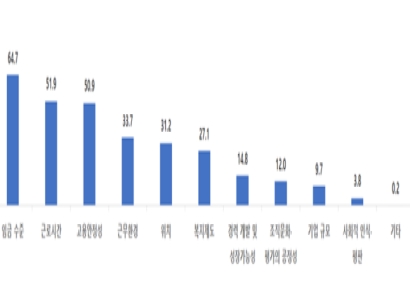 "Please Pay Me at Least 3 Million Won a Month": More Than Half of Young People Today Prioritize "Working Conditions" Over Company Size
- Selling Like Crazy Every Year... 30-Year-Old Hetbahn Takes on a New Challenge: Tastes Better Than "Mom's Home Cooking" [On-Site Report]
- I Thought Only 'Old Guys' Ate It... Young People Are Hooked on This 'Unusual Food' at Risk of Disappearing? [Delicious Stories]
- "Hey, Lady, Teach Your Kids to Behave!" ... 300,000 Won in Cash and a Bodily Injury Claim Demanded Over Child's Door Ding
- Beachgoer Finds 'Plastic' That Turns Out to Be Perfume Ingredient Worth More Than Twice as Much as Gold
The policy budget for revitalizing public transportation has also been increased. The refund rate for "K-Pass," a public transportation refund service, will be temporarily increased by up to 30 percentage points for six months, with an additional 87.7 billion won allocated for this purpose. As a result, low-income individuals can receive up to 83% of their transportation expenses refunded, while the general public can receive up to 30%. Approximately 650,000 new users are expected to benefit from this program.
© The Asia Business Daily. All rights reserved. Unauthorized AI training and use prohibited.