[War Supplementary Budget] Up to 600,000 Won in Local Currency for Bottom 70% Income Bracket... 4.8 Trillion Won Allocated
Support Amount Varies by Residence and Income
Initial Payments to Vulnerable Groups...As Early As Late April
A differentiated high oil price relief payment of 100,000 to 600,000 won per person will be provided to individuals in the bottom 70% income bracket. Middle-class residents in the Seoul metropolitan area will receive 100,000 won. The amount increases for those living in non-metropolitan regions and for more vulnerable groups. The payments are expected to begin as early as the end of April, or by early May at the latest. Like last year’s livelihood recovery consumption coupons, the high oil price relief payment can only be used at designated local currency merchant locations to help revitalize regional economies.

Gift fruit boxes are displayed at Gwangjang Market in Jongno-gu, Seoul. Photo by Jinhyung Kang aymsdream@
View original imageOn March 31, the Cabinet meeting approved the “2026 Supplementary Budget Bill” containing these measures. The high oil price relief payment is designed to alleviate the burden on working-class citizens suffering from high oil and consumer prices since the Middle East war, with the government allocating a total budget of 4.8 trillion won.
Park Honggeun, Minister of Planning and Budget, explained, “We will provide 100,000 won per person to those in the bottom 70% income bracket, with up to an additional 500,000 won depending on income level and region.” The payment will cover 35.77 million people.
The amount of support varies by income and place of residence. With the exception of those in the second-lowest income tier, single-parent households, and basic livelihood recipients, individuals in the bottom 70% income bracket will receive 100,000 won if they live in the Seoul metropolitan area and 150,000 won if they reside outside the metropolitan area. Residents of population decline preferential areas will receive 200,000 won, while those in special population decline areas will be granted 250,000 won. Special population decline areas refer to a subset of 89 population decline regions that meet all criteria, such as being designated as a balanced development extinction area or an underdeveloped area per the preliminary feasibility survey.
For those in the second-lowest income tier or single-parent households, the payment is 450,000 won if living in the metropolitan area and 500,000 won outside it. Basic livelihood recipients will receive 550,000 won if residing in the metropolitan area and 600,000 won if living outside the metropolitan area.
Cho Yongbeom, Director General for Budget at the Ministry of Planning and Budget, stated, “Price increases and economic slowdowns due to the Middle East war are affecting not only low-income groups but also the middle class. However, high-income earners are relatively less affected, so they have been excluded from the high oil price relief payment.”
![[War Supplementary Budget] Up to 600,000 Won in Local Currency for Bottom 70% Income Bracket... 4.8 Trillion Won Allocated](http://www.asiae.co.kr/news/img_view.htm?img=2026033111243397385_1774923873.png)
The timing of the payments will also differ by income group. The government will first provide the initial high oil price relief payments to basic livelihood recipients and second-lowest income tier households for whom administrative data is already available. Once the bottom 70% of the income bracket is determined through health insurance premiums and other data, a second round of payments will be made.
The first round of payments is expected to be distributed as early as the end of April or by early May. Last year, the livelihood recovery consumption coupons were distributed just 17 days after the supplementary budget passed the National Assembly. The ruling party is calling for the supplementary budget bill to be processed at the National Assembly’s plenary session on April 9.
Director Cho said, “Once the supplementary budget bill is submitted to the National Assembly and a task force is formed among relevant ministries, the specific timing and procedures will be detailed. We will strive to ensure payments are made swiftly, in line with last year’s timeline following parliamentary approval.”
The high oil price relief payments will not be made in cash, but rather through local currency or credit, debit, or prepaid cards. This is to ensure that the payments are spent rather than saved. Like last year’s livelihood recovery consumption coupons, usage is limited to local currency-affiliated merchants in the recipient’s area of residence to help boost the local economy.
In addition, among basic livelihood recipients, 200,000 households in climate-vulnerable groups—including the elderly, people with disabilities, and pregnant women—will receive an additional 50,000 won energy voucher for use with kerosene and LPG.
For facility-based farmers and fishermen struggling with high oil prices, 54.6 billion won will be provided to partially subsidize the increase in tax-exempt fuel prices. Support also includes 4.2 billion won for purchases of mineral fertilizers and 65 billion won in policy funds for livestock farmers to buy feed.
Hot Picks Today
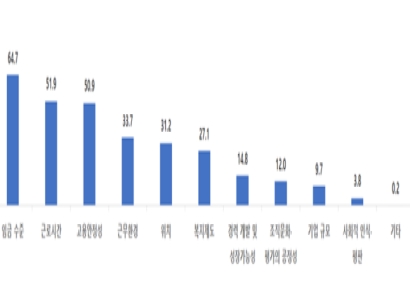 "Please Pay Me at Least 3 Million Won a Month": More Than Half of Young People Today Prioritize "Working Conditions" Over Company Size
- Selling Like Crazy Every Year... 30-Year-Old Hetbahn Takes on a New Challenge: Tastes Better Than "Mom's Home Cooking" [On-Site Report]
- I Thought Only 'Old Guys' Ate It... Young People Are Hooked on This 'Unusual Food' at Risk of Disappearing? [Delicious Stories]
- "Hey, Lady, Teach Your Kids to Behave!" ... 300,000 Won in Cash and a Bodily Injury Claim Demanded Over Child's Door Ding
- Beachgoer Finds 'Plastic' That Turns Out to Be Perfume Ingredient Worth More Than Twice as Much as Gold
Additionally, the government plans to ease the burden on small shipping companies by including marine diesel in the price ceiling system and allocating 10.6 billion won to cover part of the fuel price increase above the standard price.
© The Asia Business Daily. All rights reserved. Unauthorized AI training and use prohibited.