Party and Government Review Export Restrictions on Synthetic Resins... Mobilizing National Capabilities Amid Middle East Emergency (Comprehensive)
Reduction of Insurance Premiums and Card Fees, Review of Price Linkage System for Suppliers
Initiatives to Lower Card Fees at Gas Stations and More
Amid concerns over an economic crisis triggered by the Middle East war, the Democratic Party of Korea and the government have decided to consider measures such as export restrictions on products like synthetic resins due to concerns about supply and demand for naphtha and other materials. The party and the government will also implement stabilization measures for financial markets, including bonds and foreign exchange. Additional plans include reducing card fees to ease the burden on gas stations, lowering insurance premiums in line with the implementation of the five-day car rotation system, and conducting an ex officio investigation into supply price linkage systems for SMEs in response to price increases in plastic and other materials.
On March 30, the first meeting of the "Special Committee on Economic Response to the Middle East War" was held at the National Assembly. Previously, the Democratic Party had formed a "Task Force on Economic Response to the Middle East War," but as the situation has become prolonged and more severe, it was urgently upgraded to a special committee.
The party and the government have first decided to monitor the supply of petroleum products, including naphtha. Assemblyman Ahn Dogeol of the Democratic Party said, "There is a significant shortage of synthetic resins, which is causing problems. The Ministry of Trade, Industry and Energy has launched an in-depth investigation into the supply situation, and stabilization measures are being taken for naphtha. Similar stabilization measures will be considered for other materials as well."

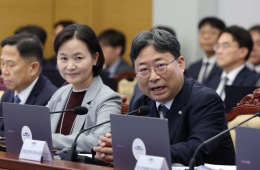
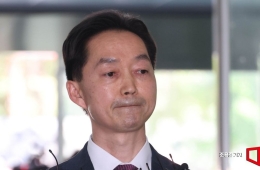
Han Jung-ae, Chair of the Policy Committee of the Democratic Party of Korea, is speaking at the Special Committee on Economic Response to the Middle East Crisis held at the National Assembly Members' Office Building on March 30, 2026. Photo by Kim Hyun-min
View original imageRegarding the value chain from naphtha to ethylene to plastics, the party and the government will also check the supply situation of synthetic resin products. Assemblyman Kim Namgeun of the Democratic Party stated, "While the government has imposed export restrictions on naphtha, it is unclear how much synthetic resin is being supplied or exported, so an accurate assessment is needed. We discussed the principle of prioritizing allocation to essential components, such as medical fluid containers, in the event of a shortage of plastic containers." Export restrictions on synthetic resins and other products will also be discussed.
Yoo Dongsoo, the chair of the special committee and a Democratic Party lawmaker, said, "There are some distribution disruptions related to petrochemical products, and cases of hoarding have also been reported. We will push for a strong ban on these practices. If the crisis is prolonged, we will prioritize the release of strategic oil reserves or expansion of supply chains for petrochemical products, ensuring that essential goods are first allocated to healthcare and key industries."
In response to rising prices of plastics and other materials, the committee will actively address the issue of supply price linkage for SMEs. Assemblyman Ahn said, "Recently, the price of synthetic resins has increased, but the price of finished products has not reflected this rise. Since the supply price linkage system is not functioning, the Ministry of SMEs and Startups and others will conduct a proactive ex officio investigation and issue corrective orders if problems are found. Measures will also be taken against unfair practices in the petrochemical and plastic industrial ecosystem." The special committee members will visit places such as Yeosu to inspect the naphtha supply situation.
Stabilization of the financial markets will also be pursued. In response to the recent rise in bond yields, the party and the government introduced bond buyback stabilization efforts. Assemblyman Ahn explained, "From next month, Korea will be included in the global bond index, which is expected to bring in about 4 trillion to 6 trillion won annually. We believe this will help stabilize bond yields, foreign currency supply, and exchange rates." Regarding foreign exchange market stabilization, Assemblyman Ahn said, "The party and the government will work to ensure the early passage of the three foreign exchange stabilization bills in the National Assembly."
Additionally, Assemblyman Ahn introduced liquidity supply measures, stating, "To address liquidity issues for SMEs and others, we have expanded the scale of policy finance by 4 trillion won, increasing it from 20.3 trillion won to 24 trillion won."
To ease the burden on gas stations and others, the party and the government will seek cooperation from card companies regarding the reduction of card fees. They also discussed lowering auto insurance premiums in line with reduced traffic due to the implementation of the five-day car rotation system. Assemblyman Ahn stated, "If the five-day car rotation system reduces traffic, efforts from the insurance industry to lower premiums will be necessary."

Hanjungae, the Chair of the Policy Committee of the Democratic Party of Korea, is speaking at the Special Committee on Economic Response to the Middle East Situation held at the National Assembly Members' Office Building on March 30, 2026. Photo by Kim Hyunmin
View original imageMeanwhile, in his opening remarks at the special committee, Assemblyman Yoo said, "We will carefully and thoroughly monitor to prevent high oil prices from triggering a chain reaction of inflation, to make sure companies trading with the Middle East do not collapse due to a liquidity crunch, and to prevent financial market anxiety from spreading to the real economy. The party, government, and the Blue House will do their utmost with a do-or-die determination to overcome the situation in the Middle East."
Hot Picks Today
 "Why Work a White-Collar Job? This Chinese Occupation Now Earns Over 5 Million Won a Month"
- "Give Us Our Money Back": 76 Billion Won in Refunds in Two Weeks... Starbucks Hit with 18 Billion Won Loss
- "Stuffed Himself with Seafood and Faked Emergency"... The Fate of a Man in His 20s Who Tried to Dine and Dash for $63
- "Will Real Part-Timers All Lose Their Jobs?"... Robot Sales Assistant Sweeps Up KRW 450 Million in Pots with Finger Hearts
Han Jungae, Chair of the Policy Committee of the Democratic Party of Korea, said, "According to the International Energy Agency (IEA), this energy crisis is on par with the two oil shocks of the 1970s combined with the gas supply shock caused by Russia's invasion of Ukraine in 2022. This war has caused serious damage to at least 40 energy assets across nine Middle Eastern countries, and the world economy is facing a very significant threat." She added, "There is a need to mobilize national response capabilities to overcome this crisis originating from the Middle East."
© The Asia Business Daily. All rights reserved. Unauthorized AI training and use prohibited.