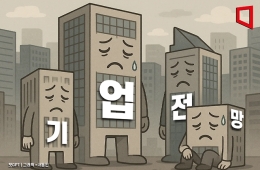
[Find Alternative Supply Chains] Blue House Shifts from Expanding Supply to Reducing Demand as Middle East Crisis Drags On
At the Outset, President Lee Stressed Financial and Price Stability
Challenges in Securing Alternative Imports and Supply Measures
"Please Save Energy," President Lee Urges Demand-Side Efforts
Blue House Leads by Example... Initiates Its Own Energy-Saving Measures
As the Middle East crisis shows signs of prolongation, the Blue House and the government have introduced new energy-saving measures. Due to soaring energy prices, it has become increasingly difficult to secure alternative supplies. President Lee Jaemyung, who in the early days of the conflict emphasized public welfare and energy supply management, has recently begun appealing to the public to save energy.
According to the Blue House and government on March 30, President Lee checked the status of alternative import sources for key items such as crude oil, naphtha, and urea solution at an emergency economic review meeting held privately on March 26. President Lee reportedly told attendees that there were too many issues caused by crude oil shortages to check them all and instructed them to prioritize the most critical items. He also emphasized the need to take measures so that the public would not become anxious.
The main challenge lies in securing alternative supplies, which has been difficult. Competition with other countries to secure energy and the resulting price increases have made it hard to introduce large-scale alternative supplies. While the government could accept financial losses and inject fiscal resources to procure them, if overall usage is not reduced, unexpected disruptions could occur in both industry and daily life for citizens.
![[Find Alternative Supply Chains] Blue House Shifts from Expanding Supply to Reducing Demand as Middle East Crisis Drags On](http://www.asiae.co.kr/news/img_view.htm?img=2026033011134995565_1774836828.jpg)
In response to these concerns, President Lee's statements have also shifted. At the beginning of the war, President Lee focused on managing financial markets, prices, and supply measures. At a temporary cabinet meeting on March 5, he instructed officials to "respond proactively to increased volatility in financial markets such as stocks and exchange rates" and to "quickly review plans to diversify import sources." At the cabinet meeting on March 10, he stated, "The most urgent task is price stability." He did not mention demand-side measures at the time.
However, as the situation in the Middle East has become protracted, he has begun appealing for energy conservation. At the emergency economic review meeting on March 26, President Lee said, "If we continue to maintain electricity rates at their current levels, the scale of losses—meaning the size of the deficit—could increase dramatically," adding, "Fiscal losses for the government are a concern, and the problem of excessive energy waste could arise. Therefore, I ask all citizens to make a special effort to reduce electricity use."
At the cabinet meeting on March 24, President Lee also requested the public's cooperation, calling for "countermeasures that assume even the worst-case scenario." He stated, "This crisis, too, can be overcome if all our people unite in heart and spirit," and encouraged, "Public institutions should lead by example with measures such as the alternate-day driving system, and I ask all citizens to participate in the energy-saving movement by using public transportation and practicing energy conservation in daily life."
Hot Picks Today
!["Sold During the Plunge, Now What?"... Samsung Electronics at 5.5 Million Won, SK hynix at 4.2 Million Won—Time to Buy, Not Sell? [Weekend Money]](https://cwcontent.asiae.co.kr/asiaresize/93/2026071415403645750_1784011236.jpg) "Sold During the Plunge, Now What?"... Samsung Electronics at 5.5 Million Won, SK hynix at 4.2 Million Won—Time to Buy, Not Sell? [Weekend Money]
"Sold During the Plunge, Now What?"... Samsung Electronics at 5.5 Million Won, SK hynix at 4.2 Million Won—Time to Buy, Not Sell? [Weekend Money]
- "Lost Half My Weight": SNS Frenzy Over Chinese Drink That Claims 4kg Loss in Two Days
- "I Spent 1 Million Won in One Night" Deep Regrets... The Heavy Burden of Today’s Housewarming Parties
- I Trusted Only My Husband... Former World No. 1 Tennis Star Sanchez Vicario Says "Lost $60 Million, Now Repaying Debts"
- "They Called It an Expensive Hobby... But Even Watching Golf Burns 1,000 Calories: The Longevity Sport"
In response, the Blue House has taken its own measures, such as restricting the operation of low-floor elevators in Yeomin Buildings 2 and 3, and reducing electricity consumption by improving the efficiency of office equipment, lighting, and heating and cooling systems. For heating and cooling, the temperature in April will be set at 18 degrees Celsius, which is 2 degrees lower than the standard 20 degrees, and from May, cooling will be set at 28 degrees, 2 degrees higher than the standard. It was also reported that some corridor lights and outdoor lamps on the Blue House grounds have been turned off.
© The Asia Business Daily. All rights reserved. Unauthorized AI training and use prohibited.