"I Thought Something Was Wrong with My Account": 686 Trillion Won Lost... No End in Sight for the Middle East War
Prolonged U.S.-Iran War Concerns Drive Continued Stock Market Decline
Surge in Foreign Selling of Samsung Electronics, SK hynix, and Other Major Stocks

In one month, the KOSPI dropped by 12.9%, showing the largest decline among major global stock markets. Getty Images
View original imageIt has been a month since the outbreak of war between the United States and Iran, yet there is still no sign of an end to the conflict, resulting in a loss of 686 trillion won in market capitalization from the Korean stock market. Over the past month, the KOSPI index declined by 12.9%, marking the largest drop among major global stock markets. The share price of Samsung Electronics, the leading stock on the KOSPI, fell by 18.7%, and the foreign ownership ratio also hit its lowest level in 12 years and six months.
Continued Stock Market Downturn Amidst Prolonged U.S.-Iran War Concerns
On March 30, the KOSPI opened at 5,181.80, down 4.73% from the previous trading day, and as of 9:45 a.m., it was trading at 5,221.50, a decrease of 4.0%. At the same time, the KOSDAQ was trading at 1,102.11, down 3.45% compared to the previous trading day. The won-dollar exchange rate opened at 1,513.4 won, up 4.5 won from the previous session, and was hovering in the 1,512 won range.

Concerns over the prolonged Middle East war have led to continued declines in global stock markets, impacting the Korean market as well. Last Friday, the Dow Jones Industrial Average dropped by 1.73%, and the Nasdaq index fell by 2.15%. Reports that the United States might deploy ground troops to Iran, and that missile exchanges between Israel and Iran are ongoing, have contributed to the market downturn.
From March 2, when the Korean stock market first began to feel the impact of the Middle East war, to March 27, the KOSPI dropped by 12.9% and the KOSDAQ fell by 4.3%. The KOSPI's drop was the largest among major global stock markets. During the same period, the U.S. Nasdaq and Dow indices fell by 5.6% and 6.2%, respectively. The Hong Kong Hang Seng Index declined by 6.7%, Japan's TOPIX by 7.5%, and the UK's FTSE 100 by 8.6%.
As the indices plummeted, 686 trillion won in market capitalization evaporated from the Korean stock market. On February 27, just before the outbreak of war, the combined market capitalization of the KOSPI and KOSDAQ stood at 5,801 trillion won, but by March 27, it had fallen to 5,115 trillion won.

On March 30, the Seoul Jung-gu Hana Bank dealing room's electronic board displayed the status of the domestic stock market as the KOSPI index plunged over 4% in early trading due to a sharp rise in international oil prices amid uncertainties surrounding the Middle East war, falling below the 5200 level. On the same day, the won-dollar exchange rate started trading at 1513.4 won, up 4.5 won compared to the previous trading day. Photo by Kang Jinhyung, 2026.3.30
View original imageNearly 700 Trillion Won in Market Capitalization Lost in One Month
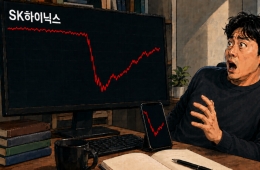
The share prices of major semiconductor stocks such as Samsung Electronics and SK hynix experienced steep declines. This month, Samsung Electronics dropped by 18.7%, while SK hynix fell by 16.8%. As foreign investors continued to sell, the foreign ownership ratio of Samsung Electronics fell from 50.3% before the war to 48.7% now, marking the lowest level since October 1, 2013—about 12 years and six months ago.
Hot Picks Today
![[Test Drive] The Sealion 7 Transformed by a 2 Million Won Upgrade: "Base Model Buyers Might Feel Shortchanged"](https://cwcontent.asiae.co.kr/asiaresize/93/2026080417033869589_1785830618.jpg) [Test Drive] The Sealion 7 Transformed by a 2 Million Won Upgrade: "Base Model Buyers Might Feel Shortchanged"
[Test Drive] The Sealion 7 Transformed by a 2 Million Won Upgrade: "Base Model Buyers Might Feel Shortchanged"
- 'Single-Stock Leveraged ETF Blow' Crippled KOSDAQ in July... Hopes Rise for a Turnaround in August with 11.38% Surge [Weekend Money]
- Chinese Buyers Retreat from Seoul’s Real Estate Market? Foreign Purchases Plummet by 2,000 [Real Estate AtoZ]
- "If We Don't Get Married, Let's Live Together"... Gen Z Chooses 'Co-Buying Homes with Friends' Over Romantic Partners [Gen Z Around the World]
- Kim Seontae Appears Gaunt After Leaving 'Don Seontae'... 3,000 Thumbs Up for Chungju Mayor's "Come Back" Offer
In just this month, foreign investors made net sales of Samsung Electronics shares worth 15.4962 trillion won. Considering that the total net selling amount by foreigners on the KOSPI during the same period was 30.263 trillion won, nearly half of the total net foreign sales were accounted for by Samsung Electronics alone.

With mounting concerns over the prolonged Middle East war, there are growing expectations that the adjustment in the Korean stock market may continue for some time. Lee Kyungmin, investment strategy researcher at Daishin Securities, emphasized, "We cannot rule out the possibility of increased market volatility due to the U.S.-Iran conflict and military clashes, which are lasting longer than expected." He added, "However, if Middle East war risks subside, the underlying earnings momentum that has been overshadowed could come to the forefront, and the stock market could rebound."
© The Asia Business Daily. All rights reserved. Unauthorized AI training and use prohibited.




!["Even a 500 Million Won Jump Is Fine, Self-Residence Buyers Flock to Billion-Won Units"...High Winning Bids Continue for Mid- and Low-Priced Reconstruction Complexes [Real Estate AtoZ]](https://cwcontent.asiae.co.kr/asiaresize/307/2026042709001641074_1777248016.jpg)