Koo Yoon-chul: "Final Decision on Raising Holding Taxes, Decline in Three Gangnam Districts Is a Positive Signal"
If Oil Prices Reach $120–$130, Vehicle Rotation System May Be Extended to the Private Sector
Restructuring of Tax Expenditures to Be Announced in July Tax Law Revision

Koo Yoon-chul, Deputy Prime Minister for Economy and Minister of Economy and Finance.
View original imageOn March 29, Koo Yoon-chul, Deputy Prime Minister for Economy and Minister of Economy and Finance, commented on the potential increase in property holding taxes, stating, "If stabilization cannot be achieved even after implementing various policies such as supply expansion and financial innovation, we will make a final decision." He also mentioned that if the international oil price rises to 120 to 130 dollars per barrel due to the Middle East crisis, the alternate day driving system for vehicles could be extended to the private sector.
Appearing on KBS's 'Sunday Diagnosis' program, Deputy Prime Minister Koo was asked whether the proposal to increase property holding taxes for real estate market stabilization would be included in the July tax reform plan. He responded, "We are still in the observation stage and nothing has been decided yet."
Regarding President Lee Jaemyung's sharing of an article on social networking services (SNS) comparing property holding taxes in major cities of advanced countries, Koo explained, "The intention is that supply expansion and financial innovation should come first, and if various measures still do not work, the administration could ultimately review the real estate tax system. That is how I understand the president's comment." He added, "At this point, we are still listening to various opinions and monitoring the market."
When asked whether the government believes the real estate market is undergoing a normalization process as intended, Koo said, "While areas such as the three Gangnam districts and Yongsan, which had seen significant price increases, are declining, I cannot say that there is an overall downward stabilization, but I do think it is a positive signal." He further explained, "Our goal is not a rapid decline, but rather to create an environment where other regions can also stabilize."
Regarding tax expenditures, including exemptions and reductions mentioned directly by the president, Koo stated, "We will proceed with restructuring tax expenditures." He said, "We will abolish chronic tax expenditures as a matter of principle. We will conduct a comprehensive survey and prepare a proposal for the July tax law revision to submit to the regular session of the National Assembly."
Commenting on the won-dollar exchange rate surpassing the 1,500 won level, Koo remarked, "Once external shocks stabilize, the exchange rate will return to normal." He emphasized, "Korea's foreign exchange reserves exceed 420 billion dollars, and our net external assets are around 900 billion dollars, so the public does not need to worry about the situation."
He also introduced the recently implemented 'Reshoring Investment Account' (RIA), which offers tax benefits to overseas retail investors returning to the domestic market. He explained that measures such as Korea's inclusion in the World Government Bond Index (WGBI) in the stock and bond markets starting next month, and further steps toward being included in the Morgan Stanley Capital International (MSCI) Developed Markets (DM) Index next year, are being pursued to support the value of the won.
Particularly, with Korea's inclusion in the WGBI starting on April 1, Koo expressed optimism, saying, "It is expected that the amount of capital inflows into Korea will be between 50 and 60 billion dollars, which will be beneficial for the Korean economy." He explained, "Joining the WGBI will lower government bond yields, which will encourage companies to increase investment due to lower interest rates. The inflow of dollars will also have multiple stabilizing effects on the exchange rate."

Koo Yoon-chul, Deputy Prime Minister and Minister of Economy and Finance, attended the Emergency Economic Ministers Meeting and Supply Chain Stabilization Committee held at the Government Seoul Building in Jongno-gu, Seoul on the 18th, and spoke about the situation in the Middle East and the AI application product commercialization support project. 2026.3.18 Photo by Jo Yongjun
View original imageRegarding the response to the crisis in the Middle East, Koo stated, "If the situation becomes more severe, the alert level will need to be raised to Stage 3. To request cooperation from the public, we are considering introducing the alternate day driving system to the private sector."
If the alert level is raised to Stage 3, Koo explained that oil market prices would rise much further, and at that point, consumption would also need to be reduced. While voluntary participation in the alternate day driving system is currently requested from the private sector, it may become mandatory if the situation worsens.
On the criteria for raising the alert level to Stage 3, Koo said, "We need to comprehensively assess the severity of the crisis." He explained, "Currently, oil prices fluctuate between 100 and 110 dollars, but if they rise to 120 to 130 dollars, or other comprehensive factors arise, we will respond accordingly."
To alleviate the public's burden from rising oil prices, Koo stated, "If necessary, there is room to further lower the fuel tax, and to address the shortage of naphtha, which is essential for the production of various industrial goods, we can secure supplies from alternative countries and adjust the priority of usage sectors." He also presented the government's response to the energy crisis, including increasing nuclear power plant operation rates and accelerating the transition to renewable energy sources such as solar and wind power.
Regarding the supplementary budget currently being prepared by the government to minimize the impact of the Middle East crisis, Koo explained, "The support will focus on four main areas: responding to high oil prices, supporting small business owners, self-employed people, logistics and delivery workers, supporting industries, and stabilizing supply chains."
Koo stressed, "This supplementary budget will be funded by expected tax revenue surplus and will not involve new government debt." He added that, according to the Bank of Korea's analysis, the impact on inflation will not be significant.
Hot Picks Today
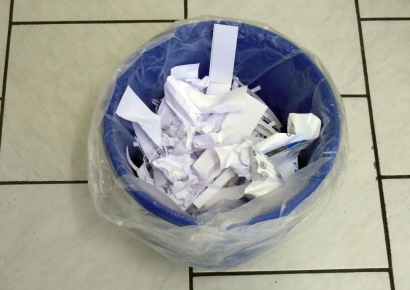 Ballot Box Found in Trash... Peru Holds Runoff Amid 'Ballot Shortage Crisis'
- "Brothers, You've Been Waiting for News?"... Orphanage Library Built Thanks to 'Money Brag' by SK hynix Employee
- Homeplus Posts Over 1 Trillion Won Net Loss in One Year... Receives Disclaimer of Opinion for Second Consecutive Year
- "A Mother's Quick Reflexes Save Child from BRT Bus Rushing onto Sidewalk"
- "Click! Gotta Post on SNS"... 'Small Luxury' for 20s and 30s Cools Down Amid High Inflation
Regarding Korea's first investment project in the United States under the Special Act on Korea-U.S. Investment, Koo stated, "We are in discussions with the United States, and it appears that the project will likely be in the energy sector."
© The Asia Business Daily(www.asiae.co.kr). All rights reserved.



![[Breaking] President Lee Criticizes Election Commission: "No Excuse, Extremely Serious"](https://cwcontent.asiae.co.kr/asiaresize/307/2026060817232560108A.jpg)