Pharmaceutical Industry Embarks on 'Management Strategy Overhaul' Amid Generic Drug Price Cuts
Price-Setting Rate for Generics to Be Gradually Lowered from 53.55% to 45% Over 10 Years
Securing Alternative Raw Materials and Diversifying Supply Chains to Ease Cost Burden
Business Portfolios Restructured, Focusing on Highly Profitable Se
Confusion and anxiety are mounting in the pharmaceutical industry regarding the government's plan to gradually adjust the reimbursement rate for generics and off-patent drugs from the current 53.55% to 45%, potentially lowering drug prices by up to 16%.
According to the pharmaceutical and biotech industries on March 27, immediately after the Health Insurance Policy Deliberation Committee (HIPDC) finalized the criteria for calculating generic drug prices the previous day, pharmaceutical companies began reviewing and reorganizing their management strategies, such as cost reduction. An executive at a pharmaceutical company commented, "Although the government did go through a process of hearing from the industry, the fundamental policy of lowering drug prices was maintained. After the new system is implemented, we have no choice but to comprehensively monitor and respond to its impact across the industry." Another executive stated, "The effects of this policy will not be limited to a specific area but will influence the overall cost structure."
Company A has begun exploring alternative raw material sources and diversifying its supply chain to immediately reduce cost pressures resulting from lower reimbursement rates. The company is also considering restructuring its business portfolio to focus on more profitable areas. Company B has revised its investment strategy: it will maintain core research and development (R&D), such as new drug development, but will take a more conservative approach to spending in non-core areas such as marketing, facilities, and operations.
A Company B executive said, "R&D is crucial to the company's future and cannot be easily reduced, but as drug price conditions worsen, overall investment capacity is bound to decrease. Ultimately, the structure of reducing investment in other areas to defend R&D will be repeated."

Among smaller pharmaceutical firms, there are even concerns that this policy could become a matter of survival. An executive from a small pharmaceutical company explained, "Large companies have some leeway to cope by streamlining low-profit products or cutting costs, but the situation is different for smaller firms. Companies that rely heavily on generics will be hit hardest."
Seung Kyu Lee, Vice President of the Korea Biotechnology Industry Organization, expressed concern: "Profit margins from generics are already not high, and if prices are cut further, the motivation to invest in new drug R&D will inevitably weaken. If external variables arise on top of the current supply structure, which depends on India and China for active pharmaceutical ingredients (APIs), the industry's burden could grow even more." The 'Emergency Committee for Drug Pricing System Reform for Industry Advancement', established by the pharmaceutical industry to respond to the reimbursement cuts, plans to convene a meeting today to prepare countermeasures.
The 'Plan to Improve the National Health Insurance Drug Pricing System', which the Ministry of Health and Welfare finalized at the HIPDC the previous day, is a comprehensive measure implemented for the first time in 14 years to address the surge in domestic drug expenditures due to population aging and to improve patient access to new drugs.
The government will completely overhaul the generic drug pricing structure—a chronic issue in the Korean pharmaceutical industry—by lowering the reimbursement rate for generics to 45% starting in the second half of this year. For off-patent originals and generics already listed, groups will be classified by listing date, and prices will be gradually reduced by year over a period of about 10 years.
For example, a patient taking the hypertension medication 'Norvasc Tab' currently pays an annual drug cost of 133,995 won, and the patient’s share (30%) is 40,187 won. If the reimbursement rate is reduced to 45%, the annual drug cost will decrease to 116,070 won, and the patient’s share will be lowered to 34,821 won.
To curb the proliferation of dozens of generics with the same ingredients, the current policy of cutting prices from the 20th product onward will be replaced by a "stepwise reduction" that lowers reimbursement by 15% from the 13th product onward compared to the previous lowest price. For new generics developed by innovative pharmaceutical companies, the reimbursement rate will be preferentially set at 60%, allowing the rate to be maintained at around 49% for up to four years. For newly categorized "quasi-innovative companies"—established to support strong mid-sized pharmaceutical firms—the rate will be set at 47%, encouraging structural improvement within companies.
For rare disease treatments, starting next year, the health insurance listing period will be dramatically shortened from the current maximum of 240 days to within 100 days. After promptly providing coverage, the actual clinical outcomes (real-world evidence, RWE) will be evaluated based on data, and the reimbursement rate will be adjusted retroactively through a new system.
Hot Picks Today
 “I Bought Big Packs to Stock Up Because They Were a Better Deal”... Why Are They Disappearing From Grocery Stores?
- "I thought getting into a big company was the goal"... The 'position' only 1 in 121 employees reaches
- "Jealous of Koreans" - Now a Must-Do on Every Trip... The Place Where Foreigners Spent KRW 229.8 Billion
- "I Don't Want to Marry a Salaried Man"... Women Flock to 'This Place' to Find Husbands Amid the AI Boom
- "Please Let Me Go Home"... Customers Trapped in Department Store Parking Lot for 5 Hours Vent Their Anger
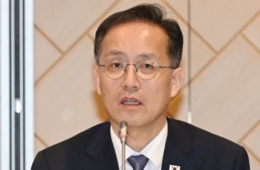
Byungki Kwon, Director of the Health Insurance Policy Division at the Ministry of Health and Welfare, stated, "With this reform, we will bring our drug pricing system up to the level of major countries, significantly improve treatment accessibility and coverage for the public, and ease the burden of drug expenses. After drug price reductions are completed in 2036, annual National Health Insurance savings are expected to reach approximately 2.4 trillion won."
© The Asia Business Daily. All rights reserved. Unauthorized AI training and use prohibited.

!["Please, Just Take Them Off" - They Made It All the Way to Bed... Then Fecal Bacteria Struck [Deep Scroll]](https://cwcontent.asiae.co.kr/asiaresize/307/2026101610053063338_1792112730.png)