"Cutting Generic Drug Prices to Foster Innovative New Drugs...Up to 16% Reduction"
Drug Pricing System Reform Approved by Health Ministry Committee
Generic Drug Price Calculation Rate to Drop from 53.55% to 45%
New Drugs for Rare Diseases to Be Listed "Within 100 Days"
The government has finalized a plan to reduce the health insurance listing period for new drugs targeting rare and severe diseases to less than half of the current duration, and to cut the prices of generics—previously set higher than in major countries—by up to 16%. This move is interpreted as a strong commitment to restructuring the domestic pharmaceutical ecosystem from a focus on generic drug sales to one centered on new drug development and the supply of essential medicines.

On March 26, the Ministry of Health and Welfare held the 6th Health Insurance Policy Deliberation Committee (HIPDC) meeting and finalized the 'National Health Insurance Drug Pricing System Improvement Plan' containing these measures. This overhaul, the most comprehensive in 14 years, aims to address the surge in pharmaceutical spending due to population aging and improve patient access to new drugs.
Starting next year, the government will dramatically shorten the listing period for treatments for rare diseases and similar drugs from the current maximum of 240 days to within 100 days. After providing rapid initial coverage, the actual clinical value (real-world evidence, RWE) will be evaluated based on data, and drug prices will be retroactively adjusted through a new system.
Additionally, from the second quarter of next year, the scope of the so-called 'Flexible Drug Pricing Agreement System'—which allows pharmaceutical companies and the National Health Insurance Service to enter separate contracts to expedite listings—will be expanded to include biosimilars and patent-expired originals, thereby broadening patients' treatment options.
The government will also overhaul the pricing structure for generics, a chronic issue in the domestic pharmaceutical industry. From the second half of the year, the calculation rate for generic drug prices will be lowered from the current 53.55% of the original drug price to 45%. As a result, consumers will see approximately a 16% reduction in drug costs. In particular, for patent-expired originals and generics already on the market, the government will categorize them by listing date and gradually reduce prices step-by-step over the next 10 years.
To prevent the flooding of dozens of generics with identical ingredients, the criteria for price reductions will also become stricter. Previously, the price was lowered from the 20th product onward; now, a "stair-step reduction" will be applied, lowering the price by 15% from the 13th product onward compared to the previous lowest price. Furthermore, to strengthen quality control for generics, the price adjustment rate for products that do not conduct their own bioequivalence testing or use unregistered active pharmaceutical ingredients will be further tightened from the current 85% to 80%.
On the other hand, compensation for essential medicines directly linked to public health security will be significantly enhanced. National essential medicines such as injectable antibiotics and pediatric drugs, which use domestic ingredients or are produced locally, will be priced at 68% of the original, and this benefit will be guaranteed for at least 10 years.
Compensation for companies investing in research and development (R&D) will also be strengthened. Innovative pharmaceutical companies will be allowed to maintain a preferential generic pricing rate of 49% for up to four years. For "quasi-innovative" mid-sized pharmaceutical companies, a new category established to support robust firms, a rate of 47% will apply, encouraging companies to upgrade their business structures.
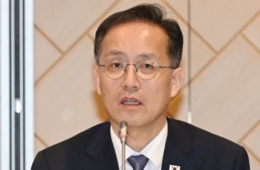
Lee Hyunhoon, chair of the HIPDC and Second Vice Minister of Health and Welfare, stated, "Through this reform, we will advance our drug pricing system to the level of major countries, greatly improving access to and coverage of treatments for the public while reducing the burden of drug costs. By establishing a reward system for R&D and the stable supply of essential medicines, we expect this to serve as a turning point for the domestic pharmaceutical and biotech industries."
Meanwhile, the HIPDC also discussed expanding support for the essential specialized function enhancement project. Currently, this project maintains a 24-hour medical service system and responds to night and holiday medical demand. The project, which currently covers five areas—burns, replantation, childbirth, pediatrics, and cerebrovascular diseases—will be expanded to include alcohol-related care and additional recruitment in areas such as pediatrics.
According to the 2021 Mental Health Status Survey by the Ministry of Health and Welfare, the one-year prevalence rate for alcohol use disorder is 2.6%, with an estimated 1.34 million patients nationwide. However, less than 5% actually receive treatment. There are only seven alcohol-specific hospitals nationwide (with 1,592 beds), indicating significant limitations in continuous treatment and recovery support.
Hot Picks Today
 “I Bought Big Packs to Stock Up Because They Were a Better Deal”... Why Are They Disappearing From Grocery Stores?
- "I thought getting into a big company was the goal"... The 'position' only 1 in 121 employees reaches
- "Jealous of Koreans" - Now a Must-Do on Every Trip... The Place Where Foreigners Spent KRW 229.8 Billion
- "I Don't Want to Marry a Salaried Man"... Women Flock to 'This Place' to Find Husbands Amid the AI Boom
- "Please Let Me Go Home"... Customers Trapped in Department Store Parking Lot for 5 Hours Vent Their Anger
A Ministry of Health and Welfare official said, "By expanding the essential specialized function enhancement project, we will strengthen support systems for alcohol addiction treatment and emergency response, and also improve the rate at which local medical needs are met, particularly in pediatric care and related fields."
© The Asia Business Daily. All rights reserved. Unauthorized AI training and use prohibited.


!["Please, Just Take Them Off" - They Made It All the Way to Bed... Then Fecal Bacteria Struck [Deep Scroll]](https://cwcontent.asiae.co.kr/asiaresize/307/2026101610053063338_1792112730.png)