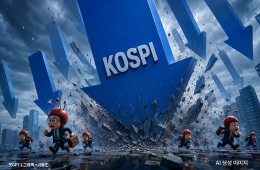
[Financial Stability Situation] Prolonged Middle East Crisis Sounds Alarm for Financial Soundness in Petrochemical Sector... Caution Urged Against Transmission of Systemic Financial Risk
Korea's Crude Oil Imports: Higher Middle East Share... Warning of Financial Soundness Deterioration in Petrochemical Sector
Stock Market Volatility Driven by “Money Move” and Expanded Margin Lending
Financial System Resilience 'Generally Sound,' but Watch for Weakness in Vulnerable Sectors
The Bank of Korea has warned that, if the Middle East crisis becomes prolonged, alarm bells could ring over corporate financial soundness, especially in the petrochemical sector. While the resilience of domestic financial institutions is generally assessed as sound, the analysis cautions that complex external shocks—such as Middle East tensions and asset price adjustments—must not be allowed to concentrate on vulnerable segments.
![[Financial Stability Situation] Prolonged Middle East Crisis Sounds Alarm for Financial Soundness in Petrochemical Sector... Caution Urged Against Transmission of Systemic Financial Risk](http://www.asiae.co.kr/news/img_view.htm?img=2026030308144358445_1772493283.png)
Korea's Crude Oil Imports: Middle East Share at 70.7%... Warning of Financial Soundness Deterioration in Petrochemical Sector
On the 26th, the Bank of Korea, in reviewing the current state of financial stability through the Financial Stability Meeting of the Monetary Policy Board, emphasized this point. The disruption of energy supply chains caused by increased geopolitical risks in the Middle East leads to higher international oil and energy prices, which in turn affect inflation and economic growth. The heightened risk aversion could also increase volatility across domestic foreign exchange and financial markets. For energy-importing countries like Korea, which are highly dependent on Middle Eastern crude oil, the impact is particularly significant. As of 2024, Korea's ratio of net crude oil imports to gross domestic product (GDP) stands at 4.6%, higher than major countries such as India (3.6%), Japan (1.8%), and China (1.7%). The share of the Middle East in Korea's crude oil import sources reached 70.7% (as of January 2026, by volume).
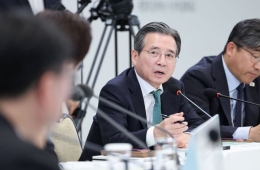
The longer the Middle East situation persists, the more corporate profitability will deteriorate due to increased cost burdens. This leads to weakened debt repayment capabilities among vulnerable companies, which could result in a decline in asset quality at financial institutions or increased rollover risks for corporate bonds. The most pronounced warning signals are sounding in the petrochemical sector, which is currently undergoing restructuring. Deputy Governor Jang Jeongsoo of the Bank of Korea pointed out, "The petrochemical sector is highly dependent on Middle Eastern crude oil imports, so disruptions in securing supply are possible. Moreover, due to weakened competitiveness from global oversupply, it is difficult to fully pass on rising costs to prices, making the deterioration of financial soundness more pronounced."
If Middle East tensions persist, the recent volatility in stock prices and exchange rates is also likely to continue. This is due to the ongoing preference for safe assets among foreign investors. Market interest rates could also face upward pressure as higher oil prices fuel supply-side inflation concerns and intensify worries about global monetary tightening. The increase in market volatility before and after the Middle East crisis has been influenced by a clear "money move" into the stock market, as foreign investors sold equities and securities firms expanded margin lending, leading to a significant influx of funds. Deputy Governor Jang noted, "As the pursuit of short-term profits intensifies, the outstanding balance of leveraged exchange-traded funds (ETFs) rose from 10.4 trillion won at the end of last year to 19.7 trillion won at the end of last month, which has also contributed to increased market volatility."
![[Financial Stability Situation] Prolonged Middle East Crisis Sounds Alarm for Financial Soundness in Petrochemical Sector... Caution Urged Against Transmission of Systemic Financial Risk](http://www.asiae.co.kr/news/img_view.htm?img=2026030316253159798_1772522731.png)
Financial System Resilience 'Generally Sound,' but Cracks Appear First in Vulnerable Sectors Amid Widening Polarization
Even under stress conditions, such as global asset price corrections and widening polarization in economic growth, the financial system's resilience has been assessed as generally sound. However, in a structurally polarized environment—across households, corporations, and real estate—complex external shocks such as geopolitical risks and asset price adjustments could concentrate on specific vulnerable sectors, exerting greater-than-expected downward pressure on the asset quality of financial institutions.
Deputy Governor Jang explained, "We conducted stress tests using two scenarios—'pessimistic' and 'severe'—over a two-year horizon, and found that the capital adequacy ratio of deposit-taking institutions, which determines their credit supply capacity, drops significantly for regional and savings banks under the severe scenario, but overall remains at a sound level." Overall, the ability to absorb losses and manage liquidity was assessed as manageable.
However, if real economy sluggishness persists over an extended period, polarization risks rise, and the non-performing loan ratio for corporate loans at domestic banks increases, particularly in vulnerable sectors such as petrochemicals and steel. In some regional and savings banks, capital adequacy ratios fell further due to regional real estate price declines and deteriorating prospects for real estate project financing (PF). The pessimistic scenario reflects a situation where geopolitical risks in the Middle East trigger a simultaneous sharp fall in financial asset prices and the value of the Korean won. The severe scenario adds deepening polarization, a prolonged Middle East crisis, surging raw material prices, and real economic stagnation, assuming a stress level akin to a global financial crisis.
Securities firms and insurers, too, maintained capital adequacy ratios above regulatory levels and generally displayed strong loss absorption capacity under stress scenarios. Market losses, which account for most of the losses at securities firms and insurers under stress, are estimated to reach up to 17% and 28%, respectively (relative to equity capital), under the severe scenario. Deputy Governor Jang said, "For securities firms, the decline in capital adequacy ratios due to market losses was most pronounced at large firms, but they still maintained high ratios. For insurers, asset valuation losses due to fluctuations in market interest rates were offset by gains from liability valuation, so the impact on the solvency ratio (K-ICS) was limited." In the severe stress scenario, the average liquidity coverage ratio was 113% for securities firms and 321% for insurers, both exceeding 100%. Securities firms had average liquidity coverage ratios above 100% regardless of capital size, while life insurers—who hold a higher proportion of government and special bonds—demonstrated stronger crisis response capabilities than non-life insurers.
Deputy Governor Jang emphasized, "Stress situations for financial institutions could combine with capital outflows by foreign investors and increased volatility in the foreign exchange market, potentially transmitting into systemic risk for the domestic financial market. Therefore, close monitoring is necessary." He added, "To mitigate polarization risks, it is essential to continue selective restructuring in fragile sectors showing clear signs of distress, such as real estate project financing and marginal companies. At the same time, financial institutions with high loan exposure to vulnerable sectors should be proactively guided to strengthen their loss absorption capacity, including through capital increases."
Hot Picks Today
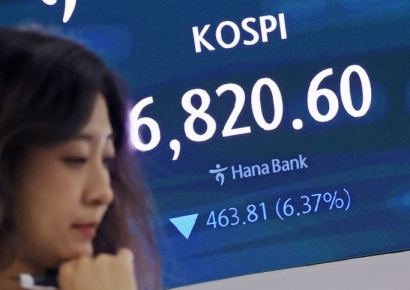 Securities Firms Reverse Course as KOSPI Falls Below 7,000... More Downgrade Reports Than Upgrades in July
- Turned on the Air Conditioner All Night and Woke Up with a Sore Throat... It's Not Just a Cold [Kok! Health]
- “Senior, Are We Having the ‘Lunch Gathering’ There Today?” Even the Manager Nods... Fierce Competition Returns to Buffets After 10 Years [Why&Next]
- "Spiders Crawling Across Faces While Sleeping"... Naju Apartment Complex Plagued by Spider Infestation
- Even Without Overdue Card Payments... Everyday Habits That Lower Office Workers' Credit Ratings
Meanwhile, the Financial Stability Index (FSI), which measures short-term financial instability, was 15.3 in February this year, remaining within the 'caution' range (12-24) but continuing to trend downward until recently. Based on available data as of March, the FSI for this month appears to be rebounding, as volatility in foreign exchange and financial markets has increased following the Middle East crisis. The Financial Vulnerability Index (FVI), which indicates the degree of medium- to long-term financial imbalances, rose to 48.1 at the end of the fourth quarter last year—slightly above the long-term average—driven by rising housing prices in Seoul and higher stock prices. Lee Suhyeong, a member of the Monetary Policy Board, stressed in his message for the Financial Stability Meeting, "Our economy faces a complex challenge, with both upside risks to inflation and downside risks to growth heightened by the possibility of a prolonged Middle East risk. Now is the time to actively utilize scenario-based contingency planning."
© The Asia Business Daily. All rights reserved. Unauthorized AI training and use prohibited.



![[Breaking] Coupang Apologizes for Incheon Logistics Center Fire…“Will Fully Cooperate With Authorities’ Investigation”](https://cwcontent.asiae.co.kr/asiaresize/307/2026071820375349810_1784374673.jpg)