Lee's Repeated Emphasis on Breaking the "Republic of Real Estate"—What's Behind It?
President Lee Jaemyung Delivers Real Estate Messages on Social Media
"Without normalizing the ruinous 'Republic of Real Estate,' there is no future for the Republic of Korea." "Escaping from the Republic of Real Estate is the most critical and core task for Korea’s great transformation." (President Lee Jaemyung on X, formerly Twitter).
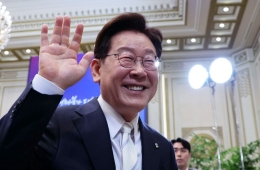
President Lee Jaemyung posted the results of the government’s first phase of the special joint crackdown on real estate crimes, conducted over the past five months, on social media platform X on March 24. He disclosed the Blue House's report on the crackdown led by the Office for Government Policy Coordination, taking a different approach from the usual method of issuing press releases or holding briefings through relevant ministries. This move is interpreted as evidence that the president is personally overseeing the issue and is strongly committed to resolving it.
According to the published data, during this period, 1,493 individuals were investigated, 640 were referred to the prosecution, and 7 were arrested. Detected cases included illegal real estate brokering—such as filing false sales reports at higher-than-actual prices and then cancelling contracts to artificially drive up market prices before selling to third parties—as well as market-disrupting practices like feigning employment at family companies to win new apartment allocations through fraudulent applications.

President Lee Jae-myung is speaking at the Cabinet meeting held at the Blue House on the 24th. Photo by Yonhap News Agency 2026.3.24
View original imageDozens or even hundreds of cases were uncovered in each crime category, such as farmland speculation, corruption in reconstruction and redevelopment projects, and fraudulent land development schemes. The second phase of the special inspection, which began on March 16, will be extended by two months compared to the first phase and will run until the end of October. Authorities plan to focus investigative resources on specific types of crimes, such as price collusion and farmland speculation.
The president’s recent messages on real estate through social media have a clear purpose. He has publicly stated his intention to use every available policy tool to address the unproductive asset structure focused on real estate and the attempts to increase assets through property, which he sees as non-productive.
He believes that structural problems in Korean society—such as housing price instability in areas like Seoul’s Gangnam district, the steep increase in household debt and the resulting sluggish domestic demand, and the growing reluctance to marry or have children—are all intertwined with real estate. His repeated use of the term "Republic of Real Estate" is understood as a critical reference to the reality that the nation’s operations are centered around property.

Apartment buildings in the Gangnam 3 District viewed from Lotte World Tower in Songpa-gu, Seoul. Photo by Yonhap News Agency
View original imageIn a post on March 18, President Lee said, "The reality that a significant portion of people’s assets is concentrated in real estate is causing various side effects, such as increased housing costs, higher corporate production costs, and a decline in industrial competitiveness," adding, "It is now time to boldly restructure the system so that capital can flow more productively."
Hot Picks Today
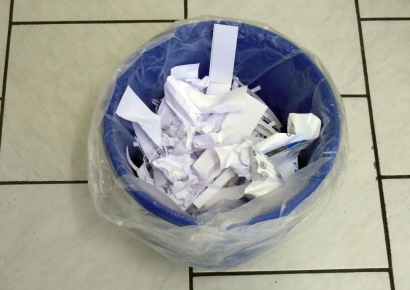 Ballot Box Found in Trash... Peru Holds Runoff Amid 'Ballot Shortage Crisis'
- "Brothers, You've Been Waiting for News?"... Orphanage Library Built Thanks to 'Money Brag' by SK hynix Employee
- Homeplus Posts Over 1 Trillion Won Net Loss in One Year... Receives Disclaimer of Opinion for Second Consecutive Year
- "A Mother's Quick Reflexes Save Child from BRT Bus Rushing onto Sidewalk"
- "Click! Gotta Post on SNS"... 'Small Luxury' for 20s and 30s Cools Down Amid High Inflation
Given that the government’s real estate policy tools are essentially limited to loans, supply, and taxation, attention is focused on how real estate-related measures will be reflected in the ongoing tax reform plan. Loan regulations and housing supply plans have already been included in previous real estate policies. Within government circles and beyond, there are expectations that the authorities may adjust the system by raising holding taxes—such as property and comprehensive real estate taxes—while lowering transaction taxes like acquisition tax. This is due to ongoing concerns that the stricter capital gains tax on owners of multiple homes, set to take effect in May, will cause further supply shortages.
© The Asia Business Daily(www.asiae.co.kr). All rights reserved.



![[Breaking] President Lee Criticizes Election Commission: "No Excuse, Extremely Serious"](https://cwcontent.asiae.co.kr/asiaresize/307/2026060817232560108A.jpg)