Sharing Solar Energy from Rental Housing with Local Communities
2026 Housing Culture Trends
Korea Land & Housing Corporation
The "Shared Solar Power Plant" project, which shares energy produced in public rental housing complexes managed by Korea Land & Housing Corporation (LH) with residents in other regions, is delivering tangible results. The initiative has been praised for achieving both energy welfare and eco-friendly values by sharing low-carbon energy not only to ease the utility costs of residents but also with communities in other areas.
The shared solar power plant is an energy welfare model that installs solar panels on the rooftops of public rental housing complexes to produce energy directly and share it with residents in other regions. LH, together with related ministries, installed solar power plants with a total capacity of 225.5 kW on the rooftops of nine purchased rental housing buildings in Daejeon. Part of the revenue from the sale of this electricity is returned to the residents, with each household receiving at least 5,000 won in monthly support for utility fees. In total, this amounts to 6 million won annually across all households.

Shared solar power plant installed on the rooftop of LH purchased rental housing. Provided by LH
View original imageThrough the Korea Electric Power Corporation's Virtual Net Metering (VNM) system, 300 kW of electricity is supplied monthly to the RE100 energy self-reliant village in Miho-dong, Daejeon, which is located in the Daechung Lake water resource protection zone. VNM is a system that allows renewable energy power plants to be installed in locations different from the point of use, and virtually connects the generated electricity to be utilized elsewhere based on production data. The Miho-dong energy self-reliant village, surrounded by the Geum River and Daechung Lake, is required to use only renewable energy for all its electricity needs.
LH is also promoting municipal cooperation projects. In Uljin, where nuclear power generation leads to abundant electricity production, it is difficult to add more solar power facilities within the area. To address this, LH has adopted the VNM approach, installing solar facilities with a capacity of 3 MW on the rooftops of 116 LH rental housing buildings in Daejeon and providing support to Uljin-gun. After the facilities begin operation, 1,363 households living in LH rental housing in Daejeon will receive about 3,000 won per month in utility support, while 280 LH rental households in Uljin will benefit from an additional electricity bill subsidy, receiving 7,420 won per month.
Hot Picks Today
 "Auntie, When Will Dried Shredded Squid Return as a Side Dish?"...Once Vanished from Restaurants, Now Making a Comeback
- Monthly Salary Soars 3.7 Times from 8.25 Million Won to 30.59 Million Won... 86 Fair Trade Commission Retirees Join Law Firms Over 10 Years
- "Wait a Little Longer, Honey"... Why Samsung Electronics and SK hynix Employees' Parental Leave Rates Dropped Simultaneously
- "Almost Entirely Written by AI"... Prestigious French Literary Award Excludes Controversial Nominee
- "V and Go Yoonjung Wear Them Too"... The Transformation of the ‘Grandma Ring’ Captivates Foreigners [K-Holic]
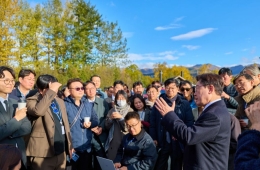
Cho Kyungsook, acting president of LH, said, "The municipality-cooperation shared solar power plant project is an effective ESG management case that creates synergy between LH's idle assets, municipal welfare resources, and the technical expertise of private companies. We will continue to develop energy welfare models that can help reduce housing costs."
© The Asia Business Daily. All rights reserved. Unauthorized AI training and use prohibited.