Anne Krueger: "Middle East Shock Far Greater Than Trump Tariffs... Difficult to Expect Prolonged Low Oil Prices Even After War"
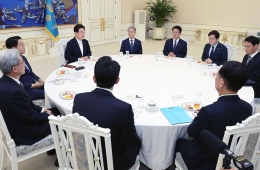
Anne Krueger, Former IMF Vice President, Attends Institute for Global Economics Breakfast Lecture
Professor Anne Krueger, Distinguished Professor at Stanford University and former Vice President of the World Bank (WB) and the International Monetary Fund (IMF), analyzed that the shock to the global economy from the war between the United States and Iran is far greater than the impact of U.S. President Donald Trump's tariffs. She also indicated that it would be difficult to be optimistic about a prolonged era of low oil prices even after the war comes to an end.

On March 25, during a breakfast lecture hosted by the Institute for Global Economics at Lotte Hotel in Jung-gu, Seoul, Professor Krueger expressed these views. She stated, "On top of the U.S.-China trade conflict and the Trump administration's tariff policies, the recent, unexpected shock from the U.S.-Iran war has further escalated global economic uncertainty to unprecedented levels," adding, "This poses a serious threat to countries with a high dependence on energy imports, such as Korea."
Professor Krueger pointed out that the current war has confirmed the possibility of Iran weaponizing its energy resources, and voiced concern by saying, "Even if the war ends, it is difficult to be optimistic that the era of low oil prices will continue." She also noted that the war is likely to further increase the U.S. fiscal deficit and inflationary pressures, and diagnosed that the Federal Reserve (Fed) may shift its monetary policy stance from rate cuts to rate hikes. She warned, "If that happens, U.S. monetary tightening could amplify instability in the global financial markets."
Hot Picks Today
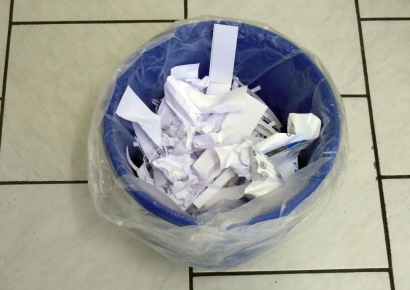 Ballot Box Found in Trash... Peru Holds Runoff Amid 'Ballot Shortage Crisis'
- "Brothers, You've Been Waiting for News?"... Orphanage Library Built Thanks to 'Money Brag' by SK hynix Employee
- Special Prosecutor Seeks 2-Year Prison Term for Yoon in First Trial Over 'False Statements During Presidential Election'
- "A Mother's Quick Reflexes Save Child from BRT Bus Rushing onto Sidewalk"
- "Click! Gotta Post on SNS"... 'Small Luxury' for 20s and 30s Cools Down Amid High Inflation
Professor Krueger emphasized that, amid such geopolitical crises, middle-power countries like Korea should reduce their dependence on the United States. To this end, she proposed that countries excluding the U.S. could come together to establish a "WTO minus one" system, upholding the principles of multilateralism. She also argued that, in a situation where energy prices and the global trade environment are changing rapidly, Korea needs to enhance the flexibility of its economy, including the labor market, in order to cope with the heightened uncertainty.
© The Asia Business Daily(www.asiae.co.kr). All rights reserved.