"Toward 30 Trillion Won in Technology Exports"... Government to Launch Full-Cycle Integrated Support for Bio Ventures (Comprehensive)
Announcement of Collaboration Plan by Health and Welfare and SMEs Ministries
Support Connecting R&D, Clinical Trials, and Commercialization
Active Promotion of Open Innovation with Global Companies
The government is aiming to achieve 30 trillion won in pharmaceutical and bio venture technology exports by 2030 by implementing an all-encompassing support system. The strategy is to build a structure that connects research and development (R&D), clinical trials, commercialization, and global expansion, thereby strengthening the foundation for the growth of K-Bio and the creation of blockbuster new drugs.
The Ministry of Health and Welfare and the Ministry of SMEs and Startups announced the "Full-Cycle Collaboration Plan for Fostering Pharmaceutical and Bio Ventures" at a joint policy meeting held at the Korea Pharmaceutical and Bio-Pharma Manufacturers Association in Seocho-gu, Seoul, on the 24th. This meeting was organized as a follow-up to the President-led National Startup Era Strategy Conference and in connection with the "Startup for All" project, with the goal of strengthening the foundation for innovative new drug development by promising pharmaceutical and bio venture companies.

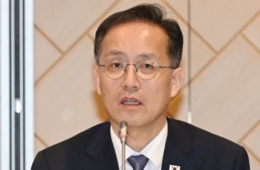
Jung Eun-kyung, Minister of Health and Welfare (right), is speaking at the Pharmaceutical Bio Venture Joint Policy Meeting held at the Korea Pharmaceutical and Bio-Pharma Manufacturers Association in Seocho-gu, Seoul, on the 24th. Ministry of Health and Welfare
View original imageAt the event, issues such as the lack of collaboration among companies in the domestic pharmaceutical and bio ecosystem were raised.
Kim Yongho, CEO of Rudacure, stated, "There is a lack of collaboration among domestic bio ventures in areas such as mergers and acquisitions (M&A), technology transfer, and joint development," adding, "A virtuous cycle ecosystem for new drug development between pharmaceutical companies and ventures is needed." Yoon Taeyoung, CEO of Protina, said, "While innovation and creativity are crucial in the early stages of the pharmaceutical industry, regulation and safety become central in the later stages." He emphasized, "The government should play a priming role so that domestic companies can collaborate with global big pharma."
Kang Choonggil, President of Olix, commented, "Most companies that have gone public through technology evaluation face another hurdle in meeting listing maintenance requirements, such as net asset loss. Although funding access has greatly improved through policy funds, various actions taken to meet listing maintenance requirements are stifling corporate R&D." CEO Yoon Taeyoung also added, "The lack of consistency in technology evaluation standards during the technology-special listing process has recently become a source of anxiety in the industry."
Lee Seungjoo, CEO of Orum Therapeutics, stated, "During the development of new drugs with novel mechanisms, we often receive assistance from the U.S. Food and Drug Administration (FDA). If we expand specialized personnel domestically, we could enhance our capability to review innovative technologies."

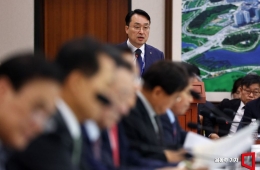
The Ministry of Health and Welfare and the Ministry of SMEs and Startups held a joint policy meeting with pharmaceutical and bio venture companies on the 24th at the Korea Pharmaceutical and Bio-Pharma Manufacturers Association in Seocho-gu, Seoul. Ministry of Health and Welfare
View original imageTo strengthen the global competitiveness of K-Bio, the government will establish an integrated support system that organically connects the stages of corporate growth and the full cycle of new drug development. Promising companies will be identified jointly and provided with focused support, and potential candidates for blockbuster new drugs will be strategically nurtured. Through these initiatives, the government aims to achieve 30 trillion won in pharmaceutical and bio technology exports and foster companies that create 'blockbuster' new drugs with annual sales exceeding 1 billion dollars by 2030.
The Ministry of Health and Welfare and the Ministry of SMEs and Startups will implement the '4UP Strategy,' which consists of: ▲ Scaling Up through the supply of innovative funds ▲ Speeding Up performance creation through open innovation ▲ Leveling Up the innovation ecosystem ▲ Creating synergy in policy (Synergy UP). Through "Scale-up TIPS," a program in which the government makes follow-up investments in companies discovered and invested in by the private sector, R&D and commercialization funding will be provided as a package, and additional support will be linked to prevent funding gaps up to the clinical stage. A so-called "relay-type support system" will be established to ensure that R&D outcomes are seamlessly connected to clinical trials and commercialization.
Support measures for overseas expansion and the expansion of technology transfer are also included. The government will introduce an open innovation program that supports the entire process from exploring technology transfer collaborations to contract signing, and will support global expansion by linking with overseas hubs such as Boston CIC and Japan's Shonan iPark. Domestically, the government plans to promote joint R&D among AI ventures, pharmaceutical ventures, and pharmaceutical companies, and to expand the use of medical data. Regulatory improvement projects based on field demand will be jointly identified and improved, and specialized statistics and monitoring systems for pharmaceutical and bio ventures will be established to increase the precision of policy implementation.
Jung Eun-kyung, Minister of Health and Welfare, stated, "Through inter-ministerial collaboration, we will build a growth ladder to elevate the global competitiveness of K-Bio, and create a virtuous cycle in which innovation leads to industrial growth, and that growth in turn enhances public health." Han Sung-sook, Minister of SMEs and Startups, said, "We will provide active support so that promising pharmaceutical and bio venture companies can achieve results in the global market."
Hot Picks Today
 "I Should Enjoy It After Retirement": Prices Quadruple... Memberships Over 100 Million Won Popular, but Closures Mount
- "I thought getting into a big company was the goal"... The 'position' only 1 in 121 employees reaches
- "Jealous of Koreans" - Now a Must-Do on Every Trip... The Place Where Foreigners Spent KRW 229.8 Billion
- “I Bought Big Packs to Stock Up Because They Were a Better Deal”... Why Are They Disappearing From Grocery Stores?
- "Please Let Me Go Home"... Customers Trapped in Department Store Parking Lot for 5 Hours Vent Their Anger
© The Asia Business Daily. All rights reserved. Unauthorized AI training and use prohibited.