Japanese Public Opposes Middle East Deployment... Takaichi's Approval Rating Rises
Yomiuri Shimbun and ANN Polls in Japan
The majority of Japanese citizens have expressed opposition to dispatching their country's naval vessels to the Iran war. Despite the ongoing blockade of the Strait of Hormuz and the United States pressuring allies, including Japan, to provide support, analysis suggests that public opinion remains largely in favor of a cautious approach. After the U.S.-Japan summit, the approval rating for Japanese Prime Minister Sanae Takaichi's cabinet remained high.

U.S. President Donald Trump is standing side by side with Japanese Prime Minister Sanae Takaichi, delivering a speech at a state dinner held at the White House in Washington D.C. on the 19th (local time). Washington (USA) = Photo by UPI
View original imageAccording to the Yomiuri Shimbun on the 23rd, a telephone poll of 1,000 eligible voters conducted from the 20th to the 22nd found that 67% of respondents opposed sending the Maritime Self-Defense Force to the Middle East. Only 24% supported the dispatch, while 9% did not respond.
A separate poll by Asahi News Network (ANN), conducted from the 21st to the 22nd, found that 52% of respondents answered that the Self-Defense Forces "should not be dispatched." Another 32% said they should be sent "after a ceasefire," and only 9% supported dispatching them before a ceasefire.
In the Yomiuri Shimbun survey, 69% gave a positive assessment of the U.S.-Japan summit, while 19% said they "would not evaluate it." Regarding Prime Minister Takaichi's message to U.S. President Donald Trump—that Japan would respond to Middle Eastern issues within the scope of its laws—82% gave a positive evaluation.
Support for the Takaichi cabinet remained high at 71%, down 2 percentage points from the previous month. According to the ANN survey, the cabinet’s approval rating rose by 3.2 percentage points to 65.2%.
During the U.S.-Japan summit held in the United States on the 19th, Prime Minister Takaichi avoided a direct confrontation with President Trump over Japanese support for ensuring safety in the Strait of Hormuz. However, President Trump continues to pressure Japan to fulfill its responsibilities.
Prime Minister Takaichi reportedly explained to President Trump that "Japan is willing to contribute, but is limited in what it can do due to legal constraints." Meanwhile, Japanese Foreign Minister Toshimitsu Motegi left open the possibility over the weekend by saying, "We can consider dispatching minesweepers after a ceasefire."
Bloomberg News analyzed that these poll results demonstrate Japanese public opinion remains cautious about military involvement in war. Japan’s pacifist constitution prohibits war, but the country is allowed to exercise the right of self-defense only in cases where its national survival is at stake. The Japanese government currently maintains that the Iran war does not constitute such a "threat to national survival."
Japan has previously dispatched minesweepers to the Middle East. The first overseas military deployment by Japan after World War II was in April 1991, when six minesweepers were sent to the Persian Gulf. That deployment occurred one month after the end of the Gulf War led by the United States.
Hot Picks Today
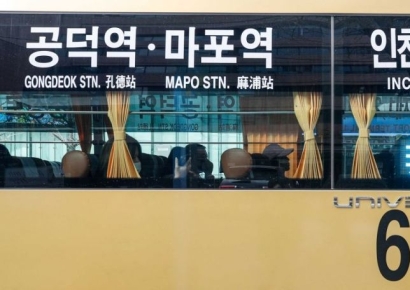 Despite "Insufficient Balance" Notices, They Board Anyway... Reports of Foreign Fare Evasion Mounting
- [Exclusive] "We Came for a KRW 140,000 Trip": Following Chinese Tourists in Korea Uncovers a 'Suspicious' Tour
- Huang Jensen: "The More Memory, the Better"... Dismisses 2029 Oversupply Concerns
- Musk Invests $1 Billion in Skydance, Which Owns CNN, Strengthening Ties With Ellison Family
- "Baek Jongwon Had Been Quiet, Then Hit It Big"... Waits in the 100s in U.S. Despite KRW 46,000 Pork Belly
Meanwhile, Foreign Minister Motegi dismissed reports that Iran is prepared to allow only Japanese vessels to pass through, stating that "Japan is not considering independent negotiations with Iran." Currently, about 45 Japan-related vessels are reportedly stranded in the Strait of Hormuz, and the Japanese government added that it will take full responsibility for ensuring their safety.
© The Asia Business Daily. All rights reserved. Unauthorized AI training and use prohibited.