MAFRA to Promote Incentives for Women Farmers Registering as Joint Managers
6th Basic Plan for the Promotion of Women Farmers (2026–2030)
The government has decided to consider providing incentives for joint management registration as part of efforts to strengthen the representation of women farmers. The aim is to enhance the legal and social status of rural women.
On March 22, the Ministry of Agriculture, Food and Rural Affairs announced the establishment of the “6th Basic Plan for the Promotion of Women Farmers (2026–2030),” which aims to protect the rights and interests of women farmers, improve their quality of life, and foster professionalism, thereby promoting healthy rural families and the sustainable development of agriculture and rural areas.

This basic plan is a medium- to long-term policy roadmap established every five years in accordance with the Act on the Promotion of Female Farmers and Fishermen. It comprehensively addresses the improvement of women farmers’ status, the expansion of their economic activity base, and the provision of welfare and health support tailored to rural areas.
To strengthen the representation of women farmers, the plan includes continuous institutional improvements such as reviewing the introduction of incentives for joint management registration, and legal amendments such as establishing gender regulations for the boards of directors of agricultural cooperatives to increase the proportion of female directors in local cooperatives. In addition, the government will promote the creation of gender-equal rural communities by reviewing women-friendly rural models, monitoring the selection process of village heads, and disseminating best practices.
Furthermore, indicators will be developed to assess the level of gender equality in rural areas, and gender equality education tailored to rural communities will be expanded and enhanced. The Ministry of Agriculture, Food and Rural Affairs will also expand gender equality education for participants in projects under its jurisdiction as well as for employers and workers in the agricultural sector, with a focus on improving the quality of the education provided.
The government will also work to establish a governance structure for rural women’s policies. With the launch of a dedicated department for women’s policies in rural areas within the Ministry of Agriculture, Food and Rural Affairs (scheduled for December 30, 2025), efforts will be made to strengthen the policy implementation system for women farmers by securing dedicated departments and personnel in local governments. In addition, a performance evaluation system for the implementation results of local government plans will be introduced to enhance policy effectiveness.
Alongside these measures, a women farmers’ policy council will be established, involving central and local governments as well as the private sector, to regularly discuss policy issues and reflect field opinions in the policymaking process. The online platform will be enhanced to provide information on policies for women farmers, chatbot consultations, and community bulletin boards, thereby expanding two-way communication and introducing new mobile services. The Ministry will also review its regulations and projects for gender-discriminatory elements, expand the sampling size and improve the items of surveys on the status of women farmers, and shorten survey cycles to strengthen the statistical foundation for policymaking.
To build the economic self-reliance of women farmers, the government will promote the discovery and spread of time-flexible jobs that can be combined with both agricultural and care work, as well as the activation of family management agreements. The development and distribution of women-friendly agricultural machinery and equipment designed with women’s physical characteristics in mind will also be expanded, and support will be provided to strengthen agricultural capabilities by reducing the physical burden of farm work through wearable assistive devices.
Welfare and health support for rural women will also be expanded. Starting this year, a “gap care” service will be introduced to address the lack of early morning and nighttime care during the busy farming season, and new indicators will be developed to assess the social value of community activities such as care and meal services.
Support for special health checkups for women farmers will also be expanded by increasing the eligible age range (from 51–70 years to 51–80 years) and significantly increasing the number of recipients (from 50,000 to 80,000), while improving convenience by linking with the Agriculture e-Ji platform. The government will also promote the creation of safe rural workplaces for women by strengthening the prevention and management of heat-related illnesses and expanding sanitary and convenience facilities such as toilets at farm worksites.
Hot Picks Today
 "I Should Enjoy It After Retirement": Prices Quadruple... Memberships Over 100 Million Won Popular, but Closures Mount
- "I thought getting into a big company was the goal"... The 'position' only 1 in 121 employees reaches
- "Jealous of Koreans" - Now a Must-Do on Every Trip... The Place Where Foreigners Spent KRW 229.8 Billion
- "People Line Up for 2 Hours Even for Plain Water"... After Crowds Flock from Across the Country, Gwangmyeong Bungeoppang Stall Suspends Business
- "Please Let Me Go Home"... Customers Trapped in Department Store Parking Lot for 5 Hours Vent Their Anger
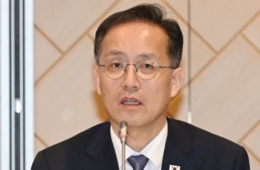
Yoon Wonseup, Director General for Agricultural Policy at the Ministry of Agriculture, Food and Rural Affairs, stated, “Women farmers are key players leading the sustainable development of agriculture and rural areas. Through the 6th Basic Plan for the Promotion of Women Farmers, we will create conditions for women farmers to fully demonstrate their capabilities and to work in agriculture in a stable environment.”
© The Asia Business Daily. All rights reserved. Unauthorized AI training and use prohibited.