Constitutional Court Discusses Preliminary Review of Judicial Complaints: "Caseload Surge Must Be Prevented"
Ideas Raised for Increasing the Number of Justices
and Sharing Roles with the Supreme Court
The Constitutional Court discussed the issues surrounding the design of a preliminary review system as a means to address the expected sharp increase in caseloads resulting from the introduction of the new trial appeal system, and explored possible countermeasures.

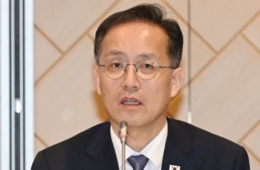
The Constitutional Law Practice Research Association of the Constitutional Court held an internal presentation on the topic of "Constitutional Petitions Against Court Decisions and the Preliminary Review System" at the main auditorium of the Constitutional Court in Jongno-gu, Seoul, on the afternoon of March 20. The event was chaired by Professor Kim Hayoul of Korea University Law School, with lawyer Kim Jinhan from Class Hangyeol Law Firm delivering the main presentation. The discussion involved Professor Jeong Kwanghyun of Hanyang University Law School, Professor Seo Kyungmi of Sungkyunkwan University Law School, and Constitutional Court Research Officer Lee Jaegang. All participating professors have previously served as research officers at the Constitutional Court.
During the discussion, concerns were raised that the Constitutional Court could be pushed to the brink if it fails to effectively manage the overload caused by a surge in cases. It was pointed out that, without proper case selection and management, only those with sufficient time and financial resources would benefit. In response, calls were made to strengthen the preliminary review process. Suggested approaches ranged from using significant constitutional issues as criteria and exercising discretionary selection, to increasing the number of Constitutional Court justices and sharing roles with the Supreme Court.
There were also arguments that legislative improvements are needed to address the fundamental problems. Some participants proposed that, similar to the case selection procedures of the U.S. Supreme Court, all Constitutional Court justices should be involved in case selection. Another opinion suggested increasing the number of justices to 15, while allowing designated panels not only to dismiss but also to reject petitions. Even compared to Germany—the model for Korea’s new trial appeal system—there was criticism that the scope of claims permitted under the revised Constitutional Court Act is overly broad, resulting in a significant increase in the Constitutional Court’s workload.
In his presentation, lawyer Kim Jinhan emphasized, “If we head down the wrong path now, we could inadvertently drive the Constitutional Court off a cliff,” stressing the need to establish the trial appeal system through rigorous preliminary review.
He continued, “Although our preliminary review system stipulates small panels in the law, at least in spirit, it should operate with the aim of involving the full bench. This would allow for diverse viewpoints to be reflected at the preliminary review stage and reduce the risk of arbitrary judgments.”
He particularly stressed that the Constitutional Court must remain faithful to its original function and role of establishing fundamental rights on important constitutional issues, rather than focusing solely on the remedy of individual parties’ rights. Kim stated, “If the focus is placed only on individual rights, it could turn into a de facto ‘fourth tier of trial,’ which is a source of public concern, and the system would only benefit those with the time and means to pursue it. The Court must free itself from the pressure to remedy every alleged infringement of constitutional rights.”
He also highlighted the need for an “issue certification system” like that of the U.S. Supreme Court to prevent an overwhelming increase in the Constitutional Court’s caseload. In the U.S., the Supreme Court selects cases based on the significance of the legal question raised by the petitioner. The plan is to filter out a substantial number of cases at the preliminary review stage in order to address the expected surge.
On the other hand, Professor Jeong Kwanghyun of Hanyang University pointed out, “There is no guideline anywhere that allows for an objective measurement of a case’s importance. Such case selection could appear highly political or as an arbitrary refusal to hear cases, which is a structure that is hard to accept in a country governed by the rule of law.”
As an alternative, he proposed increasing the number of Constitutional Court justices from the current nine to fifteen. Specifically, he suggested adding six reserve members to the nine regular justices, and reorganizing the current designated panels from three members to five (comprising three regular and two reserve members). In this case, designated panels would be able to not only dismiss clearly inadmissible petitions but also reject clearly unfounded ones, allowing the Constitutional Court to focus its resources on typical judicial review matters.
He further proposed that the Constitutional Court should handle direct infringements of fundamental rights, while the Supreme Court should oversee cases based solely on the violation of procedural rules—since the Supreme Court is the highest authority in legal interpretation.
Another discussant, Professor Seo Kyungmi of Sungkyunkwan University, agreed that case selection should be based on constitutional significance, but pointed out that such an interpretation is difficult under the current revised Constitutional Court Act. She argued that legislative improvements are necessary to prevent the Court from being buried under an excessive caseload.
Hot Picks Today
 "Changing Outfits and Snapping Photos in Hotels Is Too Much"... Europe Bars Influencers Over Privacy Concerns
- "Please Let Me Go Home"... Customers Trapped in Department Store Parking Lot for 5 Hours Vent Their Anger
- "I Should Enjoy It After Retirement": Prices Quadruple... Memberships Over 100 Million Won Popular, but Closures Mount
- "A Flying Car? Now That's More Like It"... Startup Shows Off Tech That Outdoes Tesla
- "Come Live With Me on My Farm": Man Sells Everything and Travels 1,930 km, Trusting a Beautiful Woman
She also expressed concern that the new trial appeal law applies to non-final court decisions. Professor Seo said, “I felt a chill when I read the provision. After spending a long time sending a non-prosecution decision to the court, I now worry that decisions like dismissals of applications for judicial review could come back to the Constitutional Court, and I am concerned about the scope of cases that may end up there.”
© The Asia Business Daily. All rights reserved. Unauthorized AI training and use prohibited.