[Emergency Trade Roundtable] "An Irreplaceable Partner for the U.S.; Countering Middle East Risks Through Energy Diversification"
Expert Roundtable on "Iran Conflict and Trump Tariffs"
Experts Warn of Trade Shocks, Say "Releasing Oil Reserves May Be Necessary"
Need for Mid- to Long-term Strategies to Secure Corporate Sales Channels
Tariff Impact and the Need to
Warnings have emerged that the Korean economy is facing an unprecedented "perfect storm" crisis as global trade regulations tighten and a Middle East-driven energy shock coincide. In a scenario where major countries are imposing extremely strong trade pressure and logistics risks stemming from the blockade of the Strait of Hormuz are erupting simultaneously, experts are recommending that Korea fundamentally redesign its national supply chain security system, moving beyond existing short-term solutions.
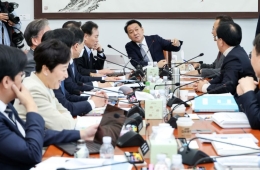
On March 18, The Asia Business Daily held a roundtable at its headquarters in Chodong, Jung-gu, Seoul, under the theme "Geopolitical Turbulence and Trump Tariff Risks." The roundtable was attended by Kim Kyunghan, Research Fellow at POSCO Research Institute; Kim Taehwang, Professor at Myongji University; Jang Sangsik, President of the Institute for International Trade and Commerce at the Korea International Trade Association; and Jung Ingyo, former Director General for Trade Negotiations at the Ministry of Trade, Industry and Energy. The participants discussed possible solutions to the emerging challenges.
The experts unanimously agreed that, in the short term, direct government intervention is urgently needed to minimize corporate losses. Given that the current Middle East situation is a crisis on par with the oil shocks of the past, they analyzed that the government should compensate export companies for their losses through an additional supplementary budget and introduce a demand-guarantee industrial policy, modeled after the U.S., in which the government guarantees a certain amount of demand for domestic production.
Regarding U.S. tariff pressure, a strategy was proposed to leverage Korea's industrial competitiveness. Korea should highlight itself as an indispensable partner that can replace China in fields the U.S. finds difficult to supply on its own, such as semiconductors, batteries, and nuclear power, and engage in package negotiations accordingly. In addition, building a private sector alliance, where companies respond collectively to strengthen their negotiating power, was cited as another key alternative.
In the long term, participants emphasized the need for Korea to break away from an energy and trade structure heavily dependent on the Middle East and the U.S. They suggested that energy supply lines should be diversified through participation in projects with lower geopolitical risk, such as Alaska gas development, and that the nation must overhaul its origin certification management system in response to the U.S.'s strengthened indirect export verification. Since the inclusion of Chinese parts could lead to severe sanctions, the government should take the lead in inspecting origin management practices at the company level and establish a system that can proactively respond to on-site inspections requested by the U.S. Department of Commerce.
The attendees diagnosed that Korea has entered a new environment where such complex risks are likely to recur rather than be one-off events. Consequently, they stressed the importance of utilizing mega free trade agreements (FTAs), such as joining the Comprehensive and Progressive Agreement for Trans-Pacific Partnership (CPTPP), to establish shock-absorbing mechanisms and building a horizontal collaborative system in which the government and companies share security costs as equal partners, moving away from a hierarchical relationship.

Jang Sangsik, President of the Institute for International Trade and Commerce at the Korea International Trade Association (from left), Jung Ingyo, former Director General for Trade Negotiations at the Ministry of Trade, Industry and Energy, Kim Taehwang, Professor of International Trade at Myongji University, and Kim Kyunghan, Research Fellow at POSCO Research Institute, are talking ahead of the emergency trade roundtable held on the 18th at the Asia Business Daily headquarters. Photo by Huh Younghan
View original imageExport Routes Blocked for SMEs Due to Iran Crisis
-With the Middle East risk stemming from Iran raising concerns over disruptions in major maritime transport routes such as the Strait of Hormuz, the burden of oil prices and logistics costs is increasing. How do you assess the current situation?
▲Jung Ingyo, former Director General: We are entering a situation that could effectively lead to an oil shock similar to what was experienced in the 1970s. It is far more serious than the Russia-Ukraine crisis. If things continue as they are, there is a high chance that the blockade of the Strait of Hormuz will not be lifted, and when the last ship arrives from the Middle East, we may have to use our strategic oil reserves to prepare for war. Releasing strategic reserves could have an even greater impact on overall prices.
▲Professor Kim Taehwang: I completely agree. While the Russia-Ukraine war only resulted in energy supply disruptions, this time there is the possibility of a blockade in critical logistics routes such as the Strait of Hormuz and the Suez Canal, making the shock much greater. Furthermore, Korea is in the process of increasing exports to Middle Eastern countries through FTAs, but if this is restricted, it could affect the supply of key raw materials such as nickel. If the Red Sea region, which allows access to Europe, is also blocked in the future, I fear how many months our economy could withstand such a scenario.

Jin In-kyo, former head of trade negotiations at the Ministry of Trade, Industry and Energy, is speaking at the emergency trade roundtable held at the Asia Business Daily headquarters on the 18th. Photo by Heo Younghan
View original image-How should the government and companies respond?
▲Professor Kim: In the short term, the government could consider releasing strategic oil reserves or other critical raw materials into the market. The government could also look into supplying raw materials or emergency stockpiles to small and medium-sized enterprises. For SMEs that have just finalized export contracts to Europe or the Middle East and are about to ship their goods, this crisis could prevent them from exporting and result in significant losses, even incurring penalties for breach of contract. For such companies, the government's short-term policies should focus on providing financial support or emergency funding to help them survive for two to three months.
Furthermore, the government must also prepare now for what to do two or three months down the line if the conflict drags on. This includes activating raw material swap arrangements and industrial cooperation channels. The previously mentioned achievement of securing 24 million barrels of crude oil from the United Arab Emirates is significant, but it would only cover eight days of domestic consumption. Therefore, while short-term measures are essential, in the long run, efforts must be made to reduce domestic energy consumption.
▲Jung, former Director General: Previously, Korea introduced a direct compensation system for FTA-related losses, converting it into a mechanism to offset losses caused by environmental changes. However, contrary to its purpose, the actual available budget for this system is extremely limited. The current situation is a textbook example of where such a system is needed, so the National Assembly should significantly increase the related budget through a supplementary budget. Now is the time for the government and the National Assembly to work together to promptly secure the necessary support resources.
From the corporate perspective, even if a company invests and produces goods, if its sales channels are not secured, the burden remains high. Recently in the U.S., the government has shifted to an industrial policy that guarantees demand by purchasing a certain amount of not only key raw materials but also finished products. The Department of Defense, for example, signs contracts to purchase production volumes in advance, thus ensuring both investment and sales channels. Korea also inevitably needs to introduce an industrial policy in which the government guarantees a certain level of demand.
-Could this crisis be an opportunity to reduce dependence on the U.S. and the Middle East and diversify import sources?
▲Jung, former Director General: When it comes to energy supply and demand, even a small disruption can shake the entire nation. While management is difficult, we must avoid excessive supply chain concentration as much as possible. Last year, Korea renewed its long-term liquefied natural gas (LNG) supply contracts with Qatar, reducing its proportion and increasing imports of U.S. crude oil and gas, which shows that we have been preparing for such scenarios.
▲Jang Sangsik, President of the Institute: Korea, Japan, Taiwan, and Thailand are the four countries considered most vulnerable to energy threats in the Strait of Hormuz. This crisis has further highlighted the need to diversify energy sources. For example, Japan is investing in the expansion of the Panama Canal to transport oil and gas from Texas and Louisiana, actively pursuing supply chain diversification.
Currently, Korea, Japan, and Taiwan have been invited to participate in the Alaska gas development project. After the war, these countries are likely to expand their willingness to participate. Alaska is geographically close to Korea and poses low geopolitical risk, making it a stable energy supply source. If investment recovery is guaranteed, there could be changes in development value and business conditions.

Kim Kyunghan, a research fellow at POSCO Research Institute, is speaking at the emergency trade roundtable held at The Asia Business Daily headquarters on the 18th. Photo by Huh Younghan
View original image▲Kim Kyunghan, Research Fellow: The reason Korea, Japan, and Taiwan depend heavily on Middle Eastern oil is economic. It was a choice made to lower energy costs, reduce production costs, and secure price competitiveness. However, as geopolitical risks rise, security costs are now being added to the equation. In this situation, it is difficult for individual companies to bear all the costs alone. Going forward, diversification of energy and resource supply sources is needed along with structures in which both the public and private sectors participate jointly. By expanding collaborative systems covering the entire process from exploration and development to production and supply, we must build a stable supply chain that reflects not only economic costs but also security costs.
"To Make Matters Worse"...Tariff Fallout on Top
-Tensions are rising as former President Trump has revived the Section 301 investigation card of the U.S. Trade Act following a court injunction. Some worry that these measures could be even more dangerous than the existing tariffs. Which sectors in Korea do you think could be hit hardest?
▲Jung, former Director General: Section 301 was initially expected to be a tool to replace existing policy tariffs, but recently it is being deployed to target China by combining the issues of overproduction and forced labor. However, as the scope of the measures expands globally, all countries with trade surpluses with the U.S. could become targets. In particular, if the U.S. applies an interpretation that considers exports themselves as overproduction, all countries with trade surpluses with the U.S. could be subject to regulations.
▲Professor Kim: Section 301 grants the president significant discretion, allowing him to selectively target specific countries or industries. Even if only one industry is singled out, retaliatory tariffs can expand to other sectors, making the scope very broad. As a result, Korea may face not only tariff burdens but also disadvantages in market competition in the U.S., so preemptive management is crucial. The government appears to be aiming to maintain the level of agreements between Korea and the U.S., as it did last year with the reciprocal tariff agreement, and to avoid situations where Korea is at a disadvantage compared to other countries.

On the 18th, Professor Taehwang Kim of Myongji University’s Department of International Trade spoke at an emergency trade roundtable held at The Asia Business Daily headquarters. Photo by Hyunghan Heo
View original image▲Kim, Research Fellow: Rather than focusing excessively on specific trade laws, we should pay attention to the overall policy direction of the U.S. The U.S. continues to regulate structures in which countries gain profits from trade without making investments. Korea, Japan, Europe, Canada, and Mexico—all countries running trade surpluses with the U.S.—are likely to remain targets. Although tariff levels will be determined through negotiations by country, I do not see the U.S. as targeting only specific countries in a discriminatory way. Since competition will take place on equal terms, we should turn this into a new opportunity by expanding local investment and securing quality competitiveness.
Notably, steel is the key material that attracts the most attention from the U.S., even more than automobiles. Major countries including those in Europe share this view, and the strongest trade defense measures are applied to protect their domestic industries. As a result, Korea’s external export conditions are bound to become even more challenging.
▲Jang, President of the Institute: In the case of automobiles, Korea’s export share is much higher than local production, so tariffs have a greater impact. Moreover, as the industry is highly price-sensitive, it is difficult to pass on tariffs to prices, which could further squeeze profitability.
-Given the current situation, what practical negotiation cards can the government use, and what strategies can companies take at the private level?
▲Professor Kim: Since the current negotiations are very unilateral on the part of the Trump administration, risk management should be prioritized over seeking additional gains. Section 301 also carries a high risk due to the uncertainty in its scope and direction, so preemptive management is crucial. Existing memoranda of understanding and agreements should be faithfully implemented to secure leverage in negotiations. For issues such as Google Maps, network usage fees, and online platforms, we should respond on the premise of acceptance, while in areas such as shipbuilding and nuclear power where cooperation is possible, we should seek practical benefits.
▲Kim, Research Fellow: The U.S.'s core objective is to attract investment and revive manufacturing. Korea, with its competitiveness in semiconductors, batteries, nuclear power, and electric power infrastructure, is the most ideal partner to replace China. Therefore, rather than merely meeting U.S. demands, we need to proactively propose cooperation projects based on Korea’s industrial competitiveness. More success stories like the MASGA (Make American Shipbuilding Great Again) project are needed. In steel, too, it’s important to highlight that Korea can provide reliable supplies of items the U.S. cannot easily produce itself, such as thick steel plates for shipbuilding and electrical steel for transformers in data centers.
▲Jang, President of the Institute: That's correct. The U.S. is increasing its reliance on Korea to build a supply chain less dependent on China, and Korea needs to highlight its role as a key complementary partner. If U.S. investment is unavoidable, Korea should negotiate to have its own requirements reflected. In particular, institutional support such as tariff exemptions on Korean-made equipment needed for U.S. investment is essential. Moreover, rather than acting alone, companies should respond as an alliance to increase their bargaining power. Now is the time for Korea to more openly and strongly assert that it is an indispensable partner for the U.S.
'Perfect Storm' Facing Korea: Need to Diversify Supply Chains

Jang Sangsik, President of the International Trade and Commerce Research Institute at the Korea International Trade Association, is speaking at the emergency trade forum held at The Asia Business Daily headquarters on the 18th. Photo by Heo Younghan
View original image-While Korea is being highlighted as a replacement partner for China, in reality, it is difficult to completely exclude Chinese parts from the production process.
▲Jung, former Director General: The decision-making structures and influential figures in the U.S. are becoming more specific, so the previous outreach methods have limitations. Going forward, outreach to the U.S. needs to be more outcome-oriented.
Additionally, we need to change the "origin certification management system." In the past, this was managed autonomously by companies, but the U.S. does not trust this and is demanding stronger verification. Some countries have even approved on-site inspections by the U.S. Department of Commerce. Moreover, the U.S. considers exports containing even a small amount of Chinese parts as indirect exports. As a result, if origin management is insufficient, additional sanctions may be imposed. Therefore, the management system for origin certification needs to be overhauled at the national level, with the Ministry of Trade, Industry and Energy taking the lead.
▲Kim, Research Fellow: Currently, the U.S. Trade Representative is reviewing the U.S.-Mexico-Canada Agreement (USMCA), with a focus on redefining rules of origin. However, it is not realistic to completely exclude Chinese components from all industries, and even the U.S. does not expect this. The key is to expand areas in each industry where dependence on China can be reduced and to persuade the U.S. on unavoidable aspects. It is especially important to tailor responses to the characteristics of each industry, and I expect the government will check the situation by company and industry and strengthen communication with the U.S. based on this.

On the 18th, Jang Sangsik, Director of the Korea International Trade Association's Institute for International Trade and Commerce (left), Jung Ingyo, former head of the Trade Negotiation Division at the Ministry of Trade, Industry and Energy, Kim Taehwang, Professor of International Trade at Myongji University, and Kim Kyunghan, Research Fellow at POSCO Research Institute, are discussing at the emergency trade roundtable held at the Asia Business Daily headquarters. Photo by Huh Younghan
View original image-Given the ongoing U.S.-China conflict, Korea continues to be caught in the middle and repeatedly affected. There are calls to diversify supply chains to third countries such as Southeast Asia, but is this realistically achievable?
▲Jang, President of the Institute: In the era of economic security, export diversification is not just about reducing dependence on certain regions as in the past. The key is to ensure that exports do not stop under any circumstances. True diversification means creating a structure that minimizes the impact of various risks such as tariffs, export controls, regulations, and war. In particular, proactively responding to global norms such as the Carbon Border Adjustment Mechanism (CBAM) itself becomes a source of competitiveness—adapting to these norms is part of our competitive strength. Accordingly, the government should expand various forms of trade agreements and cooperation systems to support companies’ overseas expansion. Companies must strengthen their ability to respond to regulations, and the government should back this up through agreements and institutional support.
▲Professor Kim: Complex trade risks are likely to recur rather than be one-off events, so in addition to short-term government responses, Korea needs to enhance its industrial and trade capabilities over the mid-to-long term. Korea's current trade response system is somewhat lacking, so the proportion of industrial and trade tasks among national projects should be increased. Moreover, as the World Trade Organization (WTO) has become weaker, a strategy that expands both bilateral FTAs and so-called "mega FTAs" such as minilateralism is necessary. In particular, risk-buffering mechanisms should be established by joining the CPTPP and strengthening cooperation with the European Union (EU).
At the corporate level, stabilizing supply chains and expanding industrial cooperation are crucial. The relationship between the government and companies should also move away from a vertical structure and toward a "horizontal partnership" that enables joint responses.
Hot Picks Today
 "Two Spend 500,000 Won in a Flash, Yet Wait Two Hours?" ... 'Dreamland' Shunned by Kids and Foreign Tourists
- The Era of Getting 200 Million Won After 30 Years Is Over... A Japanese Bank's "Perpetual Department Head" Who Just Clocked In Cries Out
- Spain Hit by Its Worst Tragedy... Lee Kangin, Moreno and Real Madrid Join Soccer World in Mourning
- They Said, “Make It Your Home for Life” - Then Suddenly Kicked 200 Passengers Off... What Happened to the Around-the-World Cruise?
- "130 Rice Bowls Sold Out in a Day"... 'Unfiltered Face' Adds 8 Million Won to Night Market Sales: China's Bungeunwoo
Moderator: Park Soyeon, Industry Editor
Compiled by Park Joon-yi and Kim Jin-young, Reporters
© The Asia Business Daily. All rights reserved. Unauthorized AI training and use prohibited.