Trump Says "No Additional Troops to Iran"...Eases Energy Sanctions Amid Surging Oil Prices
"We will do whatever it takes to maintain energy prices"
Calls on Japan to join joint defense of the Strait of Hormuz
Takaichi: "It's important, but Japan cannot participate under its laws"
As the Iran war shows signs of becoming a prolonged conflict and international oil prices are surging, U.S. President Donald Trump has drawn a clear line, stating that he has no plans to deploy additional troops to the Iran war. Instead of sending ground forces, the Trump administration has responded to rising oil prices by partially easing sanctions on Iranian oil and allowing the transport and sale of Russian oil. This move reverses the longstanding policy of using energy export controls to pressure the economies of adversarial nations.

On the 19th (local time), during a U.S.-Japan summit at the White House with Japanese Prime Minister Sanae Takaichi, President Trump was asked by reporters whether he was willing to deploy or increase U.S. ground troops in Iran. He responded, "I will not send troops (ground forces) anywhere." He added, "Even if I were to do so, I wouldn’t say it in advance, but I am not sending troops." The United States had conducted a precision strike solely on military facilities on Iran’s Kharg Island on the 13th, which some interpreted as a preliminary step for a landing operation. President Trump’s remarks are seen as making it clear that there will be no deployment of ground troops, a move that could lead to a prolonged ground war.

U.S. President Donald Trump (right) and Japanese Prime Minister Sanae Takaichi. Photo by UPI Yonhap News
View original imagePresident Trump also expressed his determination to defend against the energy crisis caused by the Iran war. He stated, "We will do whatever is necessary to keep (energy) prices stable." Regarding Israel’s attack on Iran’s gas field, which triggered a spike in international energy prices, he revealed that he had told Israeli Prime Minister Benjamin Netanyahu not to carry out additional attacks.
In addition, U.S. Treasury Secretary Scott Bessent said that the administration is considering lifting sanctions on Iranian oil to lower energy prices. He also emphasized that the unilateral release of the U.S. Strategic Petroleum Reserve (SPR) is being considered. Appearing on Fox Business Network, he said, "We could lift sanctions on Iranian oil at sea within days," estimating the amount at about 140 million barrels. According to Secretary Bessent, this would cover roughly 10 days to two weeks' worth of supply. The New York Times and other outlets, citing experts, expressed concern that these measures may not be sufficient to stabilize oil prices and could instead help Iran's regime secure funding. Nevertheless, this approach marks a reversal of the U.S. policy of using energy sanctions to pressure adversarial economies. It is also seen as significant in signaling to the global market that the United States is attentive to energy prices.
On this day, the United States also partially lifted sanctions on Russian oil. The Treasury Department’s Office of Foreign Assets Control (OFAC) announced that transactions related to the sale, transport, and unloading of Russian crude oil and petroleum products shipped before 12:01 a.m. Eastern Time on March 12 would be permitted until 12:01 a.m. on April 11.
On the same day, May Brent crude futures briefly surpassed $119 per barrel during trading but closed at $108.65, up 1.2% from the previous session, following Secretary Bessent’s remarks. April West Texas Intermediate (WTI) crude futures also briefly exceeded $100 per barrel during the session but closed down 0.2% at $96.14.
Hot Picks Today
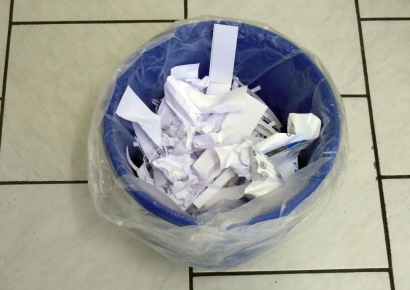 Ballot Box Found in Trash... Peru Holds Runoff Amid 'Ballot Shortage Crisis'
- "Brothers, You've Been Waiting for News?"... Orphanage Library Built Thanks to 'Money Brag' by SK hynix Employee
- "Exactly the Same Early Voting Results in Songdo 1-dong and 2-dong?"... Uproar Over Ballot Counting
- "A Mother's Quick Reflexes Save Child from BRT Bus Rushing onto Sidewalk"
- "Click! Gotta Post on SNS"... 'Small Luxury' for 20s and 30s Cools Down Amid High Inflation
Meanwhile, during the U.S.-Japan summit, President Trump also called for Japan to expand its role in defending the Strait of Hormuz. This was the first summit held after President Trump requested that allies jointly escort vessels through the Strait of Hormuz. Referring to the region’s energy dependence and the U.S. military presence, President Trump said, "I expect Japan to take action." After the summit, Prime Minister Takaichi stated at a press conference, "Although this is a sensitive issue, ensuring the safety of the Strait of Hormuz is extremely important." She added, "However, there are things Japan can and cannot do within the scope of its laws, and I explained this in detail."
© The Asia Business Daily(www.asiae.co.kr). All rights reserved.