"Inducing Hair Growth Without Side Effects"... DGIST Develops Hair Loss Treatment Applicable to Both Men and Women [Reading Science]
New Peptide Designed to Eliminate Hormonal and Hematopoietic Side Effects
Potential as a Next-Generation Treatment
A new hair loss treatment substance that can induce hair growth without hormonal side effects or gender restrictions has been developed. This is being evaluated as a potential turning point in next-generation hair loss treatment, as it represents a ‘mechanism-centered’ approach that overcomes the limitations of existing therapies.
A research team led by Professor Moon Jaeil and Professor Kim Soyeon of the Department of Brain Sciences at DGIST, Professor Lee Changhoon of the Department of New Biology at DGIST, and Professor Sung Younggwan of Kyungpook National University School of Medicine announced the development of a novel peptide, MLPH, which induces hair growth without side effects using computer modeling. The results were published in the international pharmacology journal ‘Biomedicine & Pharmacotherapy.’

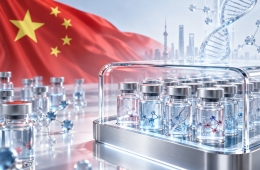
A schematic diagram illustrating the process by which a newly designed peptide (MLPH), developed through computer protein modeling, acts on hair follicle dermal papilla cells to induce hair growth, along with the effects confirmed in animal and human tissue experiments and the demonstrated safety without side effects. Provided by the research team
View original image"Removal of Hormonal and Hematopoietic Side Effects"... Peptide Designed to Retain Only the Mechanism
Currently, the only hair loss treatments approved by the U.S. Food and Drug Administration (FDA) are minoxidil and finasteride. However, minoxidil can cause skin irritation, while finasteride may induce sexual dysfunction due to its effects on male hormone regulation, and its use is restricted for women of childbearing age. As a result, concerns about side effects have persisted.
The research team focused on erythropoietin (EPO), a hematopoietic hormone known to be involved in hair growth mechanisms. While EPO promotes hair growth by binding to hair follicle cell receptors, it can cause serious hematological side effects such as excessive red blood cell production when administered in the body, making it difficult to use as a treatment.
To address this, the team utilized computer-based structural design techniques to precisely extract only the core regions of the EPO protein necessary for hair growth, while removing the domains responsible for side effects. The result was a new peptide, MLPH, which maintains the hair growth function but structurally eliminates the potential for side effects.
Effectiveness Confirmed in Animal and Human Tissue Experiments… Indicating Commercialization Potential
The team confirmed through experiments using human hair follicle tissue and mice that the MLPH peptide significantly increases the secretion of IGF-1, a factor related to hair growth. Notably, it was able to shift follicles from the resting phase to the growth phase and demonstrated a hair growth effect equivalent to that of the existing treatment, minoxidil.
At the same time, there were no hematopoietic side effects such as increased red blood cell count, which had been a concern with EPO-based treatments, thus demonstrating its potential safety.

Photo of the research team. From the left: Professor Moon Jaeil of DGIST, Professor Kim Soyeon, Professor Lee Changhoon, Professor Sung Youngkwan of Kyungpook National University School of Medicine, Dr. Kwak Mihui. Provided by DGIST
View original imageThe research team believes that, with approximately 1 billion people experiencing hair loss worldwide and about 10 million in Korea, this technology can serve as a treatment alternative that can be applied without the burden of side effects. The global market for hair loss treatments is also projected to grow to about 58 trillion won by 2028.
Professor Moon Jaeil of DGIST stated, "MLPH peptide is a safe, mechanism-centered therapeutic agent that can overcome the hormonal side effects and gender restrictions of existing treatments," adding, "It could present a new paradigm for hair loss treatment."
Hot Picks Today
 "Jealous of Koreans" - Now a Must-Do on Every Trip... The Place Where Foreigners Spent KRW 229.8 Billion
- [Exclusive] Piling medicines into a basket and setting them on the counter: "Ready to check out?" ... Misuse concerns mount, but the government remains in the dark.
- "'No! Dad, Run!'... Father Moved by 5-Year-Old Son Who Shielded Him from Ghost at Korean Folk Village"
- "I thought getting into a big company was the goal"... The 'position' only 1 in 121 employees reaches
- "Please Let Me Go Home"... Customers Trapped in Department Store Parking Lot for 5 Hours Vent Their Anger
This research was supported by the Ministry of Education and the National Research Foundation of Korea’s University-Centered Research Institute Support Program, as well as the Ministry of Health and Welfare and the Korea Health Industry Development Institute’s Health and Medical Technology R&D Project, with Dr. Kwak Mihui participating as the first author.
© The Asia Business Daily. All rights reserved. Unauthorized AI training and use prohibited.



!["Please, Just Take Them Off" - They Made It All the Way to Bed... Then Fecal Bacteria Struck [Deep Scroll]](https://cwcontent.asiae.co.kr/asiaresize/307/2026101610053063338_1792112730.png)