Korea and China Reactivate 'Supply Chain Hotline'... Joint Efforts to Manage Rare Earth and Semiconductor Risks
Minister Kim Jungkwan Holds Commerce and Industry Ministerial Meetings with China
Accelerating FTA and Intellectual Property Negotiations

Kim Jungkwan, Minister of Trade, Industry and Energy (fifth from the left in the front row), is taking a commemorative photo with Lee Leocheng, Vice Minister of Industry and Information Technology of China, and delegations from both governments at the 5th Korea-China Industry Minister Meeting held on the 18th in the conference room of the Ministry of Industry and Information Technology in Beijing, China. Ministry of Trade, Industry and Energy.
View original imageSouth Korea and China have resumed economic cooperation, focusing on supply chain stability and strengthening collaboration in advanced industries as key agenda items.
The Ministry of Trade, Industry and Energy announced that Minister Kim Jungkwan visited Beijing, China, on March 18 and held separate meetings: a Korea-China Ministerial Conference on Commerce with Minister of Commerce Wang Wentao, and a Korea-China Ministerial Conference on Industry with Minister of Industry and Information Technology Li Lecheng.
Minister Kim and Minister Wang agreed to fully implement agreements reached between the two countries' leaders and to work together to ensure supply chain stability amid growing uncertainty in the global trade environment. In particular, they decided to immediately activate a "supply chain hotline" between the two countries in the event of logistics delays or disruptions in raw material procurement, thereby strengthening their response system.
For critical items such as rare earth elements and permanent magnets, the two sides agreed to activate dialogue channels related to export controls and to utilize a prompt and universal licensing system to enhance the predictability of the supply chain. These measures are aimed at minimizing the impact on domestic industries amid growing risks of Chinese export regulations.
In terms of trade, the two countries discussed expanding the scope of cooperation, including consumer goods, by leveraging China's domestic demand expansion policies. They also agreed to increase direct business connections through exchanges with major economic organizations and trade fairs.
Additionally, within the first half of the year, the two countries will hold a joint committee for the Korea-China Free Trade Agreement (FTA) to promote progress in service and investment negotiations, and will resume the Intellectual Property Rights Implementation Committee to establish measures for protecting Korean content in China.
At the subsequent industrial ministers' meeting, the two sides focused on consolidating cooperation in advanced industries such as semiconductors and batteries. They also reached a consensus on the need for "horizontal and mutually beneficial cooperation" in response to industrial structural changes. This meeting was convened for the first time in four years since the 2022 virtual conference, and for the first time in eight years for an in-person meeting since 2018.
The two sides discussed ways to stabilize the closely connected supply chain in the battery industry, and agreed to strengthen policy communication in the semiconductor sector, which accounts for 26% of bilateral trade. In particular, they agreed to cooperate to ensure that Korean companies' semiconductor plants in China can operate smoothly.
Industrial cooperation to address climate change and an aging society was also a major agenda item. Both countries agreed to expand technology exchanges and joint cooperation in green transformation of industries and the silver industry, and to promote collaboration between companies and research institutions. They also decided to strengthen digital-based cooperation by sharing experiences in building industrial supply chain data platforms.
Hot Picks Today
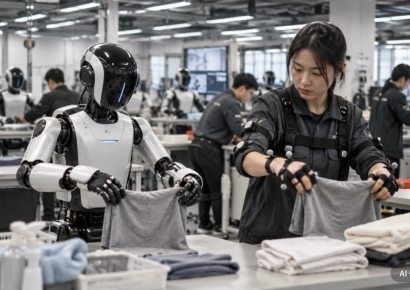 “Washing Dishes and Folding Clothes 200 Times a Day”... China’s “Robot Trainers” Earn Up to 1.2 Million Won a Month
- "Even New York Taxi Drivers Are Talking About the KOSPI; South Korean Market to Top 9,000 Again Within a Year"... 'Wall Street's Stock-Picking Ace' Names His Picks
- “Made 2 Billion Won in One Year in Prison,” PPP Lawmaker Retorts: “If You’re Jealous, Go There Yourself”
- City Bus Driver Who Fell Asleep at the Wheel While 'Drunk' Bought Meth via 'Drop-Off'... Sentenced to 2 Years and 6 Months
- Idol Member Posts Letter Saying "Suspending Activities Due to Pregnancy"... Turns Out She's AI?
Minister Kim stated, "Although the industrial structures of Korea and China are becoming increasingly competitive, the mutual benefits of cooperation remain unchanged," adding, "We will continue to identify promising areas for cooperation and respond together to shared challenges."
© The Asia Business Daily. All rights reserved. Unauthorized AI training and use prohibited.