KOSDAQ to Adopt Two-Division System with Promotion and Relegation... Low PBR Companies to Be Disclosed (Comprehensive)
Capital Market Stabilization and Structural Improvement Measures
Selection of 80 to 170 Companies for Division 1
Duplicate Listings Principally Prohibited
The Financial Services Commission has prepared a structural reform plan to split the KOSDAQ market into two divisions. The policy aims to delist underperforming companies from the market and support the growth of innovative companies.
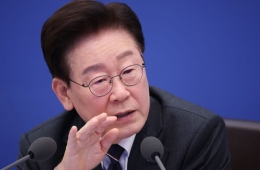
Eokwon Lee, Chairman of the Financial Services Commission, announced these capital market stabilization and structural improvement measures at the "Capital Market Stability and Normalization Meeting" presided over by President Lee Jae-myung at the Blue House on March 18.

KOSDAQ Division 1 and 2: 170 Companies to Be Selected for Division 1
According to the plan, the Financial Services Commission will operate the KOSDAQ market as a two-division system with promotion and relegation between Division 1 and Division 2. The top 80 to 170 companies by market capitalization will be grouped in the premium sector, while standard companies will be placed in the standard sector. Companies at risk of delisting will be separately classified into a watchlist group.
Strict requirements, including English-language disclosures, will be applied to companies in the premium sector. A new index focusing on the top companies in the premium sector will be developed, and linked exchange-traded funds (ETFs) will be introduced to expand the investment base. The Financial Services Commission plans to establish criteria for entry and maintenance in each sector in the second half of this year and to implement the two-division system starting next year.
Listing requirements for KOSDAQ will also be eased. In addition to the bio, artificial intelligence (AI), and space energy sectors, the technology-special listing system will be expanded to six additional sectors this year, including advanced robotics and K-content. Furthermore, the launch of new products, such as the National Growth Fund and Business Development Companies (BDCs), will be accelerated to support long-term institutional investment in the KOSDAQ market.
Measures will also be taken to revitalize the KONEX market. The liquidity of the KONEX market will be increased by expanding KONEX investment funds, which currently see investments totaling 100 billion won. When a KONEX-listed company is transferred to KOSDAQ, designated advisors at securities firms will be granted priority as listing sponsors, providing more incentives for their participation. In addition, some fees for designated advisors and external auditors will be subsidized at the time of KONEX listing.

President Lee Jae-myung is speaking at the Capital Market Stabilization and Normalization Meeting held at the Blue House on the 18th. Photo by Yonhap News
View original imagePlans have also been unveiled to reduce overhang risk following an initial public offering (IPO). For long-term investment sectors such as deep tech, funds with maturities of more than 10 years will be prioritized when investing from parent funds, and the exit market will be activated not only through IPOs but also through securities firms' mergers and acquisitions (M&A). The aim is to prevent sharp declines in stock prices after listing.
Duplicate Listings to Be Principally Prohibited... Disclosure of Low PBR Company List
Measures to protect shareholders have also been prepared. Most notably, duplicate listings will be prohibited in principle. The scope of duplicate listings will be expanded to include cases where a subsidiary, established through acquisition or spin-off, is under substantial control by the parent company.
However, exceptions will be allowed for duplicate listings if shareholders consent and there is no infringement of shareholders' rights. In such cases, the parent company must conduct an impact assessment and make disclosures regarding the domestic and overseas listing of its subsidiary. The specific standards for allowing duplicate listings will be finalized in the second quarter of this year through revisions of exchange regulations and public consultation.
The list of companies with low price-to-book ratios (PBR) by industry will also be disclosed. Companies that rank in the bottom 20% for PBR in their industry for two consecutive half-year periods will be included. The aim is to encourage voluntary improvement by companies that are persistently undervalued in the market. If a company on the low PBR list makes disclosures detailing its plan to enhance corporate value—including a diagnosis of its current PBR status, setting targets, and an action plan—public disclosure of its inclusion on the list will be exempted for a certain period.
A new requirement for disclosing revaluation-based asset values will also be introduced. If a company's asset value increases but is recorded at cost rather than market value, its value could be underestimated in its accounting books. To minimize this, companies will be required to disclose the difference between cost and fair value.
The names of institutional investors that comply with or fail to comply with the Stewardship Code will be made public to promote active corporate governance oversight by institutional investors. The factors considered for shareholder activities will be expanded to include ESG (environmental, social, and governance) and will apply not only to companies already under investment review but also to new investment targets.

Lee Okwon, Chairman of the Financial Services Commission, is attending and speaking at the "Public-Private Joint Token Securities Council Kickoff" meeting held on March 4, 2026, at the Government Seoul Office in Jongno-gu, Seoul. Photo by Jo Yongjun
View original imageTo address unfair trading, the number of personnel in the joint response team for stock price manipulation will be increased and investigative powers, such as the right to request telecommunications data, will be strengthened. In addition, the Financial Services Commission plans to operate an intensive management period for delisting through June of next year to promptly remove underperforming companies. During the restructuring process, if there is an M&A proposal, companies will be required to disclose the fairness of the purchase price based on their fiduciary duty to shareholders.
Hot Picks Today
![[Exclusive] "Forecasts of Over 10 Billion, but Only 100 Million Earned"... 95% Followed This Pattern: Why Are KOSDAQ Special Exception IPOs Inflated? [KOSDAQ Inflated IPOs]①](https://cwcontent.asiae.co.kr/asiaresize/93/2026100609060151026_1791245160.jpg) [Exclusive] "Forecasts of Over 10 Billion, but Only 100 Million Earned"... 95% Followed This Pattern: Why Are KOSDAQ Special Exception IPOs Inflated? [KOSDAQ Inflated IPOs]①
[Exclusive] "Forecasts of Over 10 Billion, but Only 100 Million Earned"... 95% Followed This Pattern: Why Are KOSDAQ Special Exception IPOs Inflated? [KOSDAQ Inflated IPOs]①
- Alteogen to Absorb Subsidiary Alteogen Biologics Through Merger
- "My Debt Is 73 Million Won"... Sharing Every Repayment Led to an Unexpected Turn
- "Drinking This in the Morning Is Like Drinking Alcohol"..."Doctors Warn: Never Consume It"
- Is 'KOGUMA' Coming Too?... "Japan in Serious Trouble" - Archipelago on High Alert Ahead of Holidays
A Financial Services Commission official stated, "We will continue our policy efforts to fundamentally improve the structure of our capital market by actively communicating with the market," and added, "Through these measures, we will do our utmost to usher in the era of the Korea Premium."
© The Asia Business Daily. All rights reserved. Unauthorized AI training and use prohibited.