[Good Morning Market] US Stocks Hold Firm Against High Oil Prices... Korean Market Also Expected to Rise
US Stocks Close Slightly Higher Despite Oil Price Rebound
Micron Hits Record High; Airline Stocks Rise Across the Board
Korean Market Expected to Remain Strong; Focus on President Lee's Policy Roundtable
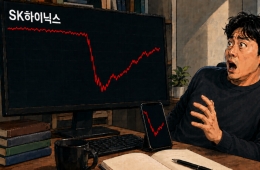
![[Good Morning Market] US Stocks Hold Firm Against High Oil Prices... Korean Market Also Expected to Rise](http://www.asiae.co.kr/news/img_view.htm?img=2025012308584010173_1737590320.png)
Despite the renewed rise in international oil prices, the major indices on the New York Stock Exchange closed slightly higher. Analysts attribute this to bargain hunting prompted by lessons learned from past wars, as well as the continued robust demand for artificial intelligence (AI), which has boosted expectations for semiconductor companies' earnings and supported the market.
On March 17 (local time), the S&P 500 Index closed at 6,716.09, up 0.25% on the New York Stock Exchange (NYSE). The tech-heavy Nasdaq Composite Index also rose 0.47% to close at 22,479.53. The Dow Jones Industrial Average ended the session at 46,993.26, up 46.85 points (0.10%) from the previous close.
Reports that oil tanker traffic had partially resumed in the Strait of Hormuz were seen as a positive factor. Kevin Hassett, White House National Economic Council (NEC) Director, said in an interview with CNBC, "Tankers have already started to pass through the strait little by little," adding, "This signals how limited Iran's capabilities are." The previous day, U.S. Treasury Secretary Stephen Miran made similar remarks. The U.S. appears to be intentionally spreading news that the blockade of the Strait of Hormuz is being lifted in an effort to bring down soaring oil prices.
Nevertheless, international oil prices, which had fallen the previous day, rebounded. On this day, May delivery Brent crude oil on the London ICE Futures Exchange closed at $103.42 per barrel, up 3.2% from the previous session. April delivery West Texas Intermediate (WTI) on the New York Mercantile Exchange rose 2.9% to $96.21 per barrel. Tensions appear to have escalated due to Iran's continued attacks on the Fujairah port in the United Arab Emirates (UAE), which is considered an alternative export route bypassing the Strait of Hormuz.
U.S. President Donald Trump also criticized allied nations that refused to send troops to help keep the Strait of Hormuz open, saying, "We don't need your help." This raises concerns about the possibility of a prolonged war.
Nevertheless, the stock market has held up, creating a level of downside support. It is a different phase compared to the frequent steep declines in stock prices seen at the onset of the war earlier this month. Micron Technology has already risen 4.5% on earnings expectations. Major airline stocks such as Delta Air Lines (up 6.5%) and American Airlines (up 3.6%) also climbed. Airlines have raised their first-quarter earnings forecasts for this year, and despite the surge in oil prices triggered by the Middle East crisis, passenger demand remains solid.
Given the emergence of downside support, some advise paying close attention to the Federal Open Market Committee (FOMC) meeting, which begins today and runs for two days. With a freeze in the benchmark interest rate this month already priced in, the key issue is when the first rate cut will come following the Middle East crisis. Some analysts also predict that unless Federal Reserve Chairman Jerome Powell makes hawkish comments at his press conference, the outcome will be a neutral factor for the market.
The Korean stock market is expected to open higher, buoyed by the record-breaking performance of Micron despite external uncertainties. Overnight, the MSCI Korea ETF, which often mirrors the movement of the Korean stock market, rose 1.00% on the U.S. stock market. The MSCI Emerging Markets Index ETF also gained 0.63%. The Philadelphia Semiconductor Index jumped 0.52% as well.
Additionally, there are expectations that further policy momentum for the stock market could emerge from the capital market roundtable to be chaired by President Lee Jaemyung later today. The meeting will focus on four key reform measures: establishing market order, enhancing shareholder value, innovating the capital market, and expanding investment accessibility.
Hot Picks Today
![[Test Drive] The Sealion 7 Transformed by a 2 Million Won Upgrade: "Base Model Buyers Might Feel Shortchanged"](https://cwcontent.asiae.co.kr/asiaresize/93/2026080417033869589_1785830618.jpg) [Test Drive] The Sealion 7 Transformed by a 2 Million Won Upgrade: "Base Model Buyers Might Feel Shortchanged"
[Test Drive] The Sealion 7 Transformed by a 2 Million Won Upgrade: "Base Model Buyers Might Feel Shortchanged"
- 'Single-Stock Leveraged ETF Blow' Crippled KOSDAQ in July... Hopes Rise for a Turnaround in August with 11.38% Surge [Weekend Money]
- Chinese Buyers Retreat from Seoul’s Real Estate Market? Foreign Purchases Plummet by 2,000 [Real Estate AtoZ]
- "If We Don't Get Married, Let's Live Together"... Gen Z Chooses 'Co-Buying Homes with Friends' Over Romantic Partners [Gen Z Around the World]
- Kim Seontae Appears Gaunt After Leaving 'Don Seontae'... 3,000 Thumbs Up for Chungju Mayor's "Come Back" Offer
Han Jiyoung, a researcher at Kiwoom Securities, said, "It is worth paying attention to the short-term stock price movements of the KOSDAQ, which has underperformed the KOSPI since the beginning of the year," explaining, "The government is strongly committed to revitalizing the KOSDAQ market, and investors tend to reflect policy expectations rather than earnings in the KOSDAQ."
© The Asia Business Daily. All rights reserved. Unauthorized AI training and use prohibited.




!["Even a 500 Million Won Jump Is Fine, Self-Residence Buyers Flock to Billion-Won Units"...High Winning Bids Continue for Mid- and Low-Priced Reconstruction Complexes [Real Estate AtoZ]](https://cwcontent.asiae.co.kr/asiaresize/307/2026042709001641074_1777248016.jpg)