Presidential Office: "Supplementary Budget Possible Without Issuing Government Bonds... Sufficient Allocation Where Needed" (Comprehensive)
Hong Ikpyo: "Energy Vouchers Are More Urgent Than Lowering Fuel Taxes"
On Expansion of U.S. Trade Act Section 301 Investigation: "An Expected Development"
"Prosecution Cancellation Deal Rumor Is Highly Inappropriate"... "An Investigation Lik
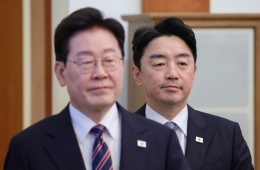
Hong Ikpyo, Senior Presidential Secretary for Political Affairs, stated on March 13 that while the scale of the supplementary budget (extra budget) to respond to the shock of high oil prices from the Middle East has yet to be determined, the government is committed to injecting sufficient fiscal resources into necessary sectors. He also noted that this supplementary budget can be pursued without issuing additional government bonds, given the current revenue conditions.

Appearing on KBS 1TV's "Sasakeonkeon" that day, Senior Secretary Hong said, "The fiscal authorities are proactively assessing the required scope of the supplementary budget," and added, "This time, we are in a situation where issuing government bonds is unnecessary."
Senior Secretary Hong cited the need to prevent the recent signs of economic recovery from being derailed by Middle East-related variables as the rationale for preparing the supplementary budget. On the back of improved semiconductor market conditions, the Korean economy has shown a moderate recovery trend. Last month, the Bank of Korea forecasted a growth rate of 2.0% for this year, and the Organisation for Economic Co-operation and Development (OECD) projected Korea's growth at 2.1%. The presidential office believes that fiscal support must be provided proactively to ensure this recovery is not dampened by the shock of high oil prices.
The supplementary budget is expected to be allocated broadly in two directions. One is to support energy-related sectors and companies directly hit by high oil prices, and the other is to bolster the economy through measures such as boosting consumption. While Senior Secretary Hong drew a line by saying it is "premature reporting" to mention figures like 10 trillion won or 20 trillion won, he made it clear that the government will "provide sufficient and decisive fiscal support where needed."
"Energy vouchers are more urgent than fuel tax cuts"
Regarding the possibility of fuel tax cuts, he said, "It is under consideration, but we are still deliberating," emphasizing that targeted support should come first. He explained that logistics companies, public transportation, and gas and electricity sectors are directly affected by the sharp rise in diesel prices. Rather than uniformly lowering the fuel tax, he argued it is more urgent to channel fiscal resources first to vulnerable sectors and industrial sites through energy vouchers. The intention is to absorb the pressure for fare increases through fiscal measures and alleviate the burden on people's livelihoods.
Senior Secretary Hong also anticipated that the public would begin to feel the effects of the petroleum product price cap, which went into effect that day, relatively soon. On March 13, from midnight, the Ministry of Trade, Industry and Energy set the maximum supply price for refiners at 1,724 won per liter of regular gasoline, 1,713 won for automotive diesel, and 1,320 won for kerosene, to be applied for two weeks until the 26th. However, this cap applies to the supply price from refiners to gas stations and dealerships, and does not directly control retail prices at gas stations.
Senior Secretary Hong noted there may be a time lag as gas stations must first sell off their inventories purchased before the implementation of the price cap. However, he predicted that as early as the evening of the 13th or starting on the 14th, some locations would begin to reflect the lower prices, and that, at the latest, stabilized prices would be seen within two to three days. In fact, on the first day of the price cap, the national average gas station price for gasoline dropped to 1,873 won, and diesel to about 1,890 won, showing a declining trend. Still, some observers noted that it may take more time for consumers to feel the effect, since existing inventories remain at the stations.
On Expansion of US Trade Act Section 301 Investigation: "An Expected Step"
Regarding the expansion of the United States' Trade Act Section 301 investigation, Senior Secretary Hong described it as "an expected step." He distanced the issue from signals of strain in specific corporate or Korea-US relations, explaining that not only Korea but also Japan, Taiwan, the European Union (EU), and other major trading partners have been widely included as subjects of the investigation. In fact, on March 12 (local time), the United States Trade Representative (USTR) announced the launch of Section 301 investigations into the import of forced labor products involving 60 major trading partners, including Korea.
Senior Secretary Hong said, "Our government had already anticipated this possibility and has been preparing. Export authorities are responding carefully to ensure that neither companies nor citizens are harmed." Amid the simultaneous challenges of the Middle East crisis and US trade pressure, the presidential office is now in a complex response phase, having to address price stability, economic defense, and external trade risk management all at once.
"Prosecution Withdrawal Deal Rumors Are Highly Inappropriate...Subject to Mediation under the Press Arbitration Act"

Senior Secretary Hong also expressed his position on current political issues. Regarding the recent so-called "prosecution withdrawal deal rumors," he said, "I find it so absurd that I do not know how to respond," and added, "We are busy as it is, and we do not have the time to respond to every one of these groundless claims."
He further stated, "There is absolutely no value in responding," but added, "However, I believe this is highly inappropriate fake news, as it could undermine public trust in the government and its policies." He continued, "Since the party has already responded, I trust the party will handle it well, and there may also be an investigation at the level of the Korea Communications Standards Commission," he said.
Afterward, the Office of the Senior Presidential Secretary for Political Affairs issued a notice correcting that the Korea Communications Standards Commission is not the investigative body for this matter, but rather the Press Arbitration Commission. The office clarified, "In the case of the so-called 'prosecution withdrawal' controversy, it falls under the scope of mediation according to the Press Arbitration Act, and Senior Secretary Hong's remarks have been corrected accordingly."
Addressing concerns that these suspicions could undermine the momentum for prosecution reform, Senior Secretary Hong said, "There is absolutely no factual basis for these claims, so I do not think this is an issue that would weaken the drive for prosecution reform." He also stated, "The presidential office has no intention of planning or taking any measures against any specific media outlets. It is far more important to gain public trust through policies related to people's livelihoods, the public, and national development."
Regarding disagreements within the Democratic Party over prosecution reform bills, he said, "I hope the Democratic Party will handle matters as befits the ruling party." Senior Secretary Hong explained, "The opposition party typically responds to the government through public disclosure, press conferences, and attacks, but the ruling party is a pillar of the administration and a partner in state affairs. When disagreements arise, it is right to coordinate them internally and improve the completeness of the measures."
He outlined the President's principles for prosecution reform: separation of investigation and indictment, correction of past wrongful practices by the prosecution, and ensuring there are no investigative failures or harm to ordinary citizens during the reform process. He explained, "The consistent position is that the party and government should work together to create reform-minded yet reasonable alternatives."
Hot Picks Today
 "I Went for the Cheap Coffee, but Now I Feel Uneasy"... Major Coffee Franchises Cited for Violations One After Another
- Snipers and Drones to Be Deployed Atop 'Trump Arch' ... "It Will Be the Greatest"
- "Surprisingly Real, Perfect Like AI" -- Global Media Praise Korean Fencer's Beauty
- "50 Million Won for Weekly Encounters"... Man in His 60s Sentenced for Deceiving Woman in Her 20s with Forged 1.4 Billion Won Account
- "I've Already Booked My Trip to Japan, But This Is Serious"...Highest Number of Measles Cases in Japan in a Decade Spurs Emergency Alert
Meanwhile, on the speculation that former Deputy Director of the Democratic Research Institute Kim Yong will run in the June National Assembly by-elections, he said, "That is a matter for the party to decide," and refrained from further comment. On National Assembly Speaker Woo Wonshik's proposal for a one-point constitutional amendment, he said, "It may be difficult to smoothly pursue constitutional revision at present, but constitutional amendment is also President Lee's long-held view." He added, "Even if major issues such as power structure reform require more deliberation, I hope discussions can proceed on matters where bipartisan agreement is possible." He continued, "Inserting the May 18 Gwangju Democratization Movement into the preamble to the Constitution and strengthening the requirements for a state of emergency could be pursued even ahead of the local elections."
© The Asia Business Daily. All rights reserved. Unauthorized AI training and use prohibited.